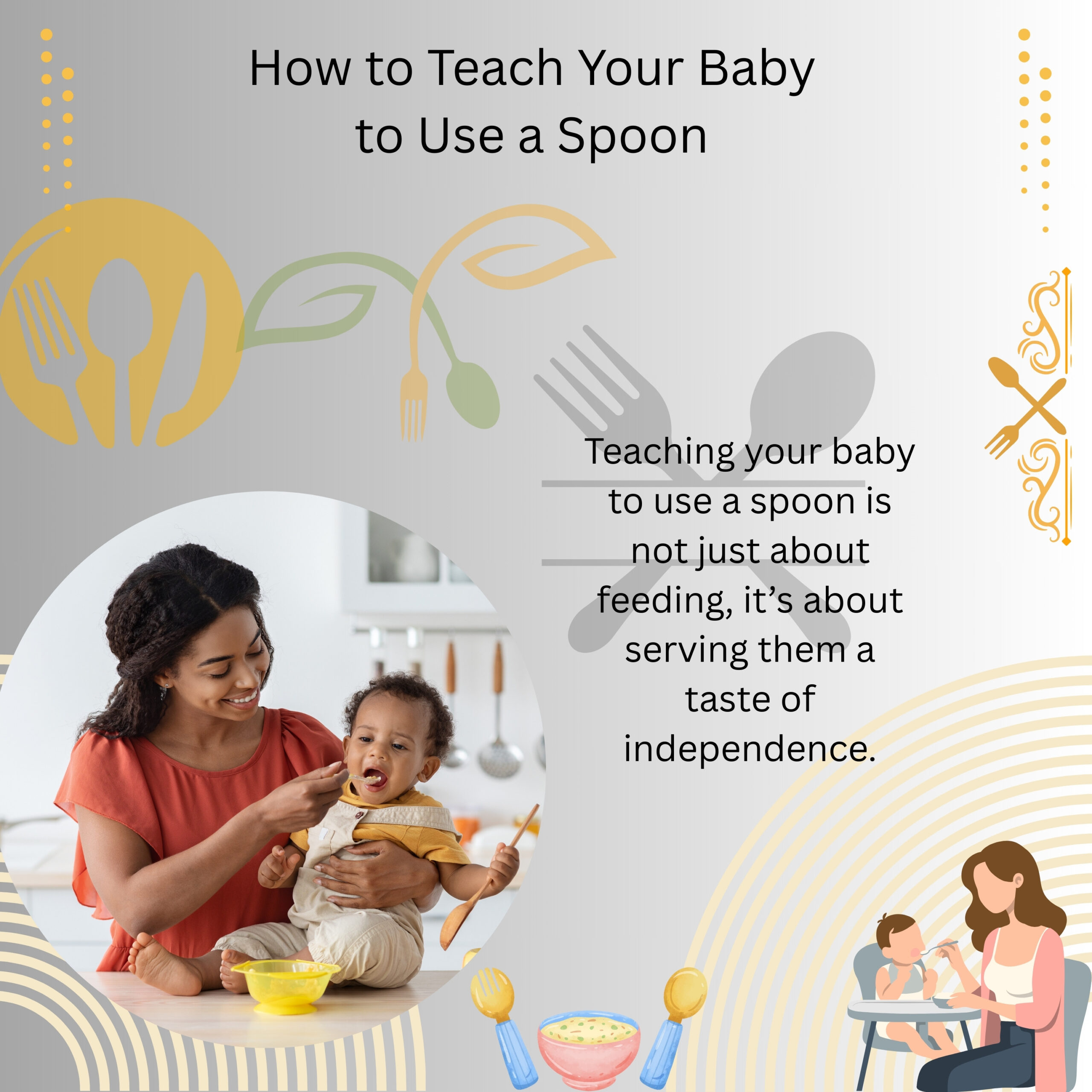
Teach your baby to use a spoon is a special milestone, one that often brings a little mess, a few spills, and many joyful smiles. At first, progress may seem slow, and that’s completely normal. Spoon-feeding is more than just learning to eat; it’s an important step toward building independence, confidence, and early self-feeding skills.
Each small attempt helps your baby understand control and coordination. The most important part of this journey is staying patient, practicing regularly, and allowing your baby the time and freedom to learn in their own way.When you teach baby to use a spoon with gentle support and encouragement, this phase becomes a meaningful and enjoyable experience for both of you.
When Do Babies Start Using a Spoon?
Most babies show interest in using a spoon feeding baby between 6 to 9 months.
At this stage, they may not feed themselves fully, but they’re ready to explore textures, movements, and basic self-feeding skills. According to child-feeding guidance shared by the Centers for Disease Control and Prevention (CDC), introducing spoons alongside finger foods helps babies gradually learn coordination and independence during meals.
Signs your baby is ready:
• Can sit with support : When a baby is able to sit with support, it shows they have enough head and body control to start learning spoon-feeding safely and comfortably.
• Shows interest in food : If your baby watches you eat, reaches toward food, or seems curious at mealtimes, it’s a clear sign they’re ready to explore eating.
• Reaches for the spoon : When your baby tries to grab the spoon, it reflects curiosity and an early desire to participate in feeding and self-feeding.
• Opens mouth when food approaches : This indicates your baby recognizes food and is prepared to accept it, an important step in learning to eat with a spoon.
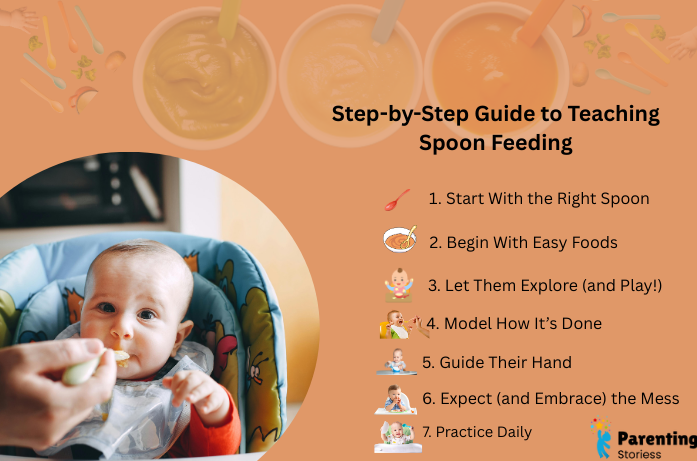
Step-by-Step: How to Teach Your Baby to Use a Spoon
1. Start With the Right Spoon
Use a spoon designed for baby first spoon feeding:
• Soft silicone or plastic : These materials are gentle on your baby’s delicate gums and emerging teeth, making spoon-feeding safe and comfortable during early learning stages.
• Small and shallow : A smaller, shallow spoon holds just the right amount of food, helping your baby move food into their mouth without spilling or gagging.
• Easy for tiny hands to grip : A lightweight spoon with an easy-to-hold handle allows little hands to grasp it comfortably, encouraging confidence and early self-feeding skills.
Avoid metal spoons in the beginning, they can be heavy and uncomfortable.
2. Let Your Baby Hold the Spoon
Even if you’re feeding, give your baby their own spoon to hold.
They’ll:
• Chew on it ; Babies explore new objects using their mouths. Chewing or sucking on the spoon helps them get familiar with how it feels.
• Bang it ; Banging the spoon on the table or plate is a natural way for babies to explore sound, movement, and cause-and-effect, while also building coordination.
• Drop it (many times!) : Dropping the spoon repeatedly is part of learning. It helps your baby practice grip control and understand what happens when they let go.
This is normal, it helps them understand how a spoon feels.
3. Demonstrate First
Babies learn by watching, so modeling the action is an important first step.
- Show how to scoop food: Slowly demonstrate how to scoop food with a spoon and bring it from the plate to your mouth. Babies learn best by observing simple, repeated actions.
- Bring the spoon to your mouth slowly: Moving the spoon at a gentle pace gives your baby time to watch and understand each step. Smile and talk while doing it to make the experience fun and engaging.
Your baby will naturally try to copy you, which is an important part of learning teach baby to use a spoon baby self-feeding skills.
4. Use Thick, Scoop-Friendly Foods
Start with foods that stick to the spoon:
- Mashed banana
- Thick porridge
- Yogurt
- Mashed vegetables
- Dal or khichdi (well-mashed)
These make baby eating with spoon easier and less frustrating.
Choosing the right texture is not just about convenience, it’s also about safety. The CDC highlights that thick, soft, and well-mashed foods reduce choking risk when babies are learning to eat with spoons. Always avoid hard, round, or sticky foods during early spoon-feeding stages.
5. Guide Their Hand Gently
In the beginning:
- Place food on the spoon
- Help guide their hand to the mouth
- Let them try on their own after a few attempts
Avoid forcing, learning should feel fun, not stressful.
6. Expect Mess When You Teach Baby to Use a Spoon
Food on the face, clothes, floor, it’s all part of learning.
Use:
- Bibs
- Old clothes
- Easy-to-clean mats
Messy eating helps babies develop coordination and confidence.
7. Keep Mealtimes Calm & Short
Babies have short attention spans.
- Start with 5–10 minutes
- Stop if your baby gets tired or cranky
- Praise effort, not perfection
Learning happens slowly, meal by meal.
Common Mistakes to Avoid
- Expecting your baby to eat neatly too soon
- Forcing the spoon into your baby’s mouth
- Getting upset about the mess
- Comparing your baby to others
Every baby learns spoon feeding at their own pace, and that’s perfectly okay. Patience, encouragement, and a relaxed attitude help make mealtimes a positive learning experience for both you and your baby.
Helpful Tips for Parents
When it comes to teaching baby to use a spoon, small everyday habits can make a big difference. Pediatric feeding experts, including the American Academy of Pediatrics (AAP), encourage parents to allow babies to explore food at their own pace using both hands and utensils. This balanced approach supports motor development, confidence, and healthy eating habits.
These tips help create a positive and stress-free feeding experience:
Eat together as a family when possible
Talk and smile during meals to keep your baby engaged
Let your baby explore food with their hands as well
Switch between parent-feeding and self-feeding
Be patient, spoon-feeding skills improve with time
FAQs
Q1. What if my baby refuses the spoon?
That’s okay. Pause for a few days and try again later. Readiness varies from baby to baby.
Q2. Is it okay if my baby prefers using hands?
Yes. Hand-feeding and spoon-feeding can happen together. Both support learning.
Q3. How long does it take for babies to learn spoon-feeding?
It can take weeks or even months. Progress is gradual, not instant.
Q4. Should I stop feeding if my baby makes a mess?
No. Mess is part of learning and helps build coordination.
Final Thoughts: Learning Takes Time
Teach your baby to use a spoon isn’t about perfect bites, it’s about building confidence, coordination, and independence. When it comes teach baby to use a spoon, progress rarely happens overnight. Some days your baby may do great, and other days not at all, and both are completely normal parts of the learning process.
With gentle guidance, encouragement, and plenty of patience, your baby will gradually develop spoon-feeding skills, one messy spoonful at a time.
Parenting is made up of small moments: messy meals, tiny wins, and big emotions. At ParentingStories, we share simple, honest guides and real parenting experiences to support parents through every stage of baby feeding and development.
Disclaimer
This article is for general informational purposes only and does not replace professional medical or nutritional advice. Always consult your pediatrician if you have concerns about your baby’s feeding, development, or readiness for solids.