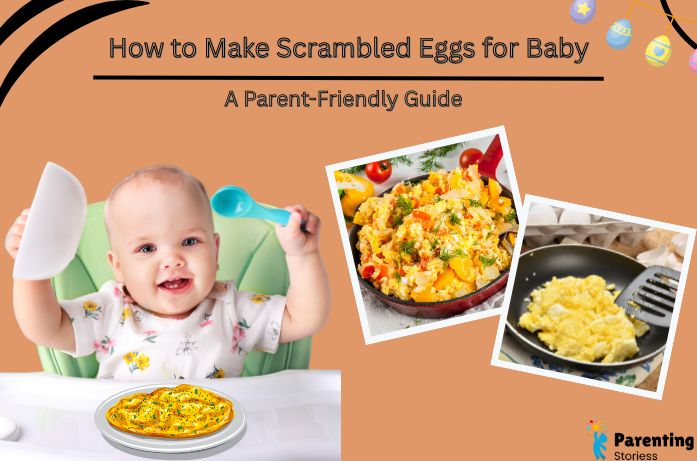
scrambled eggs for baby are one of those foods parents naturally turn to, quick to cook, easy on the budget, and packed with goodness. They’re soft, versatile, and gentle on little tummies, which makes them one of the best first foods to introduce to your baby. Plus, with every bite, your little one gets a boost of essential nutrients that support healthy growth and development.
Scrambled eggs for baby, in particular, are soft, fluffy, and easy to chew, making them perfect for little ones beginning solids. Whether you’re starting with spoon-feeding purées or trying baby-led weaning (BLW), scrambled eggs can fit beautifully into your baby’s menu.
This guide will walk you through everything: when to start, how to cook scrambled eggs for babies safely, recipe variations, allergy tips, storage hacks, and answers to the most common parent questions.
By the end, you’ll feel confident whipping up this nutritious meal, and maybe even enjoy some scrambled eggs together.
Scrambled eggs for baby are one of the safest and most nutritious first foods when introduced at the right age and prepared properly.
When Can Babies Eat Scrambled Eggs?
According to the American Academy of Pediatrics (AAP), babies can be introduced to eggs (both egg yolk and egg white) around 6 months of age, once they’re ready for solid food introduction
In the past, parents were told to avoid egg whites due to egg allergy risks. Today, research shows that introducing eggs early (6–8 months) may actually reduce the risk of allergies.
Signs your baby may be ready for scrambled eggs:
- Sitting with minimal support in a high chair
- Showing interest in your food
- Opening their mouth when offered a spoon
- Swallowing purées without pushing them out immediately
Why Eggs Are a Great First Food for Babies
Eggs aren’t just convenient, they’re a nutritional powerhouse. The National Institutes of Health (NIH) notes that eggs contain vital nutrients babies need:
- Protein : Builds muscles and tissues
- Healthy fats & Omega-3 fatty acids : Brain and nervous system development
- Choline : Supports memory and brain function
- Iron : Prevents anemia
- Vitamin D : Bone and immune support
- B vitamins : Boost energy and metabolism
- Antioxidants (Lutein & Zeaxanthin) : Protect eye health
In short: scrambled eggs are one of the most nutrient-dense, easy-to-digest foods you can offer your baby.
Scrambled Egg Recipe for Baby
Ingredients
- 1 fresh egg
- 1–2 tsp breast milk, infant formula, or whole milk (optional, for creaminess)
- A drop of unsalted butter or a little olive oil
Step 1: Crack & Whisk
Break the egg into a small bowl and whisk until smooth. For a softer texture, mix in a spoonful of breast milk, formula, or water.
Step 2: Cook Gently
Warm a nonstick pan over low heat and add the butter or oil. Pour in the whisked egg.
Step 3: Stir Slowly
Using a silicone spatula, stir the egg mixture slowly until just set and fluffy. Keep the heat low to prevent browning or drying out, babies do best with soft, moist eggs.
Step 4: Cool & Serve
Let the scrambled egg cool slightly. For spoon-feeding (6–8 months), mash to a smooth consistency. For self-feeding (9–12 months), cut into small strips or cubes so little hands can grasp easily.
Tip: Always make sure eggs are fully cooked before serving, and offer alongside other soft foods like avocado or banana for a balanced, baby-friendly meal.
Scrambled Eggs for Baby: BLW vs Spoon-Feeding
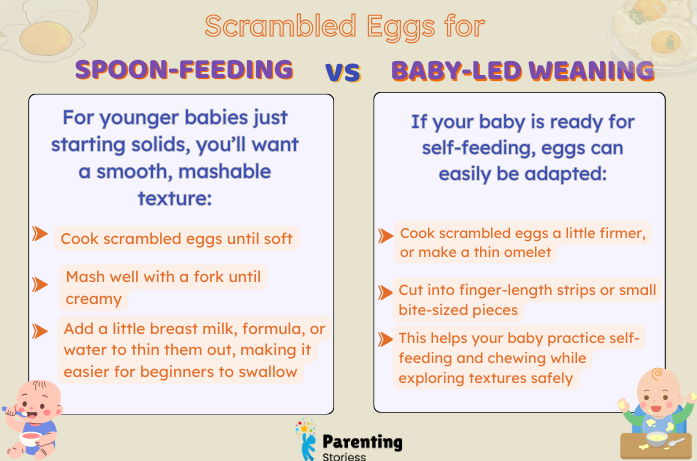
Many parents wonder whether scrambled eggs are better for baby-led weaning (BLW) or spoon-feeding, the good news is they’re a healthy choice for both! Eggs provide protein, healthy fats, and choline, which support brain and eye development. The key is to match the texture and shape to your baby’s stage.
Scrambled Eggs for Baby for Spoon-Feeding (6–7 Months)
For younger babies just starting solids, you’ll want a smooth, mashable texture:
- Cook scrambled eggs until soft
- Mash well with a fork until creamy
- Add a little breast milk, formula, or water to thin them out, making it easier for beginners to swallow
Baby-Led Weaning (Around 8–9 Months)
If your baby is ready for self-feeding, eggs can easily be adapted:
- Cook scrambled eggs a little firmer, or make a thin omelet
- Cut into finger-length strips or small bite-sized pieces
- This helps your baby practice self-feeding and chewing while exploring textures safely
Mixed Feeding Approach
Many families find success starting with mashed eggs on a spoon and gradually moving to finger-sized pieces as their baby’s pincer grasp and chewing skills improve.
Extra tips:
- Make sure the eggs are fully cooked to reduce the risk of foodborne illness.
- Offer them alongside other soft, nutrient-rich foods, such as avocado, banana, or lightly toasted bread, to encourage variety and self-feeding skills.
- Introduce one new food at a time, waiting a few days before adding another, so you can watch for any signs of allergy.
Scrambled eggs are versatile, quick to prepare, and a great way to help babies explore new textures while getting essential nutrients.
Fun Egg Variations for Babies and Toddlers
Scrambled eggs don’t have to be boring, you can add gentle flavors and nutrients as your little one grows. Here are some safe, easy ideas:
- Plain & Soft (6+ months): Start with simple, softly scrambled eggs so your baby gets used to the taste and texture.
- Veggie Boost: Stir in very finely grated or steamed vegetables such as zucchini, spinach, carrots, or sweet potato for extra fiber and vitamins.
- Cheesy Scramble (after 9 months): Add a pinch of mild cheese (like cheddar or cottage cheese) for a creamy, calcium-rich twist.
- Mini Omelet Squares: Cook eggs in a thin layer, let them cool, then cut into small, bite-sized pieces that toddlers can easily pick up.
- Egg Muffins: Whisk eggs with finely chopped veggies, pour into muffin tins, and bake. They make excellent toddler snacks and can be frozen for quick meals.
- Avocado Egg Mash: Combine scrambled eggs with mashed avocado for a smooth, nutrient-dense option that’s great for self-feeding.
Tip: Babies often need 10–15 tastings before accepting a new food, so keep offering eggs in different fun forms, patience pays off!
Safety and Egg Allergy Tips
When preparing scrambled eggs for baby, focus on cooking and safety first. Always make sure the eggs are completely cooked, soft but without any runny yolk, to avoid harmful bacteria like salmonella (the CDC recommends this for infants and toddlers). Skip adding salt or sugar; babies’ kidneys aren’t ready to process extra sodium or sweeteners, and eggs have plenty of natural flavor. Cut the eggs into very small, soft pieces so they’re easy to chew and don’t pose a choking risk. Offer only one new food at a time, waiting a few days before introducing another, so you can easily spot any reactions.
Watch carefully for allergy symptoms such as a rash, hives, vomiting, facial swelling, or breathing difficulties, if these appear, seek medical help immediately as they may signal anaphylaxis. For extra peace of mind, the NHS notes that eggs from hens vaccinated against salmonella (look for the Lion Quality Stamp in the UK) are considered safest for little ones.
Storage and Meal-Prep Tips
Good storage habits make egg meals simple and safe. Keep scrambled eggs in a clean, airtight container in the fridge for up to two days, and reheat gently in a pan or microwave for just 10–15 seconds, stirring halfway. Never reheat the same batch more than once. While plain scrambled eggs don’t freeze well, baked egg muffins or mini frittatas freeze beautifully for up to a month, a lifesaver for quick breakfasts or travel snacks. Another handy hack: cook a thin omelet, slice it into baby-friendly portions, and refrigerate. With just a little planning, you’ll always have a healthy, protein-packed meal ready for your baby or toddler.
FAQs About Scrambled Eggs for Babies
Final Thoughts
Scrambled eggs for baby are more than just breakfast, they’re a milestone food. From that first spoon-fed mash to proud toddler bites, eggs grow with your child.
At Parenting Stories, we believe meals are about more than nutrition, they’re about connection, discovery, and those messy little smiles parents treasure. With scrambled eggs, you’re not just cooking, you’re creating memories.
Disclaimer:
This article is for informational purposes only. It does not replace medical advice. Always consult your pediatrician before introducing new foods, especially if your child has allergies or medical concerns.