There’s nothing quite as heartwarming as hearing your baby’s very first word, whether it’s a gentle mama, a joyful dada, or even a funny little sound that melts your heart. That tiny voice marks the beginning of something big: your baby is learning to communicate.
Every baby’s journey in learning to talk is unique. Some start speaking early, while others quietly observe every expression, rhythm, and tone before joining in. If your little one is still babbling while others seem to be chatting, you might wonder, can I support my baby’s baby language development?
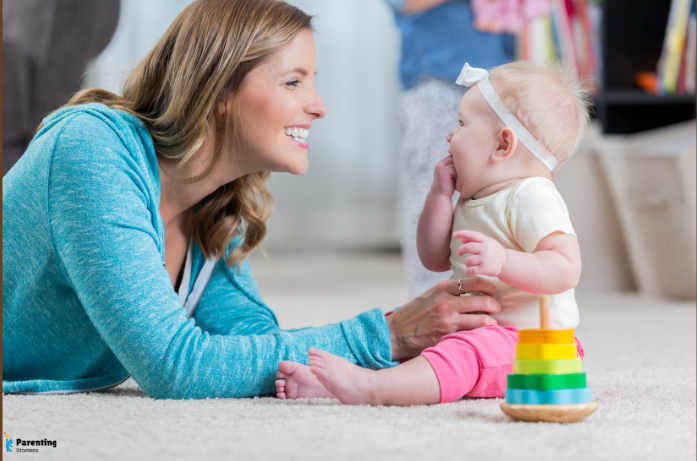
The truth is, language grows best not through pressure, but through playful, loving interaction. The way you talk, sing, respond, and engage each day lays the foundation for your baby’s baby language development.
In this guide, we’ll explore how babies learn to talk, the stages of speech development, and simple, science-backed ways to encourage your baby’s baby language development, all through everyday play and connection.
How Babies Learn to Talk (Even Before They Can Speak)
Language doesn’t just appear one day, it grows layer by layer. Your newborn first learns by listening, to your tone, rhythm, and emotion. Slowly, those sounds turn into babbling, and soon into real words.
Before babies can speak, they already understand a lot: familiar names, voices, and daily words like milk or bye-bye. Speech begins when the brain, hearing, attention, and mouth muscles start working together, a beautiful, natural process.
Think of it like a dance between you and your baby. You talk, they respond with a sound or a gesture. You smile, and they copy you. Every exchange teaches them the rhythm of real conversation, a lifelong skill that starts in your arms.
Speech Milestones: A Gentle Guide (Not a Race)
Every child develops at their own pace, and that’s perfectly okay. While one baby might start saying words early, another may prefer to quietly observe, listen, and absorb the world around them. Each child’s speech and baby language development follows a unique timeline, influenced by their environment, genetics, and daily interactions.
Still, here’s a gentle, research-based guide to what’s generally expected as your baby’s communication skills grow:
- 0–6 months: Your baby begins recognizing familiar voices, cooing, and experimenting with different sounds. This stage lays the foundation for understanding tone and emotion, the first steps toward speech.
- 6–12 months: Babbling begins! Babies start responding to their name and the tone of your voice. They may also try to mimic the rhythm and melody of your speech, a sign that their language learning is in motion.
- 12–18 months: Most little ones can say 1–5 simple words like mama or ball. They imitate sounds and gestures, understand easy directions, and begin linking meaning to words.
- 18–24 months: Vocabulary expands rapidly, from around 20 to 50+ words. Your toddler may start combining two words like more milk or mama go, showing exciting progress in early communication.
- 2–3 years: Short sentences appear! Children begin asking questions, naming objects, and following two-step instructions. Their growing curiosity fuels their desire to communicate more clearly.
Don’t focus on dates, focus on progress. The American Speech-Language-Hearing Association (ASHA) notes that early, rich language exposure is one of the best predictors of future success in communication.
10 Everyday Strategies to Boost Baby Language Development
1. Narrate Your Day
Narrate your daily actions to your baby, Let’s put on your socks, Here’s your blue cup. Your calm, rhythmic voice helps your little one connect words with actions, strengthening early vocabulary and speech development. The more your baby hears you talk, the more they absorb the rhythm and meaning of language. Experts note that frequent, loving conversation is one of the most powerful tools for building strong language skills.
2. Read Aloud from Birth
Even newborns benefit from hearing your voice in stories. Choose bright, colorful board books with simple pictures and repeat key words, Apple! Red apple! Reading aloud supports early literacy, strengthens language and memory development, and deepens emotional bonding. When babies hear your expressive voice daily, their brains build strong neural connections that boost speech development, listening skills, and a lifelong love for reading and learning.
3. Sing and Use Rhymes
Songs are magical for speech and language growth! Singing nursery rhymes, lullabies, and playful tunes teaches rhythm, repetition, and pronunciation, all vital for baby speech development. Add gentle claps, hand motions, or dance movements to make it fun and interactive. Music activates both sides of your baby’s brain, strengthening memory, listening skills, and emotional bonding, while helping words and sounds stick through joyful repetition.
4. Treat Babbling as Real Talk
When your baby says ba-ba, respond naturally, Yes! The ball! These little back-and-forth moments, known as serve and return interactions, are the foundation of baby communication skills. Treating babbling as real talk helps your baby feel heard and encourages early speech development. The more you respond, the more your baby learns that sounds have meaning, turning simple babbles into the building blocks of real conversation.
5. Label What They Love
Notice what fascinates your little one, Car! Big car! or Doggy! Linking words to things your child loves boosts attention, curiosity, and understanding. When you describe what catches their eye, you turn everyday moments into powerful language learning experiences. Talking about your child’s interests strengthens early communication skills, supports speech development, and helps them connect words with feelings and the world around them naturally.
6. Turn Daily Routines into Language Lessons
Daily routines are full of language opportunities! At bath time, say, Splash! Warm water.During meals, Banana, yellow, soft banana. Describing actions and objects builds word associations and helps your child connect language with real experiences. Through repetition and gentle conversation, ordinary moments like dressing, eating, or playing become powerful tools for early speech development and language learning at home.
7. Encourage Gestures
Waving, clapping, and pointing are powerful early communication tools that help babies express needs and emotions before they can speak. These gestures build important connections in the brain, laying the foundation for language development and social skills. Encouraging gestures strengthens parent-child bonding and boosts confidence in self-expression. Celebrate every attempt, even small movements support faster speech, cognitive growth, and a deeper understanding of communication.
8. Keep Screen Time Minimal
Real faces teach far more than screens. The American Academy of Pediatrics (AAP) recommends avoiding screen time before 18 months (except video calls). Too much exposure can affect attention span, sleep, and language growth. Instead, focus on real-world interactions, talking, singing, and playing together. These activities help build stronger brain connections, emotional bonding, and early communication skills, setting the stage for healthy cognitive and social development.
9. Play Social Games
Peek-a-boo, pat-a-cake, and hide-and-seek aren’t just adorable games, they teach babies essential skills like taking turns, building memory, and forming social bonds. Interactive play helps develop emotional intelligence, attention, and problem-solving abilities. Joyful activities like these stimulate brain growth and language development naturally. Engaging in regular social play strengthens trust, boosts confidence, and lays the foundation for healthy communication and lifelong learning.
10. Celebrate Every Little Word
Language learning takes time, and every babble or sound is a big milestone. Celebrate each attempt, Wow! You said ‘ba’! to make your baby feel proud and motivated. Positive reactions boost confidence, curiosity, and a love for communication. Consistent encouragement also strengthens parent-child bonding and supports brain development, helping your little one learn to express thoughts and emotions more clearly and naturally.
Turning Science Into Simple Daily Habits
Talking is more than words, it’s about connection. When you respond warmly, your baby doesn’t just hear; they feel seen and loved.
These everyday serve and return exchanges strengthen brain growth, attention, and emotional security, the roots of great communication.
If your home uses two languages, keep speaking both naturally. Bilingual babies may mix words at first, but soon they’ll separate them. Research shows bilingualism actually boosts focus, memory, and problem-solving skills.
Supporting Baby Language Development in Real Life
- 0–6 months: You talk, they coo. You smile, they kick, these sweet exchanges are the foundation of early communication. During this stage, babies start recognizing voices, facial expressions, and emotions. Talking, singing, and maintaining eye contact help them learn tone, rhythm, and the flow of conversation. These early moments build trust, strengthen emotional bonding, and lay the groundwork for healthy language and social development.
- 6–12 months: Babies begin to babble, recognize their names, and connect familiar sounds with meaning. They respond to tone, gestures, and simple words like no or bye-bye. This stage marks rapid brain and language development. Reading, singing, and talking often help strengthen their understanding and vocabulary. Consistent interaction builds listening skills, emotional bonding, and lays the foundation for clear speech and communication growth.
- 12–24 months: Words begin to emerge, Mama, Ball, Go car! and your baby’s vocabulary grows rapidly. They start naming objects, expressing wants, and imitating sounds around them. Encourage talking by reading picture books, singing rhymes, and describing daily routines. This stage builds language comprehension, memory, and confidence. The more you talk and respond, the faster their communication and social skills develop naturally.
- 2–3 years: At this stage, sentences start to form as toddlers express thoughts clearly and ask endless questions like What’s that? or Where’s Daddy? They begin to understand more complex directions and follow routines easily. Reading stories, singing, and engaging in pretend play boost imagination, grammar, and communication skills. Consistent conversation strengthens confidence, emotional intelligence, and prepares them for preschool learning and social interaction.
When to Seek Guidance
Most variation in language milestones is perfectly normal, as every child develops at their own pace. However, if you notice consistent delays or missed speech milestones, it’s important to consult your pediatrician or a certified speech-language pathologist (SLP). Early evaluation helps identify underlying issues and ensures your child receives timely support for healthy communication development.
- No cooing or babbling by 6 months.
- Doesn’t respond to name or sounds by 9–10 months.
- No clear words by 15 months.
- Few or no two-word phrases by 24 months.
- Loss of previously used words or limited eye contact.
Early help makes a big difference, babies’ brains are incredibly adaptable, and early intervention often brings rapid progress.
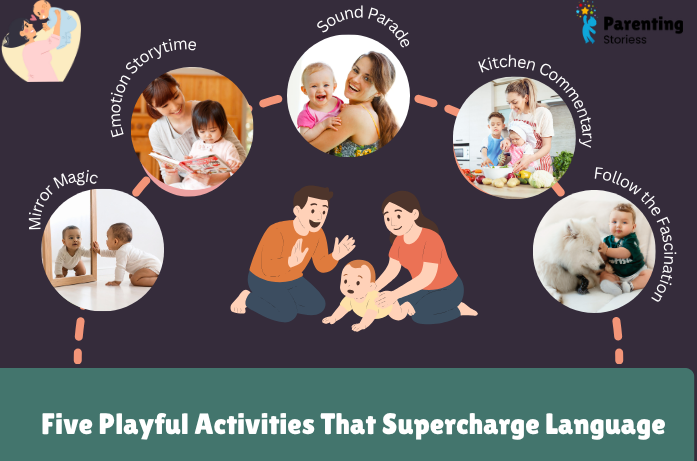
Fun Play Ideas to Supercharge Speech
- Mirror Magic: Make silly faces and fun sounds together in front of a mirror to grab your baby’s attention. This playful activity helps them notice mouth movements, expressions, and sounds, key elements of early speech. It also strengthens social interaction, emotional bonding, and confidence in communicating naturally.
- Emotion Storytime: Read stories using expressive tones, happy, sleepy, or surprised, to make storytelling exciting and meaningful. Changing your voice and expressions helps babies understand emotions and tone variations. This activity builds listening skills, emotional awareness, and language comprehension while making storytime a fun bonding experience for both of you.
- Sound Parade: Make fun animal and vehicle sounds, moo, meow, beep! to spark your child’s curiosity and listening skills. Mimicking sounds helps babies connect words with real-world meanings and improves speech clarity. This playful activity also boosts memory, attention, and early vocabulary development in a joyful, natural way.
- Snack Talk: Describe snacks with fun, simple words, Crunchy apple!, Sweet banana!,to build your child’s vocabulary through everyday moments. Talking about taste, texture, and color turns snack time into a learning experience. It enhances language comprehension, sensory awareness, and helps children connect words with real-life experiences.
- Follow Their Fascination Talk about what excites your child, pets, cars, music, or colors. Engaging with their interests keeps them curious and encourages natural language use. When you name what they see and love, it builds vocabulary, strengthens focus, and creates joyful learning moments that boost communication skills.
Building a Language-Rich Home
You don’t need extra time or fancy tools, just your words, attention, and love. Keep the TV off, face your baby, and talk throughout daily routines like meals, play, and bedtime. Offer simple choices (Cup or straw?) and give them time to respond. Reading books, singing rhymes, and naming objects around you make learning natural. Each word, smile, and laugh helps your baby feel connected, confident, and eager to communicate.
FAQs for Parents
Q: My child isn’t speaking yet. Should I be worried?
A slight delay is often normal, but if there are no words by 18 months, check with your pediatrician.
Q: Does screen time help babies talk faster?
No. Real human interaction is key. Babies learn from faces, voices, and touch, not screens.
Q: Is it okay to speak two languages at home?
Yes! Bilingual homes enrich cognitive growth and don’t delay speech.
Q: Should I correct pronunciation mistakes?
Don’t scold. Just repeat the correct word naturally: Yes, that’s a ball!
Q: Are gestures normal before speech?
Absolutely. Gestures are an early step toward speaking.
Final Thoughts: Love Is the Language That Teaches All Others
Helping your baby talk faster isn’t about chasing milestones, it’s about creating connection. Your voice, your eyes, your laughter, these are the tools that shape your baby’s mind and heart.
Every story you read, every song you sing, every silly sound you share builds the brain’s language pathways. Celebrate the babble, the brave attempts, and the first real words.
At Parenting Stories, we believe language begins with love, and grows through everyday moments filled with warmth, play, and patience.
Disclaimer:
This article is for informational and educational purposes only. It is not a substitute for medical or developmental advice. If you have concerns about your child’s speech, hearing, or communication skills, consult your pediatrician or a certified speech-language pathologist (SLP).