

A gentle and consistent bedtime routine truly makes a big difference for babies and toddlers. When the same calm steps are followed every night, children feel safe, relaxed, and emotionally secure. This sense of familiarity helps them understand that the day is coming to an end and it’s time to rest.
Over time, their body and mind naturally respond to these signals, making it easier for them to fall asleep and enjoy deeper, more peaceful sleep. The best bedtime routine for babies and toddlers is one that is loving, predictable, and suited to their age, supporting healthy emotional well-being and brain development. Below is a simple, effective, and age-appropriate guide to help you create a soothing bedtime routine for babies and toddlers, filled with comfort, patience, and care.
Why the Best Bedtime Routine for Babies and Toddlers Matters
Every parent knows those late-night struggles, rocking, singing, and whispering just sleep, please.
If your baby or toddler fights bedtime, you’re not alone. Almost every parent goes through this phase of bedtime resistance. But here’s the truth, the secret isn’t magic or luck; it’s routine.
The best bedtime routine for babies and toddlers teaches your child’s body and brain that it’s time to relax, unwind, and drift into sleep. It’s less about the perfect schedule and more about creating a calm, predictable daily rhythm every night, something your baby can rely on.
According to the American Academy of Pediatrics (AAP), children with a set bedtime routine not only fall asleep faster and stay asleep longer, but they also show better emotional regulation, language development, and cognitive growth over time.
Why it works:
• Predictability = comfort: Babies feel safe when they know what’s coming next, like bath, pajamas, book, and lullaby.
• Consistency builds habits: Repeating the same steps each night helps their body recognize it’s sleep time, making bedtime battles easier.
• Bonding time: Gentle cuddles, stories, and songs create a strong emotional connection and make bedtime something your child looks forward to.
• Better sleep for everyone: A well-rested baby means calmer parents and more peaceful nights for the whole family.
Pro tip: Try starting your bedtime routine 20–30 minutes before the actual bedtime. Dim the lights, reduce stimulation (like screens or loud toys), and move into quiet activities. Over time, your baby’s internal clock will naturally align with this rhythm, leading to longer, deeper sleep.
When to Start a Bedtime Routine
You can start building gentle sleep habits from as early as 6 to 8 weeks. At this stage, your baby begins to recognize daily patterns, light, sound, and timing, and learns what signals bedtime. Establishing a calming bedtime routine early helps regulate your baby’s circadian rhythm and encourages healthy sleep associations. For toddlers, routines become even more important as they reduce nighttime resistance, ease separation anxiety, and promote independent sleep and emotional security over time.
Parent Tip: Even a short, 15–30 minute bedtime routine done consistently can make a huge difference!
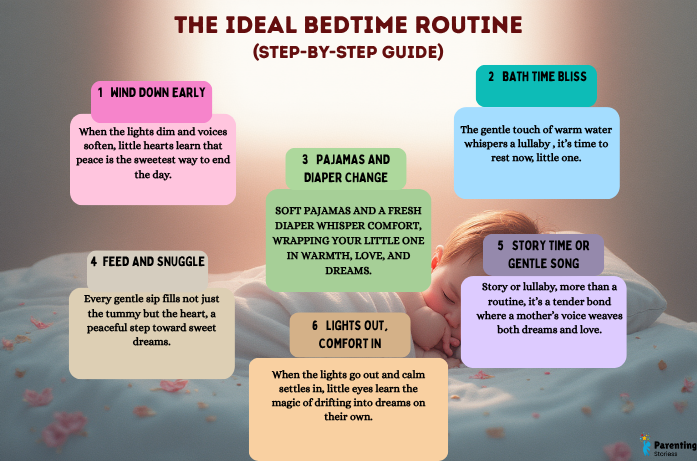
The Ideal Bedtime Routine (Step-by-Step Guide)
Here’s a flexible, loving bedtime flow that works beautifully as part of the best bedtime routine for babies and toddlers.
1 Wind Down Early
Start slowing things down 30–45 minutes before bedtime to help your child’s body produce melatonin, the natural sleep hormone that prepares them for a calm, restful night.
- Dim the lights to signal the end of the day.
- Avoid TV, loud music, or screen time (these can overstimulate your child’s brain).
- Switch to soft voices and gentle play, puzzles, books, or cuddles.
Tip: Create a calm zone in your home, dim lights, no noise, soft textures, and cozy vibes.
2 Bath Time Bliss
A warm bath is soothing and helps lower your baby’s body temperature slightly, a signal that it’s time for sleep. It also relaxes muscles, reduces stress, and prepares your baby’s mind for restful sleep.
- Use lukewarm water and gentle baby soap.
- Keep the mood calm; avoid splashy play right before bed.
- After the bath, pat dry and move into a cozy sleep space.
Optional: Follow up with a gentle baby massage using mild lotion or baby oil. This relaxes muscles, reduces fussiness, and enhances bonding.
3 Pajamas and Diaper Change
Choose soft, breathable pajamas and make sure your baby’s diaper is clean and snug.
For toddlers, involve them in choosing pajamas, it gives them a sense of independence and excitement about bedtime.
4 Feed and Snuggle
Whether you’re breastfeeding, bottle-feeding, or offering a bedtime snack (for toddlers), keep it calm and cozy.
Avoid heavy meals right before bed, but a small feed or snack can prevent midnight hunger.
Pro Tip: Try to finish feeding before your baby falls fully asleep, this helps them learn to drift off independently.
5 Story time or Gentle Song
Reading and singing are more than just traditions, they’re powerful bonding and learning moments.
- Read simple, soothing bedtime stories or board books.
- Use a soft, rhythmic voice.
- Sing lullabies or hum softly; your voice is your child’s favorite sound.
Storytime also boosts language development and builds a love for reading from an early age.
6 Lights Out, Comfort In
Once your baby is drowsy but awake, place them in their crib or bed.
This teaches them to fall asleep independently, a skill that prevents night wakings.
Keep the room:
- Dimly lit or dark
- Quiet, with white noise or soft lullabies if needed
- Comfortable, not too hot or cold
Bedtime Routine for Toddlers (Ages 1–3)
As toddlers grow, bedtime can become more of a negotiation (One more story!). That’s okay, consistency is your best friend here. Setting clear bedtime boundaries, using calming routines, and maintaining a predictable schedule support emotional security and healthy sleep habits.
A good toddler bedtime routine might look like this:
- Bath time
- Pajamas and brushing teeth
- Story or quiet talk about the day
- Cuddles and a lullaby
- Lights out
Tip: Give your toddler a bedtime job, like choosing a book or turning off the light. It helps them feel in control while staying on track.
Bonus Tips for Peaceful Sleep
Creating healthy sleep habits starts with consistency and the right environment.
- Set a consistent bedtime: Babies and toddlers thrive on rhythm. A predictable bedtime within a 15–30 minute window each night helps regulate their circadian rhythm and improves overall sleep quality.
- Keep naps age-appropriate: Make sure your child gets the right balance of daytime rest, too much can lead to bedtime resistance, while too little causes overtiredness and crankiness.
- Avoid overstimulation: Bright lights, noisy toys, or screens before bed can interfere with melatonin production, making it harder for babies to relax and fall asleep.
- Create a sleep-friendly environment: Use blackout curtains, soft night lighting, and white noise to block distractions and mimic a calm nighttime atmosphere.
- Stay calm and patient: Bedtime struggles are part of the process. A calm, loving attitude paired with consistency teaches your child that bedtime is safe, predictable, and peaceful.
Common Sleep Challenges and Gentle Solutions
Every baby and toddler experiences sleep challenges, and that’s completely normal. The key is to respond with patience and gentle consistency rather than quick fixes.
- Baby won’t sleep unless held? Try putting them down drowsy but awake each night. This helps your baby develop self-soothing skills and gradually increases independence. Consistent sleep cues, like a bedtime song or white noise, can make the transition easier.
- Toddler stalling at bedtime? Offer simple choices Which pajamas? or One story or two?) to give them a sense of control. Set firm yet loving boundaries, toddlers test limits to feel secure, not defiant.
- Early waking? Ensure your child’s room is dark, naps are age-appropriate, and bedtime isn’t too early. Sometimes, pushing bedtime 15–30 minutes later helps reset their circadian rhythm.
Remember, every child’s sleep pattern is unique, celebrate small improvements and stay consistent.
FAQs About Baby & Toddler Bedtime Routines
1. What age should I start a bedtime routine?
You can start as early as 6–8 weeks. Even a short, calming pattern (like feed–cuddle–lights out) helps babies learn that nighttime means rest.
2. My baby cries when I put them down. Should I pick them up?
If your baby’s cry is soft or short, pause before picking them up, they might be settling themselves. But always comfort them if they seem distressed. Gentle consistency is key.
3. Do I need to follow the same routine on weekends?
As much as possible, yes. Babies thrive on predictability, and keeping a similar rhythm helps prevent sleep disruptions.
4. What if my toddler keeps asking for one more thing?
Acknowledge the request, but set loving limits. Say, One more story, then lights out, and follow through calmly. This builds trust and structure.
5. Is white noise helpful for sleep?
Yes, soft, steady sounds (like rainfall or gentle humming) can mask background noise and create a calming sleep environment.
Final Thoughts
The best bedtime routine for babies and toddlers isn’t just about sleep, it’s about connection. Those quiet, cozy moments at the end of the day are where trust and love deepen.
When your baby feels safe and relaxed, they sleep better, and so do you.
Remember: it’s not about a flawless schedule. It’s about creating peaceful, loving rhythms that work for your family.
Parenting isn’t about perfection, it’s about presence, patience, and love.
At Parenting Stories, we share gentle, real-life parenting tips, expert-backed guidance, and heartwarming stories that make this journey a little easier and a lot more joyful.
Disclaimer
This article is for informational purposes only. Always consult your pediatrician for guidance on sleep, feeding, or bedtime routines specific to your child’s needs.