
Every parent wants to do what’s best for their baby, and vaccinations are an important part of that care. From the first hours after birth through the early years, vaccines help protect your child from serious illnesses and support a strong, healthy immune system. For many new parents, the baby vaccination schedule can feel confusing at first, with different vaccines given at different ages and plenty of questions along the way.
When explained simply, it becomes a helpful roadmap that shows how your baby is protected at each stage of growth. Staying on track with vaccinations not only keeps your child safe, but also gives you peace of mind, knowing you’re taking the right steps to protect their health.
Why Vaccinations Matter So Much
A baby’s immune system is still developing in the early months of life and needs guidance to recognize and fight harmful germs. Vaccines play a vital role in this process, they act as a safe and controlled training session for the immune system, helping it learn how to defend the body without causing the disease itself.
By introducing harmless components or weakened forms of pathogens, vaccines teach the body to recognize and respond swiftly if exposed in the future. This builds long-term, reliable immunity similar to natural infection, but without the risks and complications that come with getting sick.
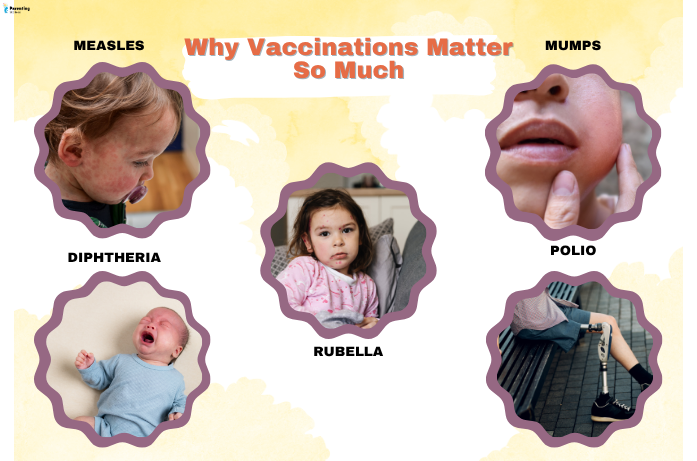
Vaccination protects your child from serious and potentially life-threatening diseases such as measles, mumps, rubella, diphtheria, and polio. It also strengthens herd immunity, safeguarding even those who cannot be vaccinated due to medical conditions.
In essence, vaccines are your child’s first shield, a small step today that ensures a stronger, healthier, and safer tomorrow.
According to the World Health Organization (WHO), timely vaccinations are one of the most effective ways to prevent serious childhood diseases.
Parenting Reminder:
Vaccines don’t just protect your baby; they protect everyone around them, grandparents, siblings, and other children, especially those too young or too fragile to get vaccinated yet.
Following the recommended baby vaccination schedule helps your child build protection at the right time, when their immune system needs it the most.
Baby Vaccination Schedule: Birth to 18 Months
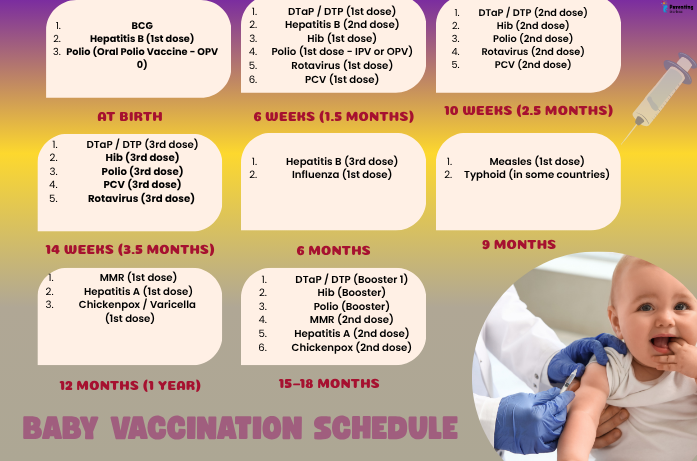
Below is the standard schedule recommended by health authorities like the CDC, and WHO. Your pediatrician might adjust the timeline slightly based on your baby’s needs or local health guidelines. Following the recommended baby vaccination schedule ensures timely protection against life-threatening diseases like hepatitis B, polio, measles, and influenza. Staying updated with each dose not only safeguards your baby’s health but also strengthens community immunity. Always keep a vaccination record card and consult your pediatrician if a dose is missed or delayed.
At Birth
- BCG: Protects against tuberculosis.
- Hepatitis B (1st dose): Prevents serious liver infections.
- Polio (Oral Polio Vaccine – OPV 0): First step in protecting against polio.
6 Weeks (1.5 Months)
- DTaP / DTP (1st dose): Protection against diphtheria, tetanus, and whooping cough.
- Hepatitis B (2nd dose): Reinforces immunity from the first shot.
- Hib (1st dose): Prevents meningitis and other infections.
- Polio (1st dose – IPV or OPV): Polio prevention continues.
- Rotavirus (1st dose): Protects against severe diarrhea and dehydration.
- PCV (1st dose): Helps prevent pneumonia, meningitis, and ear infections.
10 Weeks (2.5 Months)
- DTaP / DTP (2nd dose)
- Hib (2nd dose)
- Polio (2nd dose)
- Rotavirus (2nd dose)
- PCV (2nd dose)
14 Weeks (3.5 Months)
- DTaP / DTP (3rd dose)
- Hib (3rd dose)
- Polio (3rd dose)
- PCV (3rd dose)
- Rotavirus (3rd dose) (depending on vaccine brand, some require only two doses)
6 Months
- Hepatitis B (3rd dose)
- Influenza (1st dose): Start annual flu vaccination once your baby is 6 months old.
9 Months
- Measles (1st dose): Sometimes given as part of MMR (Measles, Mumps, Rubella).
- Typhoid (in some countries): Ask your pediatrician if it’s recommended.
12 Months (1 Year)
- MMR (1st dose): Protects against measles, mumps, and rubella.
- Hepatitis A (1st dose): Prevents liver infections caused by hepatitis A virus.
- Chickenpox / Varicella (1st dose): Protects against chickenpox.
15–18 Months
- DTaP / DTP (Booster 1): Strengthens earlier protection.
- Hib (Booster): Extends immunity.
- Polio (Booster): Reinforces protection.
- MMR (2nd dose): Ensures lifelong immunity.
- Hepatitis A (2nd dose): Given at least 6 months after the first.
- Chickenpox (2nd dose): Boosts long-term defense.
What to Expect after Each Vaccination
It’s normal to feel a little anxious about side effects, but most are mild and short-lived. Mild fever, soreness, or slight swelling are common signs that your baby’s immune system is responding. These effects usually fade within a day or two and are completely normal.
Common and Mild Reactions (Normal & Temporary)
These usually appear within 24–48 hours and go away on their own:
- Mild fever (below 101°F / 38.5°C)
- Soreness, redness, or slight swelling at the injection site
- Fussiness or irritability
- Sleepiness or tiredness
- Mild loss of appetite
- A small lump under the skin where the shot was given (can last a few days to weeks)
These are signs that the baby’s immune system is responding, it’s actually a good thing and means the vaccine is working.
Less Common Reactions (Still Usually Not Serious)
- Moderate fever (up to 102–103°F / 39.5°C)
- Rash (after vaccines like MMR or varicella, appearing 7–10 days later)
- Mild joint pain or temporary stiffness
- Vomiting or mild diarrhea (can occur after oral vaccines like rotavirus)
These reactions are not dangerous but should be monitored closely.
Understanding these normal reactions can make it easier to follow the baby vaccination schedule with confidence and less anxiety.
When to Call Your Doctor Immediately
Seek medical advice right away if you notice:
- High fever (above 104°F / 40°C)
- Persistent crying for more than 3 hours
- Severe swelling or redness spreading beyond the injection area
- Breathing difficulties, wheezing, or facial swelling (possible allergic reaction, rare)
- Seizures (fits) or unresponsiveness
Expert Tip
Applying a cool compress on the injection spot, ensuring adequate hydration, and giving extra cuddles and rest usually help your baby feel better quickly.
Staying on Track: Parent’s Guide to Vaccine Success
Staying organised and informed makes it much easier to follow the baby vaccination schedule without missing important doses.
- Keep a Record:
Carry your baby’s vaccination card to every visit, it’s your most important health document. - Set Reminders:
Mark vaccine dates in your calendar or phone to avoid missing doses. - Don’t Delay:
Postponing shots can leave your baby unprotected when they need it most. - Ask Questions:
Your pediatrician is your partner, no question is too small. - Stay Calm:
Babies sense your emotions. Speak softly and stay positive during appointments.
Combination Vaccines: Fewer Shots, Same Protection
If the thought of multiple injections makes you nervous (we get it!), combination vaccines can help. These combine protection from multiple diseases into a single shot, like a 6-in-1 vaccine that covers Diphtheria, Tetanus, Pertussis, Polio, Hepatitis B, and Hib. Combination vaccines reduce pain, save time, and ensure your baby stays up-to-date with the recommended immunization schedule. They’re widely approved by pediatric experts and the World Health Organization for safety and effectiveness.
Bonus: They’re completely safe, effective, and reduce both pain and clinic visits, a win for everyone.
FAQs About Baby Vaccinations
Q1. What happens if my baby misses a vaccine dose?
Don’t worry, your pediatrician can adjust the schedule. A delayed vaccine doesn’t mean starting over; your baby can simply continue from where they left off.
Q2. Can I give my baby pain relief after vaccination?
Yes, but only as advised by your pediatrician. Avoid giving medicine before the shot, unless recommended.
Q3. Are vaccines 100% safe?
All vaccines undergo rigorous testing for safety and effectiveness. Mild side effects like fever or soreness are normal, serious reactions are extremely rare.
Q4. Can my baby get vaccinated if they have a cold or mild fever?
Usually yes, but always check with your doctor first. If your baby has a high fever or is very unwell, the vaccination may be postponed briefly.
Q5. Why are combination vaccines recommended?
They protect against multiple diseases with fewer shots, reducing pain, visits, and missed doses, while being just as safe and effective as single vaccines.
Q6. How do I manage my baby’s comfort during vaccinations?
Stay calm, hold your baby close, talk softly, and breastfeed afterward. Babies respond best to gentle touch and your reassuring voice.
Final Thoughts: Each Shot Is a Promise of Protection
Watching your baby get vaccinated can tug at your heart, those tiny cries are hard to hear. But remember this: every shot is an act of love and protection.
You’re giving your baby the best possible start in life, one that’s free from preventable diseases and filled with the freedom to explore the world safely.
Vaccines are one of parenting’s greatest gifts: a moment of courage today for a lifetime of health tomorrow.
Staying informed is one of the best ways to care for your baby’s health.
Explore more heart-led guides on baby care, milestones, and parenting at Parenting Stories, where every choice comes from love.
Disclaimer
This article is for educational purposes only and should not replace medical advice. Vaccination schedules can vary depending on your baby’s health and country. Always consult your pediatrician for personalized recommendations.