
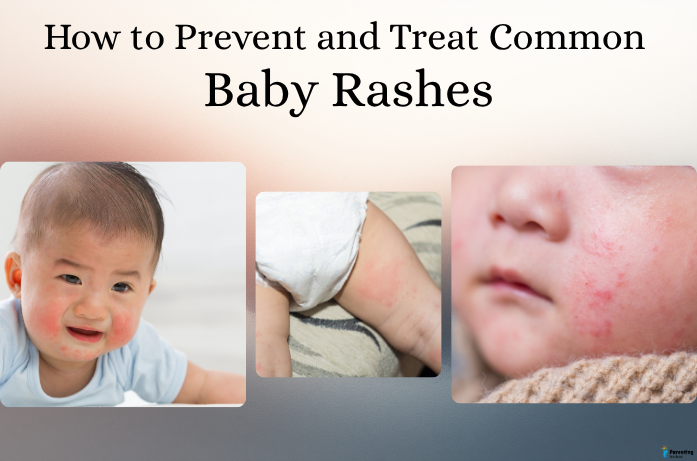
Baby rashes are extremely common during the first year of life, as a baby’s delicate skin adjusts to moisture, heat, friction, and new products. With gentle care and early treatment, most baby rashes can be prevented and healed quickly.
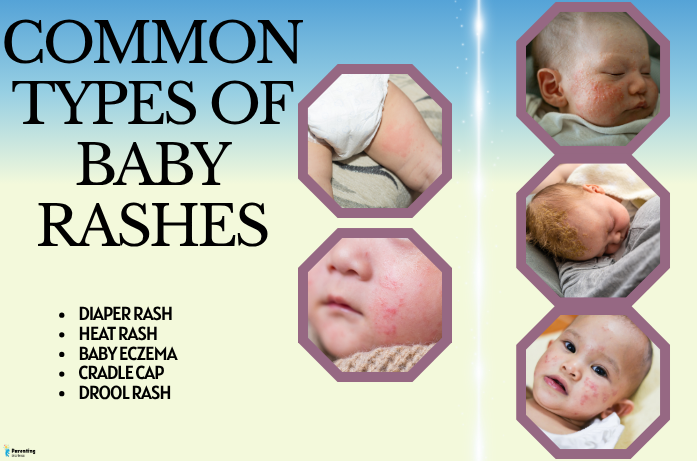
1. Common Types of Baby Rashes
Every parent will come across a few skin surprises during the first year. Here are the most common types of baby rashes:
- Diaper Rash: Red or sore patches around the diaper area, often caused by moisture, friction, or prolonged contact with urine and stool. It’s one of the most common baby skin problems, especially in warm or humid weather. Changing diapers frequently, keeping the area dry, and using a gentle diaper cream with zinc oxide can help soothe irritation and prevent further rashes.
- Heat Rash: Tiny red or pink bumps that appear on the chest, neck, back, or skin folds, usually when your baby becomes overheated or sweats excessively. It’s common in hot, humid weather or when babies are overdressed. Keeping your baby cool, using lightweight cotton clothes, and ensuring proper airflow can help prevent and soothe heat rash effectively.
- Baby Eczema: Dry, rough, or itchy patches that often appear on a baby’s cheeks, arms, or legs. This common skin condition can flare up due to dryness, allergens, or irritants like harsh soaps or detergents. Using fragrance-free moisturizers, gentle cleansers, and keeping your baby’s skin hydrated can help soothe itching and prevent flare-ups.
- Cradle Cap: Yellowish, greasy, or scaly flakes that form on a baby’s scalp, commonly during the first few months. It’s harmless and not itchy but can look concerning. Regular gentle washing with a mild baby shampoo and lightly massaging the scalp with natural oils like coconut or olive oil helps loosen the flakes and keep the scalp clean and healthy.
- Drool Rash: Redness, irritation, or chapping that appears around your baby’s mouth, chin, and neck due to constant drooling and moisture. It’s especially common during teething. To prevent it, gently wipe drool often, keep the area dry, and apply a thin layer of baby-safe barrier cream to protect delicate skin from further irritation.
According to the American Academy of Pediatrics (AAP), most mild baby rashes clear up within a few days with simple at-home care.
2. Why Baby Skin Is More Prone to Rashes
A newborn’s skin is much thinner, softer, and more permeable than an adult’s, making it prone to dryness, irritation, and allergies. Because its protective barrier isn’t fully developed, it easily reacts to environmental changes, harsh products, and even minor friction or moisture.
Common baby rash causes include:
- Wet diapers and trapped moisture
- Harsh fabrics or detergents
- Overheating or sweat
- Scented soaps or lotions
That’s why baby skin care should always focus on being gentle, clean, and breathable.
3. How to Prevent Baby Rashes Naturally
Preventing rashes starts with simple, everyday habits:
- Keep the skin clean and dry: Change diapers frequently to prevent moisture buildup and gently pat not rub the area dry. Moisture can trap bacteria, leading to diaper rashes, so ensure proper air circulation and hygiene.
- Use mild, fragrance-free products: Always choose pH-balanced, hypoallergenic baby cleansers and detergents that are free from alcohol, dyes, and harsh chemicals to protect your baby’s delicate skin from irritation and dryness.
- Dress comfortably: Use soft, breathable cotton clothes and avoid overdressing. Tight or synthetic fabrics can trap heat and sweat, causing irritation or baby rashes, especially in warm weather.
- Let the skin breathe: Give your baby a few minutes of diaper-free time daily. This helps reduce moisture, prevents irritation, and keeps the skin healthy and rash-free naturally.
- Maintain a cool environment: Avoid using too many blankets or thick layers, especially during naps. Overheating can cause sweating and increase the risk of heat rashes or skin irritation.
The Centers for Disease Control and Prevention (CDC) recommends maintaining good hygiene and choosing baby products that are dermatologist-tested to reduce irritation.
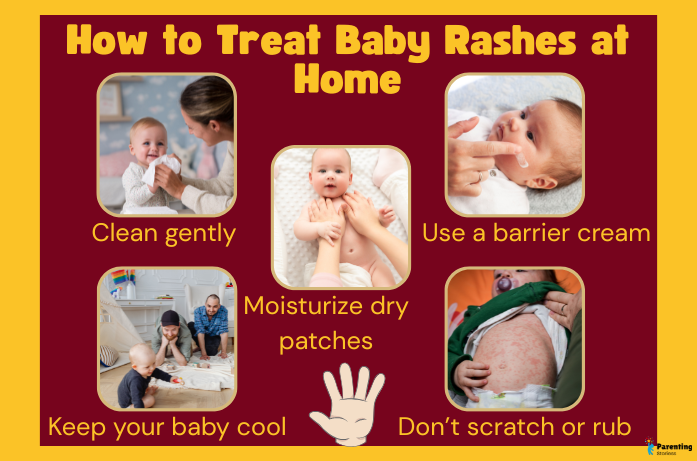
4. How to Treat Baby Rashes at Home
Most rashes can be treated gently at home with consistent care:
- Clean gently: Use lukewarm water and a soft cloth; avoid wipes with alcohol or perfume. This cleans the skin without drying it and helps reduce irritation or sensitivity.
- Use a barrier cream: Apply zinc oxide or petroleum jelly to protect your baby’s skin from moisture. Regular use prevents diaper rash, soothes irritation, and promotes faster healing naturally.
- Moisturize dry patches: Apply a fragrance-free moisturizer twice a day to soothe and hydrate your baby’s skin. Regular moisturizing helps prevent cracking, irritation, and reduces the risk of rashes.
- Keep your baby cool: For heat rash, dress your baby in light, breathable clothing and ensure proper airflow in the room. Avoid overheating to prevent sweating and further skin irritation.
- Don’t scratch or rub: Avoid rubbing or scratching the rash. Use soft mittens if needed to protect delicate skin, prevent infection, and allow faster healing of irritated areas.
If the rash worsens, spreads quickly, or comes with a fever, consult your pediatrician for guidance.
5. When to See a Doctor for Baby Rashes
While most common baby rashes are mild and resolve on their own, call your doctor if symptoms persist, worsen, or show signs of infection, to ensure proper care and prevent complications.
- The rash doesn’t improve within a few days
- Your baby has blisters, pus, or open sores
- The rash is accompanied by fever or swelling
- Your baby seems unusually fussy or uncomfortable
The Mayo Clinic notes that persistent or infected rashes may need prescription creams or medical evaluation.
FAQs: Common Questions About Baby Rashes
Q1. Are baby rashes always serious?
No. Most baby rashes are temporary and harmless. Simple home care usually resolves them.
Q2. How long do baby rashes usually last?
Most mild rashes clear up within a few days with gentle care. Some, like eczema, may last longer and need ongoing moisturizing.
Q3. Can baby rashes be contagious?
Most common rashes like diaper rash, heat rash, or cradle cap are not contagious. Only certain viral or bacterial rashes can spread, so consult a doctor if unsure.
Q4. Are baby rash creams safe for everyday use?
Yes, mild barrier creams and fragrance-free moisturizers are safe for daily use, but always check labels and avoid harsh chemicals.
Q5. Can environmental factors worsen baby rashes?
Yes. Hot, humid weather, excessive sweating, rough fabrics, or harsh soaps can irritate your baby’s skin and trigger rashes.
Q6. Can rubbing or scratching a rash make it worse?
Yes. Rubbing or scratching can irritate the skin further and increase the risk of infection. Use soft mittens if your baby scratches a lot.
Q7. How can I tell the difference between a mild rash and something serious?
Mild rashes are usually localized, do not cause fever, and the baby is otherwise healthy. Seek medical advice if the rash spreads rapidly, has blisters or pus, or comes with fever.
Final Thoughts: Caring for Baby Rashes with Love and Patience
Baby rashes are a normal part of early parenthood, but with awareness, gentle care, and patience, they’re easy to manage. Remember, your baby’s skin reflects how gently it’s cared for: keep it clean, dry, and protected.
At Parenting Stories, we believe that caring for your baby’s skin isn’t just about preventing rashes, it’s about building comfort, confidence, and closeness through every gentle touch.
Disclaimer
This article is for informational purposes only. It should not replace professional medical advice. Always consult your pediatrician if you’re unsure about your baby’s rash or treatment.