Written with care by a loving mom at Parenting Stories
Parents who notice unusual events while their infants sleep will check their babies more frequently as a result. One moment they look peaceful, and the next you gently touch their head and realize it’s slightly damp with sweat. Many parents quietly worry about baby sweating in sleep, especially when it seems to happen often. If you are ever wondered whether this is normal, you’re not alone.
I remember touching my baby’s head during the night and feeling surprised at how warm and sweaty it was. My mind started to think about various questions. Is the room too warm? Is my baby uncomfortable? Should I be worried? The good news is that in most cases, baby sweating during sleep is completely normal.
Why Does Baby Sweating in Sleep Happen?
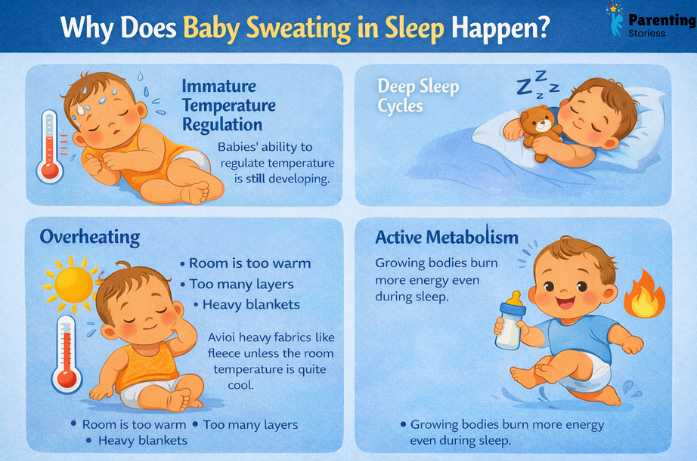
Babies are still developing many of the systems that help adults stay comfortable. Their temperature regulation system is not fully mature, which means their bodies sometimes react differently to warmth.
Here are some of the most common reasons babies sweat during sleep. You can learn more about how night sweating works in the body from this helpful guide by the Sleep Foundation.
1. Immature Temperature Regulation
Newborns and young babies are still learning how to balance body temperature. Their sweat glands exist, but their ability to regulate heat is still developing.
Because of this, even small changes in room temperature or clothing can cause sweating.
2. Deep Sleep Cycles
Babies often sweat during the deeper stages of sleep. During this time, their nervous system relaxes and their bodies release excess heat.
This is one of the most common reasons parents notice baby head sweating while sleeping.
3. Overheating
Sometimes the cause is simply too much warmth. Babies can easily overheat if:
- The room temperature is too high
- They are wearing too many layers
- Heavy blankets are used
- Thick sleepwear traps body heat
A baby’s small body warms quickly, and sweating is the body’s way of cooling down.
4. Active Metabolism
Babies burn energy quickly because their bodies are growing rapidly. Their metabolism is surprisingly active, even during sleep.
This can cause them to produce more heat, which sometimes leads to sweating.
Why Does My Baby Sweat So Much From the Head?
One of the most common questions parents ask is, “why does my baby sweat so much from the head?”
You may notice that your baby’s hair or pillow feels damp after sleep, even when the rest of their body feels dry.
There are a few simple reasons for this.
Babies Have More Sweat Glands on Their Heads
A large number of sweat glands are concentrated around the scalp and forehead. Because of this, babies often release heat from the head first.
The Head Holds More Heat
A baby’s head is proportionally larger than the rest of their body. This means it retains more heat, especially when lying down during sleep.
Limited Movement During Sleep
When babies sleep, they stay in one position for long periods. This can trap warmth around the head and cause sweating.
In most cases, baby head sweating while sleeping is completely normal and not a sign of any health problem.
When Do Babies Start to Sweat?
Many new parents are surprised to learn that newborns don’t sweat very much during their first few weeks of life.
So when do babies start to sweat?
Sweat glands are present at birth, but they don’t fully function right away. Most babies begin sweating more noticeably between 2 and 4 months of age as their bodies develop better temperature control.
As their nervous system matures, sweating becomes a normal part of regulating body temperature.
That’s why parents often start noticing baby sweating in sleep around this stage.
Signs Your Baby Might Be Too Warm
While sweating itself is usually harmless, it can sometimes signal that your baby is too warm.
Look for these signs:
- Damp hair or pillow after sleep
- Flushed cheeks
- Warm chest or back
- Restless sleep
- Slightly rapid breathing
If you notice these signs often, adjusting the sleep environment may help.
Practical Tips to Reduce Baby Sweating During Sleep
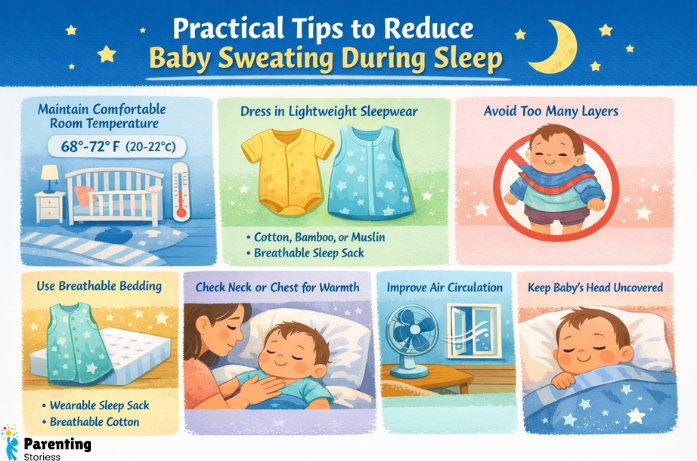
As parents, we always want our babies to sleep comfortably and peacefully. If you notice baby sweating in sleep, making a few simple changes to your baby’s sleep environment can often help. Babies are very sensitive to temperature, and even small adjustments in clothing or room conditions can make a big difference.
Below are some practical tips that many parents and pediatric experts recommend to help keep babies cool and comfortable during sleep.
1. Maintain a Comfortable Room Temperature
Keeping the nursery at a comfortable temperature can help prevent overheating. Most experts suggest maintaining the room between 68°F and 72°F (20–22°C) so your baby stays cozy without becoming too warm during sleep.
2. Dress Your Baby in Lightweight Sleepwear
Choose soft, breathable fabrics such as cotton, bamboo, or muslin for your baby’s sleepwear, and keep helpful baby summer essentials in mind during warmer nights. These materials allow air circulation and help absorb moisture, which can reduce sweating during sleep.
3. Avoid Too Many Layers
Babies warm up quickly, especially while sleeping, so too many layers can easily cause overheating. A simple rule is to dress your baby in one more layer than you would wear in the same room.
4. Use Breathable Bedding
Instead of heavy blankets, many parents prefer light sleep sacks or wearable blankets that keep babies comfortable without trapping heat. Breathable cotton crib sheets can also help maintain a cooler sleep surface.
5. Check the Back of the Neck or Chest
A baby’s hands and feet can feel cool even when their body temperature is normal. The best way to check if your baby is comfortable is by gently touching the back of the neck or chest to see if they feel too warm.
6. Improve Air Circulation in the Room
Good airflow helps keep the nursery comfortable. Slightly opening a door or window or using a gentle fan can help circulate air and prevent the room from becoming too warm.
7. Keep the Baby’s Head Uncovered
Babies release a lot of body heat through their heads, so covering the head during sleep can trap warmth. Keeping your baby’s head uncovered can help reduce baby head sweating while sleeping and keep them cooler at night.
When Baby Sweating in Sleep May Need Attention
Most of the time, baby sweating in sleep is harmless. However, there are rare situations where it may be worth speaking with your pediatrician.
You may want to consult a doctor if sweating happens along with:
- Difficulty feeding
- Poor weight gain
- Fast breathing
- Extreme tiredness
- Sweating even when the room is cool
In very rare cases, excessive sweating could be linked to heart or metabolic conditions. But it’s important to remember that these situations are uncommon. You can read more about the medical perspective on sweating in this study
When in doubt, a quick pediatrician visit can bring reassurance.
Night Sweats vs Normal Baby Sweating
Parents sometimes confuse normal sweating with night sweats.
Normal Baby Sweating
- Happens mostly on the head
- Occurs during deep sleep
- Stops once the baby wakes up
Night Sweats
- Clothes or sheets become soaked
- Happens repeatedly every night
- Occurs even in a cool room
If your baby experiences true night sweats regularly, it’s a good idea to check with a healthcare professional.
Emotional Reassurance for Parents
Parenthood is filled with moments where we question every small detail about our baby’s health. I remember checking my baby’s head several times each night, wondering if the sweating meant something was wrong.
The truth is, most babies sweat at some point during sleep, especially as they grow and develop. Their little bodies are simply learning how to regulate temperature.
If your baby is feeding well, growing normally, and sleeping comfortably, occasional sweating is usually nothing to worry about.
Sometimes our babies are just warm sleepers, just like some adults are. The CDC also recommends placing babies on their backs to sleep and keeping the sleep area free of loose bedding or items that could increase overheating risks.
Final Thoughts for Concerned Parents
Noticing your baby sweaty during sleep can feel worrying at first, especially when you’re still learning your baby’s little habits and signals. In most cases, baby sweating in sleep is completely normal and simply part of your baby’s growing body learning how to regulate temperature.
By keeping the room comfortable, dressing your baby in breathable clothing, and avoiding overheating, you can help your little one sleep more peacefully. And if something ever feels unusual, trusting your instincts and speaking with your pediatrician can always bring reassurance.
Frequently Asked Questions (FAQs)
1. Is baby sweating in sleep normal?
Yes, in most cases baby sweating in sleep is completely normal. Babies are still developing their ability to regulate body temperature, so sweating especially during deep sleep is common and usually not a cause for concern.
2. Why does my baby sweat so much from the head while sleeping?
Many parents notice baby head sweating while sleeping because babies have a higher concentration of sweat glands on their scalp. Their heads also release more body heat, which can make the hair or pillow feel damp after sleep.
3. When do babies start to sweat?
Babies have sweat glands at birth, but they don’t function fully right away. Most babies start sweating more noticeably between 2 to 4 months of age as their temperature regulation system develops.
4. Should I be worried if my baby sweats during sleep?
Occasional sweating is usually harmless. However, if sweating happens along with symptoms like difficulty feeding, poor weight gain, fast breathing, or extreme tiredness, it’s best to consult your pediatrician for guidance.
5. How can I prevent my baby from sweating during sleep?
You can reduce sweating by keeping the room temperature comfortable, dressing your baby in light breathable fabrics, avoiding too many layers, and ensuring good airflow in the nursery.
At Parenting Stories, we love supporting moms and dads with gentle advice, real experiences, and trusted parenting tips to help you feel more confident every day.
Disclaimer: This article is written for informational purposes only and does not replace professional medical advice. If you have concerns about your baby’s health or unusual sweating, please consult your pediatrician or a qualified healthcare professional.