Written with care by a loving mom at Parenting Stories
If you’re going through pregnancy right now, you already know that morning sickness doesn’t always stay in the morning. It can hit anytime, early morning, afternoon, or even in the middle of the night. And when it does, even the thought of food can feel overwhelming.
I still remember those days when even my favorite meals made me feel queasy. Some days, I could barely manage a few bites. But over time, I discovered that choosing the right foods, especially high protein snacks for morning sickness, made a gentle but real difference.
Protein helps stabilize blood sugar levels, which can reduce nausea and keep your energy more steady throughout the day. It’s not about forcing yourself to eat big meals, it’s about finding small, comforting foods your body can handle.
Let’s walk through this together, like one mom to another.
Why High Protein Snacks for Morning Sickness Really Help
When you’re feeling nauseous, your body is already under stress. Empty stomachs and sudden drops in blood sugar can actually make nausea worse.
This is where high protein snacks for morning sickness can help in a quiet but powerful way.
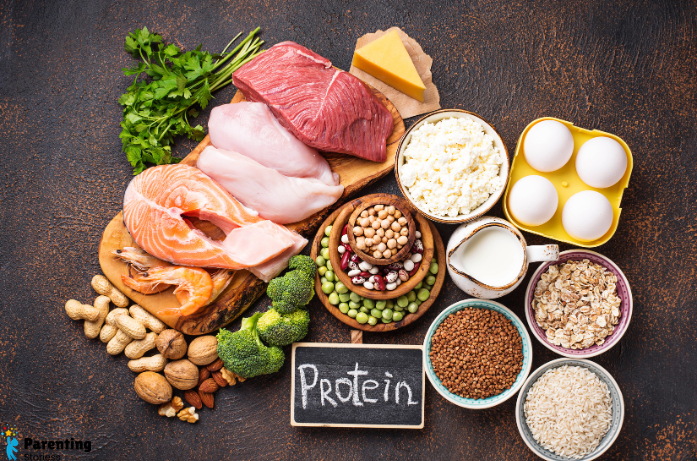
Protein-rich foods digest slowly, which means they keep your stomach feeling fuller for longer. This helps prevent that sudden wave of nausea that often comes when your stomach is empty.
Many doctors also suggest including high protein foods for morning sickness because they provide steady energy without causing spikes and crashes.
Even small bites, taken slowly, can help calm your stomach more than you might expect.
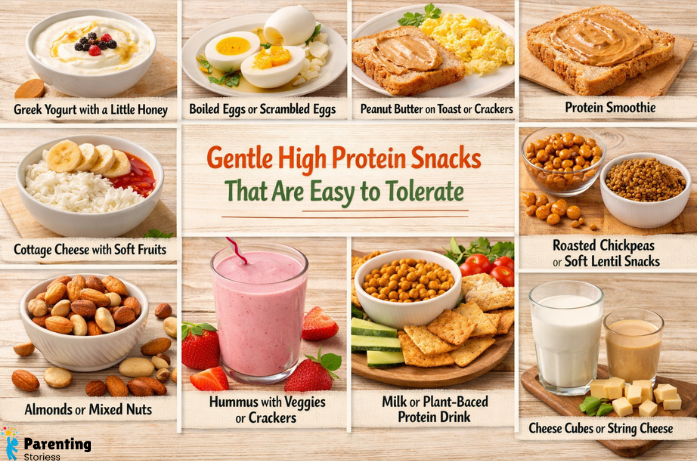
Gentle High Protein Snacks That Are Easy to Tolerate
When you’re dealing with nausea, simple and mild foods are often the easiest to handle. Here are some comforting snack ideas that many moms find helpful.
1. Greek Yogurt with a Little Honey
Greek yogurt is soft, creamy, and packed with protein. It’s also easy on the stomach, especially when served chilled.
You can add a drizzle of honey or a few soft fruits if you can tolerate them. Even a few spoonfuls can help when eating feels difficult.
2. Boiled Eggs or Scrambled Eggs
Eggs are one of the best high protein foods for morning sickness. They are simple, nutritious, and gentle when cooked lightly.
If the smell bothers you, try eating them cold or preparing them earlier in the day when nausea is less intense.
3. Peanut Butter on Toast or Crackers
A thin spread of peanut butter on plain toast or crackers can be surprisingly soothing. It combines protein with a mild carbohydrate, which can help settle the stomach.
Keep it simple, avoid heavy toppings or strong flavors.
4. Cottage Cheese with Soft Fruits
Cottage cheese is another soft and protein-rich option. Pairing it with mild fruits like banana or applesauce can make it more appealing.
It’s light, filling, and easy to eat in small portions.
5. Protein Smoothies (Simple and Light)
If chewing feels like too much, smoothies can be a lifesaver. Blend milk (or a dairy-free option), a banana, and a small scoop of protein-rich yogurt.
Keep the flavors mild and avoid anything too sweet or strong.
6. Roasted Chickpeas or Soft Lentil Snacks
If you prefer something savory, lightly roasted chickpeas or soft lentil preparations can provide protein in a simple way.
Make sure they are not too spicy or heavily seasoned, as strong flavors can sometimes trigger nausea.
7. Cheese Cubes or String Cheese
Small portions of cheese are easy to grab and eat slowly. They are rich in protein and can help keep your stomach settled between meals.
Many moms find cold cheese easier to tolerate than warm foods.
8. Almonds or Mixed Nuts
A small handful of almonds or mixed nuts can be a great quick snack when you don’t feel like eating much. They are rich in protein and healthy fats, which help keep your energy stable and reduce nausea.
If chewing feels difficult, try soaking almonds overnight they become softer and easier on the stomach.
9. Hummus with Soft Veggies or Crackers
Hummus is made from chickpeas and is a gentle, protein-rich option. Pair it with soft cucumber slices or plain crackers for a light and balanced snack.
Its smooth texture and mild flavor make it easier to tolerate during nausea.
10. Milk or Plant-Based Protein Drinks
A glass of milk or a simple plant-based protein drink can be very helpful when solid food feels too heavy. It provides both hydration and protein in an easy-to-consume form.
Sipping slowly instead of drinking quickly can help prevent nausea and keep your stomach calm.
According to Johns Hopkins Medicine, healthy snacks with protein can support both mom and baby during pregnancy
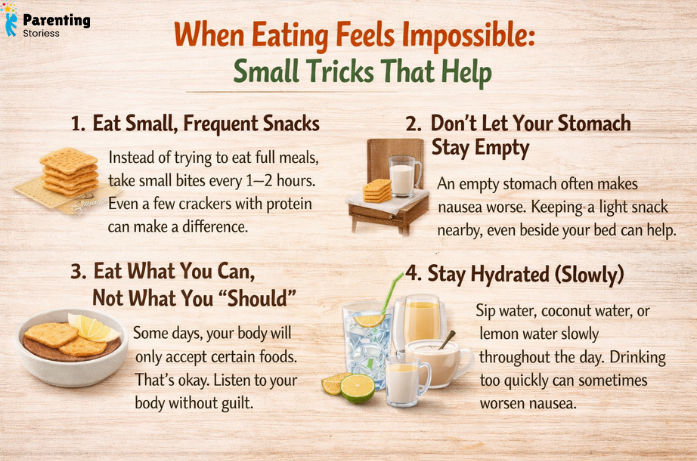
When Eating Feels Impossible: Small Tricks That Help
There will be days when even these snacks feel like too much, and that’s okay. You’re not doing anything wrong.
Here are some gentle tips that helped me during those tougher days: The Cleveland Clinic shares helpful tips on managing morning sickness, including eating light snacks and avoiding an empty stomach
1. Eat Small, Frequent Snacks
Instead of trying to eat full meals, take small bites every 1–2 hours. Even a few crackers with protein can make a difference.
2. Don’t Let Your Stomach Stay Empty
An empty stomach often makes nausea worse. Keeping a light snack nearby, even beside your bed, can help.
3. Eat What You Can, Not What You “Should”
Some days, your body will only accept certain foods. That’s okay. Listen to your body without guilt.
4. Stay Hydrated (Slowly)
Sip water, coconut water, or lemon water slowly throughout the day. Drinking too quickly can sometimes worsen nausea.
Best Times to Eat Protein During the Day
Timing can matter just as much as what you eat.
Early Morning
Try eating a small snack before getting out of bed. Even a few bites of a protein snack can help prevent morning nausea.
Mid-Morning and Afternoon
These are great times to include high protein snacks for morning sickness, as energy levels tend to dip.
Before Bed
A light protein snack before sleeping can help stabilize blood sugar overnight and reduce early morning nausea.
Foods to Avoid If They Trigger Nausea
Every pregnancy is different, but some foods commonly make nausea worse:
- Strong-smelling or spicy foods
- Oily or fried foods
- Very sweet or sugary snacks
- Heavy, rich meals
If something doesn’t feel right, trust your body and gently avoid it.
Emotional Support for Moms Going Through This
Morning sickness can be more than just physical, it can feel emotionally draining too. There were days when I felt frustrated, tired, and even guilty for not eating “properly.”
But here’s something I want you to remember:
You are doing your best, and that is more than enough.
Even small snacks, even a few bites, even slow progress, it all counts. Your body is working incredibly hard to grow your baby.
When to Talk to Your Doctor
While nausea is very common, there are times when it’s important to seek medical advice.
You should talk to your doctor if you experience:
- Severe vomiting multiple times a day
- Inability to keep food or fluids down
- Signs of dehydration
- Weight loss
These could be signs of a more serious condition like hyperemesis gravidarum, which needs medical care.
Final Thoughts for Moms Navigating Morning Sickness
Morning sickness can feel overwhelming, especially when eating becomes a challenge. But finding small, gentle solutions, like high protein snacks for morning sickness, can make your days a little easier.
You don’t need to eat perfectly. You don’t need to have it all figured out. Just take it one snack, one moment, one breath at a time.
Listen to your body, be kind to yourself, and remember, you are not alone in this journey.
You are doing something truly incredible, even on the hardest days.
At Parenting Stories, we’re here to support you with gentle advice, real experiences, and comforting guidance through every step of pregnancy and motherhood.
Disclaimer: This article is for informational purposes only and is not a substitute for professional medical advice. If your morning sickness feels severe or you have concerns about your health, please consult your doctor or a qualified healthcare provider.