
Written with love by a caring mom at Parenting Stories
Bringing a baby into the world changes everything. Your heart grows in ways you never imagined, but so do the emotional challenges that come with sleepless nights, hormonal shifts, physical recovery, and the pressure of caring for a tiny human. While many moms hear about sadness after birth, fewer people openly talk about postpartum rage the sudden anger, irritability, or emotional outbursts that can feel frightening and confusing.
If you have found yourself snapping at your partner, crying after yelling, feeling constantly irritated, or wondering, “Why am I so angry after having a baby?” please know this does not make you a bad mother. It makes you a human mother who may be overwhelmed, exhausted, emotionally overloaded, or struggling silently with postpartum mental health changes.
The good news is that postpartum rage is real, common, treatable, and manageable with support, understanding, and gentle care.
What Is Postpartum Rage?
Postpartum rage is intense anger, irritability, frustration, or emotional outbursts that happen after childbirth. It may appear suddenly and feel difficult to control. Some moms describe it as feeling constantly “on edge,” emotionally reactive, or exploding over very small things.
This anger may be directed toward:
- A partner
- Older children
- Family members
- Household situations
- Noise or overstimulation
- Even themselves
For many women, the rage is followed by guilt, shame, sadness, or emotional exhaustion.
Postpartum rage is not simply “being moody.” It can be deeply connected to physical exhaustion, hormonal changes, emotional stress, anxiety, trauma, or postpartum depression.
According to the Cleveland Clinic, intense anger and irritability after childbirth are more common than many parents realize.
Why Postpartum Rage Happens After Having a Baby
Motherhood changes nearly every part of life at once. Your body, hormones, emotions, sleep, and daily routine all shift together. For many moms, that emotional overload slowly builds until anger becomes the body’s response to stress and exhaustion.
1. Hormonal Changes
After childbirth, hormone levels drop very quickly. These sudden hormonal changes can affect mood, emotions, and stress levels. Many moms feel more sensitive, emotional, or irritable during this time.
2. Severe Sleep Deprivation
Caring for a newborn while recovering physically can leave moms extremely exhausted. Lack of sleep affects emotional patience and can make even small situations feel overwhelming or frustrating.
3. Mental Overload and Constant Responsibility
Many mothers carry nonstop mental pressure every day. Feeding schedules, night waking, household tasks, and constant worry about the baby can become emotionally draining without enough rest or support.
4. Feeling Unsupported or Emotionally Isolated
Some moms silently struggle because they feel alone or emotionally unseen. When mothers feel expected to handle everything by themselves, frustration and resentment can slowly grow over time.
Common Postpartum Rage Symptoms
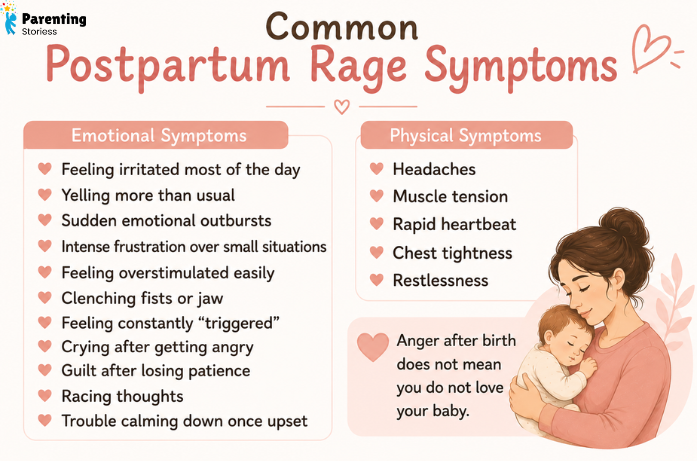
Every mother experiences emotions differently, but some postpartum rage symptoms are very common.
You may notice:
- Feeling irritated most of the day
- Yelling more than usual
- Sudden emotional outbursts
- Intense frustration over small situations
- Feeling overstimulated easily
- Clenching fists or jaw
- Feeling constantly “triggered”
- Crying after getting angry
- Guilt after losing patience
- Racing thoughts
- Trouble calming down once upset
Some moms also feel physical symptoms such as:
- Headaches
- Muscle tension
- Rapid heartbeat
- Chest tightness
- Restlessness
The difficult part is that many women hide these emotions because they fear judgment.
But anger after birth does not mean you do not love your baby.
Postpartum Depression and Rage: Are They Connected?
Yes, they often can be.
Many women experience postpartum depression and rage together, even if they do not initially recognize the depression.
Postpartum depression does not always look like constant sadness. Sometimes it appears as:
- Irritability
- Anger
- Emotional numbness
- Withdrawal
- Feeling hopeless
- Constant frustration
This is one reason postpartum rage should never be ignored. Persistent anger may be a sign that your emotional health needs support.
Some moms also experience postpartum anxiety, which can make them feel constantly tense, overstimulated, and emotionally reactive.
Postpartum rage is not simply “being moody.” It can be connected to exhaustion, hormonal changes, anxiety, trauma, or postpartum depression. Experts from the University of Arizona Health Sciences explain that many mothers experience emotional overwhelm during the postpartum period.
How Long Does Postpartum Rage Last?
For some moms, the anger improves within a few weeks as hormones stabilize and sleep improves. For others, symptoms may continue for months if emotional stress, depression, anxiety, trauma, or lack of support are not addressed.
Postpartum rage may last longer when:
- A mom is severely sleep deprived
- There is little emotional support
- Mental health struggles go untreated
- Stress levels remain extremely high
- Moms feel isolated or overwhelmed daily
The important thing to remember is this: You do not have to wait for things to become unbearable before seeking help.
Support can make recovery gentler and faster.
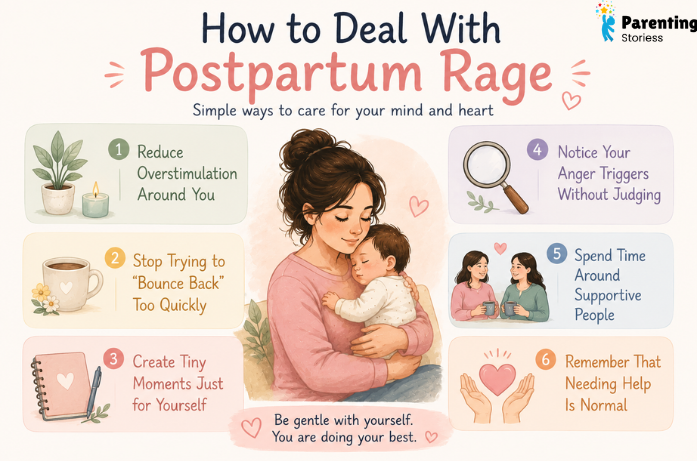
How to Deal With Postpartum Rage in Healthy Ways
Learning how to deal with postpartum rage starts with self-compassion, not guilt. Many moms blame themselves for feeling angry, but healing becomes easier when you understand that your mind and body are under intense emotional and physical pressure after childbirth.
1. Reduce Overstimulation Around You
New motherhood can feel incredibly loud and overwhelming. Constant crying, background noise, bright screens, visitors, and nonstop responsibilities can overstimulate your nervous system without you even realizing it.
Creating small calm moments during the day may help emotionally. Lower the volume around you when possible, spend a few quiet minutes alone, or step outside for fresh air to reset your mind.
2. Stop Trying to “Bounce Back” Too Quickly
Many moms feel pressure to return to normal immediately after birth. Social media and outside expectations can make it seem like you should recover quickly, stay productive, and enjoy every moment.
But postpartum recovery takes time physically and emotionally. Giving yourself permission to slow down can reduce frustration and emotional burnout.
3. Create Tiny Moments Just for Yourself
When caring for a baby all day, moms often lose their sense of identity. Even five or ten minutes of self-care can help you feel emotionally lighter.
Listening to music, drinking coffee while it is still warm, taking a slow shower, journaling, or sitting quietly for a few minutes can help you reconnect with yourself beyond motherhood.
4. Notice Your Anger Triggers Without Judging Yourself
Sometimes postpartum rage builds in patterns. Certain situations may make emotions feel more intense, like sleep deprivation, messy surroundings, criticism, or feeling unsupported.
Instead of feeling guilty afterward, gently notice what tends to trigger your anger. Understanding patterns can help you prepare emotionally and respond more calmly over time.
5. Spend Time Around Supportive People
Isolation can make postpartum emotions feel even heavier. Being around people who make you feel safe, understood, and supported can help reduce emotional pressure.
Even a short conversation with another mom, a supportive friend, or someone who listens without judgment can make a difficult day feel more manageable.
6. Remind Yourself That Needing Help Is Normal
Many moms believe they should handle everything alone, but motherhood was never meant to be carried without support. Asking for help does not make you weak or incapable.
Sometimes emotional healing begins the moment a mother realizes she does not have to do everything perfectly by herself.
Signs You Should Reach Out for Professional Help
Every mom deserves support, especially when emotions begin affecting daily life or relationships.
Please consider speaking with a healthcare provider if:
- Anger feels uncontrollable
- You feel emotionally overwhelmed daily
- Rage causes relationship problems
- You feel hopeless or numb
- You struggle bonding with your baby
- You experience panic attacks
- You have thoughts of harming yourself or others
Seeking help is not weakness.
It is motherhood with support.
Postpartum Rage Therapy Can Truly Help
Many women find healing through postpartum rage therapy, especially when anger feels intense, frequent, or emotionally exhausting. Therapy offers a safe and supportive space to process emotions without shame.
A therapist can help you understand triggers, manage stress, improve coping skills, and work through anxiety, depression, or birth-related trauma. The goal is not to become a “perfect mom,” but to help you feel emotionally supported, calmer, and healthier again.
Ways Partners and Family Can Support a Mom Experiencing Rage
Support systems matter deeply during postpartum recovery.
If you are supporting a new mom:
- Listen without judgment
- Avoid minimizing her feelings
- Help with household tasks
- Encourage rest
- Offer emotional reassurance
- Watch for signs of depression or anxiety
- Encourage professional support if needed
Sometimes moms do not need advice.
Many women experience postpartum depression and rage together. According to the Mayo Clinic, postpartum depression may sometimes appear as anger, irritability, anxiety, or emotional numbness instead of sadness alone.
Gentle Daily Habits That May Help Emotional Healing
Small daily habits can slowly support emotional recovery.
Try:
- Fresh air and sunlight
- Gentle walks
- Calming music
- Journaling emotions
- Limiting overstimulation
- Drinking enough water
- Taking social media breaks
- Practicing slow breathing exercises
These tiny moments of regulation can help calm an overwhelmed nervous system.
Final Thoughts on Postpartum Rage
If you are struggling with postpartum rage, please know this does not make you a bad mom. Motherhood after birth can feel emotionally heavy, exhausting, and overwhelming in ways many people never talk about openly. Sometimes the anger is not really about being angry at all it is your body and mind asking for rest, support, and care.
Be kind to yourself during this season. Ask for help when you need it, take small moments to breathe, and remember that you do not have to handle everything alone. Healing takes time, and even on the hardest days, you are still a loving mother doing your best for your baby.
Explore more gentle motherhood support and real parenting advice at Parenting Stories.
FAQs
1. Is postpartum rage normal?
Yes, many moms experience anger or irritability after childbirth due to hormones, stress, and exhaustion.
2. How long does postpartum rage last?
It varies for every mother. Some feel better within weeks, while others may need extra support for longer recovery.
3. Can postpartum depression cause anger?
Yes, postpartum depression can sometimes appear as anger, frustration, or emotional overwhelm instead of sadness.
4. How can I calm postpartum rage?
Rest, emotional support, therapy, and taking small breaks during overwhelming moments may help reduce symptoms.
5. When should I seek help for postpartum rage?
You should speak with a healthcare professional if anger feels uncontrollable or starts affecting your daily life and relationships.
Disclaimer: This article is for informational and educational purposes only and is not a substitute for medical advice, diagnosis, or treatment. Always speak with a qualified healthcare professional about postpartum mental health concerns.