Written by a Caring Mom at Parenting Stories
Before my baby arrived, I thought organizing all those tiny clothes would be the easy part. But once the drawers started filling up with onesies, sleepers, socks, and clothes in different sizes, I realized I really needed to figure out how to organize baby clothes in a way that actually made sense.
Some outfits fit right away, some were still too big, and a few were already getting too small before I had even used them much. It can get messy so quickly, especially in those first few months.
The good thing is, you do not need a perfect nursery or lots of fancy storage boxes. A few simple habits can make baby clothes much easier to find, use, and put away.
How to Organize Baby Clothes Without Making It Complicated
The easiest way to organize baby clothes is to think about what you actually use every day.
You do not need every size, every special outfit, and every seasonal piece inside the main dresser.
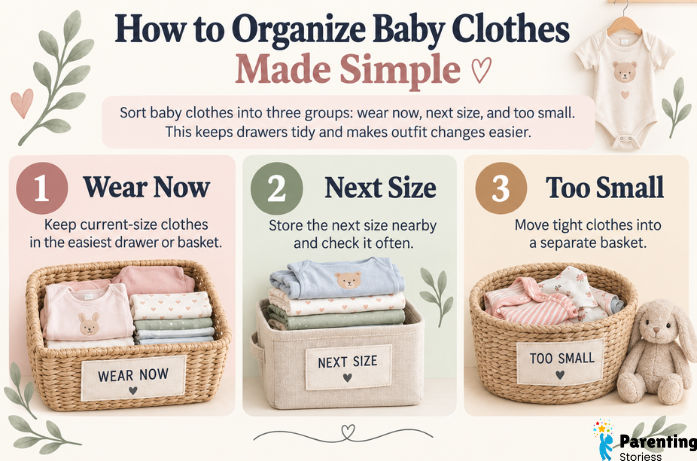
I like to keep things in three simple groups: clothes that fit now, clothes your baby will wear next, and clothes that are already too small.
This keeps the dresser from becoming overcrowded and helps you find the right outfit much faster.
Step 1: Keep a Wear-Now Section
Keep the clothes your baby fits into today in the easiest-to-reach drawer or basket.
This can include bodysuits, sleepers, pajamas, pants, socks, and bibs.
When your baby needs a quick change, everything in this section should fit without you checking labels.
Step 2: Keep the Next Size Nearby
Do not hide the next clothing size at the back of a closet.
Babies often move into bigger clothes sooner than we expect.
Keep the next size in a nearby drawer, basket, or storage bin and check it every few weeks.
Step 3: Move Outgrown Clothes Out Quickly
The moment something becomes too tight, move it out of the everyday drawer.
A small “Too Small” basket beside the dresser can make this much easier.
Once it fills up, you can decide what to store, donate, sell, or save.
Start by Sorting Baby Clothes by Size
If you are learning how to organize newborn clothes, sorting by size is the easiest place to begin. Take everything out and group the clothes into newborn, 0–3 months, 3–6 months, 6–9 months, and 9–12 months.
You do not need every size in the main dresser. Keep your baby’s current size and a few next-size pieces nearby, while bigger clothes can be stored until they are needed.
Do Not Trust the Size Label Completely
Baby clothing sizes can vary a lot between brands. A 0–3 month bodysuit from one brand may look almost the same size as a newborn outfit from another.
After sorting by label, compare the clothes by their actual size too. If something looks smaller than the rest, move it forward so your baby gets a chance to wear it before it becomes too tight. For sleepwear, it is also worth checking the garment label and fit, since the U.S. Consumer Product Safety Commission explains infant garment and tight-fitting sleepwear requirements.
Organize Drawers Around Your Daily Routine
There is no perfect way to organize a baby dresser. The best setup is the one that matches what your baby actually wears most often.
If your baby lives in sleepers, keep those in the easiest drawer. Bodysuits, leggings, and everyday essentials can stay close to the changing area, while less-used outfits can go in lower drawers or the closet.
The goal is simple: you should be able to find what you need quickly, especially during busy or sleepy moments.
Try Vertical Folding
Stacked baby clothes can look neat at first, but they often become messy when you pull something from the bottom. Vertical folding helps you see more of the drawer at once.
Fold bodysuits, pajamas, leggings, and T-shirts into small rectangles and place them upright. This makes it easier to spot the outfit you want without digging through a pile.
The folds do not need to be perfect. They just need to help you see and reach the clothes easily.
Give Tiny Items Their Own Space
Baby socks, mittens, hats, and bibs are easy to lose in a large drawer. Giving them a small section of their own can make a big difference.
You can use drawer dividers, small baskets, gift boxes, or even clean shoeboxes. Keep the categories simple, such as socks with mittens and bibs with burp cloths.
Too many tiny categories can become hard to maintain, so choose a system that feels easy to keep up with. Simple newborn basics such as socks, burp cloths, diapers, wipes, and receiving blankets are also included among the everyday newborn-care supplies highlighted in the HHS Newborn Supply Kit.
Keep Nighttime Clothes Near Where Baby Sleeps
One useful tip for how to organise newborn clothes is to keep a few nighttime essentials close to where you actually change your baby at night.
If your baby sleeps in your bedroom but their main dresser is in another room, a small nearby basket can save a lot of sleepy walking.
Keep a couple of sleepers, one bodysuit, a sleep sack, and a burp cloth there.
That is usually enough for unexpected nighttime changes.
This small setup can feel especially helpful after a diaper leak at 2 or 3 in the morning.
Create a Small Laundry Buffer
Babies can go through clothes surprisingly fast.
Some outfits may be in the washing machine, some drying, and some still sitting in the laundry basket.
That is why it helps to keep a few extra everyday pieces in rotation.
If your baby usually needs several sleepers between laundry days, keep a few more than that.
You do not need dozens of outfits.
You just need enough clean clothes to cover your normal laundry routine, especially during the newborn stage when spit-up and diaper leaks can happen often. Keeping other frequently used baby essentials clean and properly stored matters too. The CDC provides guidance on cleaning, drying, and storing infant feeding items to help reduce contamination.
Keep an Outgrown Clothes Basket Nearby
This is one of the easiest habits to start. Place a basket or bag near the dresser for clothes that no longer fit. The moment you notice that something feels too tight, put it there instead of returning it to the drawer.
Once the basket fills up, you can decide whether you want to store, donate, sell, give away, or keep those clothes. This small habit prevents outgrown clothes from slowly taking over your everyday storage.
Store Future Sizes in Labeled Bins
Clothes your baby will not wear for several months do not need to take up space in the main dresser.
Future clothing is easier to manage when it is stored separately.
Step 1: Label by Size
Use simple labels such as 3–6 months, 6–9 months, 9–12 months, and 12–18 months.
This means you will know exactly where to look when your baby is ready for the next size.
Step 2: Keep the Next Size Most Accessible
The size your baby will wear next should be the easiest storage bin to reach.
You should not have to move several heavy boxes just to find it.
Step 3: Check Before Buying More
Before shopping for bigger clothes, look through the next-size bin first.
You may already have plenty from gifts, hand-me-downs, or things you bought earlier and forgot about.
Check the Season Before Saving Clothes
Before storing bigger sizes, think about what the weather may be like when your baby is likely to fit into them. This can help you avoid keeping clothes that may never get much use.
For example, if your baby is likely to reach 6–9 months during summer, heavy sweaters, fleece sleepers, or thick jackets may not be very practical. In the same way, lightweight rompers and sleeveless outfits may not be useful if your baby reaches that size during colder months.
Babies do not always follow clothing size charts exactly, so you do not need to plan everything perfectly. Just use the season as a rough guide and keep a mix of flexible pieces, such as cotton bodysuits, light layers, and comfortable pajamas.
Doing this before buying more clothes can also help you spot what is actually missing. You may find that your baby already has plenty of everyday outfits but still needs a few weather-appropriate layers or sleepwear.
Keep Special Clothes Separate
Holiday outfits, dresses, jackets, photo outfits, and matching sets do not need to sit beside everyday sleepers.
Keep them in a separate section of the closet.
This makes daily dressing easier and helps protect special pieces from getting mixed into regular laundry.
It also makes it easier to remember what you already own before buying another occasion outfit.
Do Not Forget Clothes Outside the Nursery
Baby clothes have a funny way of ending up everywhere.
Before packing away an outgrown size, check the diaper bag, laundry basket, washing machine, dryer, stroller, car, and changing area.
There always seems to be one tiny bodysuit hiding somewhere.
I like waiting a few days before sealing an outgrown clothing box because another missing piece usually appears.
Save Only the Sentimental Clothes That Matter
Baby clothes can hold a lot of memories.
You may want to keep the outfit your baby wore home from the hospital, first holiday pajamas, or a favorite little sleeper.
That is completely fine.
But you do not need to save everything.
Choose a small keepsake box and keep only the pieces that truly feel special.
This gives you meaningful memories without filling your storage space with several boxes of clothes you may never open again.
Try a 10-Minute Monthly Reset
Baby clothing organization works much better when you check it regularly.
You do not need to spend an entire afternoon reorganizing every few weeks.
Step 1: Remove Clothes That No Longer Fit
Take out anything that looks too tight, short, or uncomfortable.
Move these pieces straight into the outgrown basket.
Step 2: Check the Next Size
Look through the next-size clothes and move a few into the everyday drawer if your baby is getting close to needing them.
Step 3: Straighten the Main Drawers
Refold anything messy, check your nighttime basket, and make sure the clothes your baby wears most are still easiest to reach.
Ten minutes every few weeks is often enough to keep everything manageable.
How to Organize Baby Clothes in a Small Space
You do not need a large nursery to stay organized. If your space is limited, keep only current clothes in the easiest-to-reach area.
Future sizes can go under the bed, on closet shelves, in storage boxes, or inside hanging organizers.
A small rolling cart can also work nicely for frequently used clothes, especially if you change your baby in more than one room.
The main idea is simple: give your best storage space to the clothes your baby uses now.
What Should You Hang and What Should You Fold?
There is no one right way to store baby clothes, so it really depends on what feels easiest for you. Everyday pieces such as bodysuits, pajamas, leggings, and sleepers usually work well folded in drawers because you reach for them often.
Clothes that wrinkle easily or are worn less often, like dresses, jackets, matching sets, and special occasion outfits, are usually easier to keep on hangers. This also makes them easier to spot when you need them.
Try to keep the system simple. If you can quickly see and grab what your baby needs, then your setup is doing its job.
Final Thoughts
Learning how to organize baby clothes is really about making daily life a little easier, not creating perfectly arranged drawers. A simple system for current sizes, next sizes, and outgrown clothes can save time and make everyday changes feel less stressful.
Your baby’s dresser will not stay perfect all the time, and that is completely fine. Some days everything may be neatly folded, while other days you may grab a clean sleeper straight from the laundry basket.
Keep your system simple and adjust it as your baby grows. Those tiny outfits change sizes so quickly, so enjoy them while they fit and choose an organization routine that works for your real life.
FAQs
1. How should I organize baby clothes by size?
Keep your baby’s current size in the main dresser, the next size nearby, and larger sizes in labeled storage bins.
2. How often should I sort through baby clothes?
A quick check every few weeks works well, especially during the first year when babies grow quickly.
3. Is it better to hang or fold baby clothes?
Fold everyday clothes like bodysuits and pajamas, and hang dresses, jackets, or special outfits that you use less often.
4. What is the best way to store outgrown baby clothes?
Keep a separate basket for clothes that no longer fit, then sort them into items to save, donate, sell, or pass along.
5. How can I organize baby clothes in a small space?
Use drawers for current clothes and store future sizes in under-bed bins, closet shelves, or hanging organizers.
For more practical baby-care ideas, newborn tips, and real-life parenting guidance, explore more helpful articles on Parenting Stories. We’re here to make everyday parenting feel a little simpler.
Disclaimer
This article is for general parenting and organization information only. Every family, home, and baby is different, so choose the storage methods that work best and feel safest for your own situation.