Authored by: A Caring Mom at Parenting Stories
Siblings can be the best of friends one moment and argue over the smallest thing the next. That back-and-forth is a normal part of growing up together. The good news is that simple sibling bonding activities can give children more chances to cooperate, laugh, solve small problems, and enjoy each other’s company in a positive way.
A healthy sibling bond usually develops through everyday experiences rather than big, planned moments. Building something together, sharing a silly joke, helping with a small task, or learning how to reconnect after an argument can all strengthen trust and closeness over time.
You do not need expensive toys or a packed activity schedule. Even a few minutes of relaxed, shared play can support connection and help siblings create the kind of childhood memories they may carry with them for years.
Why Sibling Bonding Matters
Sibling relationships can help children practise sharing, teamwork, communication, and problem-solving in everyday life. According to the American Academy of Pediatrics, siblings can also learn how to work through conflict, show support, respect differences, and understand one another better.
Every sibling relationship is different, though. Some children love spending lots of time together, while others need more space. The goal is simply to create regular opportunities for kindness, connection, and shared experiences.
25 Sibling Bonding Activities Kids Can Enjoy
The best activities for sibling bonding are usually simple, low-pressure, and easy to adjust for different ages.
Choose the ideas that fit your children’s personalities rather than trying to do them all.
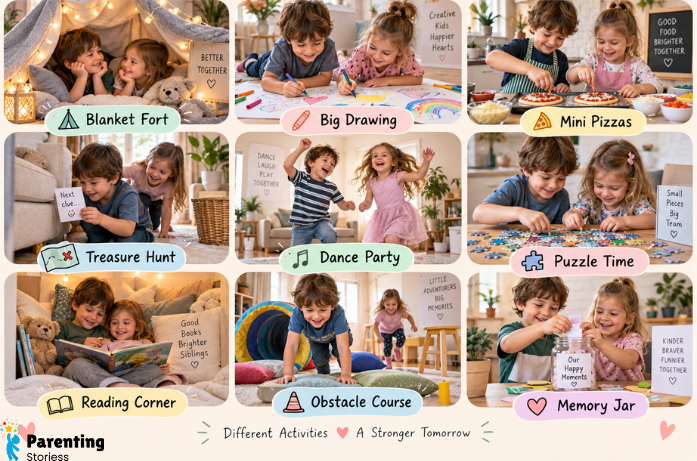
1. Build a Blanket Fort
Give the children blankets, cushions, chairs, and a few safe clips.
Ask them to build one shared fort.
The building itself encourages teamwork, and once it is finished they can read, snack, or play inside together.
2. Create a Secret Handshake
Let siblings invent their own handshake, funny greeting, or silly dance.
Children often love having something that feels special and belongs only to them.
It can quickly become a sweet little family tradition.
3. Make One Big Drawing
Tape a large sheet of paper to the table.
Let one child start drawing and then ask the other to add something.
Keep taking turns until they have created one big, funny picture together.
4. Make Mini Pizzas
Cooking together gives children natural little jobs.
One child can spread sauce while the other adds cheese or toppings.
They can make different pizzas while still enjoying the activity side by side.
5. Try a Team Challenge
Ask siblings to complete one simple task together.
They might build a tall block tower, move soft toys into a basket, or carry a balloon across the room without using their hands.
Shared goals help children practise cooperation instead of competition.
6. Start a Sibling Memory Jar
Keep a jar and a few slips of paper nearby.
Whenever something funny, kind, or memorable happens, write it down.
Read the notes together at the end of the month or year.
7. Go on a Treasure Hunt
Hide a few objects or clues around the house.
Instead of making the children race, ask them to find everything as a team.
For younger children, use picture clues. Older kids may enjoy simple riddles.
8. Have a Living Room Picnic
Spread a blanket on the floor and serve an ordinary snack or lunch picnic-style.
Let the children help choose the food and arrange the plates.
Something very simple can suddenly feel special.
9. Play “How Well Do You Know Me?”
Ask siblings easy questions about each other.
What is your brother’s favourite snack? Which animal does your sister love? What always makes them laugh?
Do not keep score. The fun is in noticing how much they already know about each other.
10. Build a Cardboard Box World
A large cardboard box can become a shop, castle, pet hospital, or spaceship.
Let the children decide what they want to create together.
Shared pretend play gives them lots of chances to talk, cooperate, and use their imagination.
11. Have a Dance Party
Put on a few favourite songs and dance together.
Children can copy each other’s moves or play freeze dance.
This is one of the easiest bonding activities for siblings because it needs almost no preparation.
12. Make Friendship Bracelets
Older children can make simple bracelets using yarn or beads.
Ask them to choose colours for each other instead of only making their own.
For younger children, avoid small beads and supervise closely.
13. Make Up a Story Together
Start with one sentence such as, “One morning, we opened the door and found…”
Then let each child add the next sentence.
The story may become silly very quickly, which usually makes it even more fun.
14. Try a Kindness Challenge
Give each child a small kindness mission.
It could be helping their sibling find a toy, sharing a snack, saying something encouraging, or inviting them to play.
Keep it playful rather than turning kindness into a reward system.
15. Grow Something Together
Let siblings plant a flower, herb, or easy vegetable.
They can take turns watering it and checking for new leaves.
A shared plant gives them something they can care for together over time.
16. Recreate an Old Sibling Photo
Choose a sweet or funny photo of the children together.
Try to recreate the pose and take a new picture.
This can become a lovely tradition as they grow older.
17. Make a Snack for Each Other
Give each child a few familiar foods and ask them to prepare a small snack plate for their sibling.
The aim is not perfect sharing.
It is simply encouraging them to think about what the other person likes.
18. Work on a Puzzle
Choose a puzzle suitable for both children.
One can look for edge pieces while the other searches by colour or pattern.
Try to focus on finishing together rather than who placed the most pieces.
19. Try “You Choose, I Choose”
One sibling chooses an activity for ten minutes.
Then the other child gets a turn.
This works especially well when siblings have very different interests.
20. Make an Obstacle Course
Use cushions, tape lines, or tunnels to create a simple course.
One child can design it while the other completes it, then they can swap roles.
Keep everything safe and suitable for their ages.
21. Create a Quiet Reading Corner
Sibling time does not always need to be noisy.
Set up cushions and books in a cosy corner.
Children can look at books side by side, take turns reading, or let an older sibling read to a younger one.
22. Play Sibling Restaurant
Turn snack time into pretend play.
One child can be the chef while the other is the customer.
They can make simple menus, take orders, and serve easy snacks with your help.
23. Make a Family Time Capsule
Ask siblings to choose a few things that represent their life right now.
They might include drawings, handprints, photos, or notes about their favourite foods and games.
Put everything in a box and choose a future date to open it.
24. Create a Team Name
Let siblings invent a funny team name and draw a simple logo or flag.
Then use the team name during chores, games, or treasure hunts.
It can make cooperation feel more fun.
25. Start a Weekly Sibling Tradition
Choose one small activity that happens regularly.
Maybe Friday means popcorn and a cartoon, Sunday means pancakes, or bedtime includes choosing one story together.
Little traditions often become the memories children remember most.
Choose Activities That Match Their Ages
ge differences can make sibling play tricky because children may have very different attention spans, abilities, and interests. A toddler might enjoy knocking down a block tower, while an older child may want to carefully build and protect it.
Instead of expecting both children to do the same task, give each one an age-appropriate role. During baking, an older child can measure ingredients while a younger sibling pours or stirs. During block play, one can build while the other sorts or passes pieces.
Choosing activities this way can reduce frustration and make activities for sibling bonding feel more enjoyable for everyone.
Do Not Make Everything a Competition
Competition can be fun, but too much of it may create tension.
Try including plenty of games where children work toward one shared goal.
Build one tower. Finish one puzzle. Find one treasure. Prepare one snack.
Shared success can help siblings see each other as teammates.
What If They Fight During the Activity?
Sometimes they will, and honestly, that is part of sibling life.
Even the best sibling bonding activities cannot stop every disagreement. One child may want the same toy, change the rules, or simply be tired and in no mood to cooperate.
If the argument is small, give them a little time to work it out. You can gently say, “You both want that toy. What do you think we can do?” instead of solving everything for them straight away.
If things are getting too heated, it is completely okay to pause the activity and let everyone calm down. You can always come back to it later when the mood feels better.
Do Not Always Make the Older Child the Helper
It is easy to tell an older sibling, “You’re bigger, so help your little brother.”
Occasional helping is wonderful, but the older child should not always feel responsible for keeping the younger one happy.
Give both children chances to lead.
A younger child can choose the music, hide treasure hunt clues, or pick the bedtime book.
Both siblings should feel that their ideas matter.
Help Them Reconnect After Arguments
Siblings are going to argue sometimes, but what happens after the argument matters too.
You do not always need to rush in and ask for an immediate apology. A child who is still upset may not really mean it yet.
Give them a little time to calm down, then gently help them think about how they can make things better. That might mean returning a toy, helping rebuild something that was knocked over, giving their sibling some space, or simply asking, “Do you want to play again?”
These small moments of repair can teach children how to move past disagreements and reconnect in a more caring way.
Let Siblings Have Time Apart
Bonding does not mean children must play together all day.
Everyone needs personal space.
One child may want quiet time while another wants active play.
One-on-one time with a parent is also important. Even ten minutes of reading, chatting, or cuddling can help a child feel seen and may reduce competition for attention.
How Often Should You Plan Bonding Activities?
There is no perfect schedule for sibling bonding, and you do not need to plan a special activity every day. A few simple opportunities each week are usually enough to encourage connection without making it feel forced.
Many meaningful sibling moments happen naturally during everyday routines, like helping with dinner, walking together, sharing a joke in the car, or playing before bedtime. Planned activities can be useful, especially when siblings need help reconnecting, but free play and time apart are important too.
The best approach is to create regular chances to spend positive time together while still letting their relationship grow at its own pace.
FAQs About Sibling Bonding Activities
1. What are the best sibling bonding activities?
Simple activities like building forts, doing puzzles, baking, reading, drawing, and playing cooperative games can help siblings spend positive time together.
2. How can I help siblings bond naturally?
Give them regular chances to play, work together, and create shared memories without forcing them to spend all their time together.
3. What if my children keep fighting during activities?
Small disagreements are normal. Give them time to work things out, and step in calmly if the argument becomes too upsetting.
4. Can siblings with a big age gap still bond?
Yes. Choose activities with different roles so each child can participate at their own age and ability level.
5. How often should siblings do bonding activities?
There is no set schedule. A few relaxed activities each week, along with everyday family time, can be enough to encourage connection.
Final Thoughts
Sibling relationships are rarely perfect, and that is completely normal. Some days your children may laugh and play together for hours, and other days they may argue over the smallest things.
What really matters is giving them chances to enjoy each other, work through little problems, and make happy memories together. A few simple sibling bonding activities can help, but everyday moments often matter just as much.
Try not to force closeness. Let each child have their own space, personality, and way of connecting. Years from now, they may not remember every game or activity you planned, but they may remember the silly jokes, blanket forts, shared snacks, and little traditions that made growing up together feel special.
Research highlighted by the American Psychological Association also shows that sibling relationships can play an important role in children’s development and well-being, making those everyday moments of cooperation and support more meaningful than they may seem.
Looking for more simple parenting ideas and fun activities for kids? Explore more helpful guides on Parenting Stories and make everyday family moments a little more meaningful.
Disclaimer
This article is for general informational purposes only. Every child and family is different, so choose activities that suit your children’s ages, abilities, and individual needs.