Written by a caring mom at parenting stories
Pregnancy brings many beautiful changes, but some can be uncomfortable. Have you ever finished a meal and suddenly felt a burning sensation in your chest or throat? That’s pregnancy heartburn, a common problem caused by hormonal changes and the extra pressure your growing baby puts on your stomach.
I know how frustrating it can feel, especially when you’re already dealing with nausea, tiredness, and sleepless nights. The good news is that simple heartburn during pregnancy remedies, like eating smaller meals, avoiding trigger foods, and adjusting your sleeping position, may help ease the discomfort.
In this guide, we’ll explore what causes pregnancy heartburn, safe home remedies that may help, foods to avoid, and when to call your doctor so you can feel more comfortable throughout your pregnancy.
What Is Heartburn During Pregnancy?
Heartburn is a burning sensation in your chest, usually behind your breastbone. Sometimes, it travels upward toward your throat and leaves a sour taste in your mouth.
It happens when stomach acid flows backward into your esophagus, the tube connecting your mouth to your stomach. This is called acid reflux.
Common symptoms include:
- Burning in your chest after meals
- A sour or bitter taste in your mouth
- Frequent burping or bloating
- Food or liquid coming back into your throat
- Discomfort when lying down
- Heartburn that gets worse at night
According to Cleveland Clinic, heartburn affects an estimated 30% to 80% of pregnant women.
Although it’s common, you don’t have to ignore the discomfort.
What Causes Heartburn During Pregnancy?
Heartburn is common during pregnancy because hormonal changes and your growing baby affect how your digestive system works. Here are three main reasons you may experience that uncomfortable burning sensation.
1. Pregnancy Hormones
During pregnancy, progesterone relaxes the muscle that normally prevents stomach acid from flowing into your esophagus. It can also slow digestion, leaving you feeling full or bloated even after a small meal.
2. Your Growing Baby
As your uterus expands, it puts extra pressure on your stomach, making it easier for acid to flow upward. This is why heartburn often becomes more noticeable during the second and third trimesters, especially after meals.
3. Certain Foods and Eating Habits
Spicy foods, fried meals, chocolate, citrus fruits, and coffee may trigger heartburn. Eating large portions or lying down soon after meals can also worsen symptoms. Since every pregnancy is different, try noticing which foods cause you discomfort.
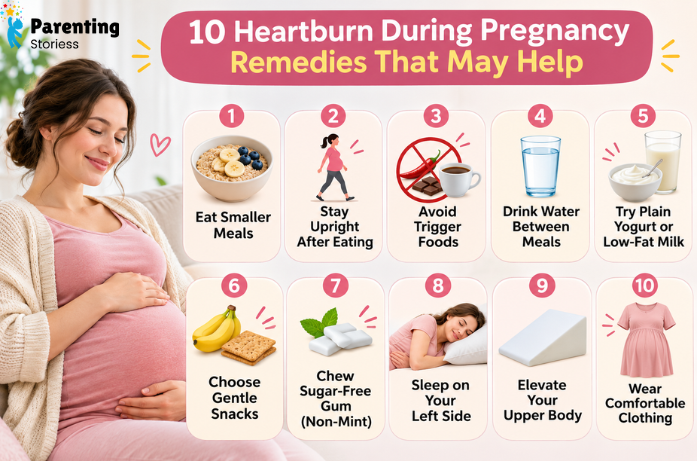
10 Heartburn During Pregnancy Remedies That May Help
Dealing with a burning sensation after meals or while trying to sleep can be frustrating, especially during pregnancy. Thankfully, a few simple changes to your eating habits and daily routine may help.
Here are 10 heartburn during pregnancy remedies that can help reduce acid reflux and make you feel more comfortable.
1. Eat Smaller, More Frequent Meals
Eating large meals fills your stomach and increases pressure, making it easier for stomach acid to flow into your esophagus.
Instead of three heavy meals, try eating five or six smaller meals and snacks throughout the day. For example, enjoy oatmeal for breakfast, fruit as a midmorning snack, and a lighter lunch.
Eat slowly and stop when you feel comfortably full. You still need enough nutrition during pregnancy, so focus on smaller portions more frequently rather than eating less overall.
2. Stay Upright After Eating
Lying down immediately after eating can make heartburn worse because stomach acid can move upward more easily.
Try sitting upright or taking a gentle 10–15-minute walk after meals. Avoid lying down for at least two to three hours, particularly after dinner.
If pregnancy fatigue makes you want to rest, sit in a supportive chair instead of lying flat. This may help reduce reflux while allowing you to relax.
3. Identify Your Heartburn Trigger Foods
Certain foods can make acid reflux worse, but triggers vary from one pregnant woman to another.
Common foods that may cause heartburn include:
- Spicy and fried foods
- Oranges, lemons, and other citrus fruits
- Tomatoes and tomato-based sauces
- Chocolate and peppermint
- Coffee and carbonated drinks
Keep a simple food diary for a few days. Note what you eat and when heartburn appears. This can help you identify your personal triggers without unnecessarily avoiding nutritious foods.
4. Drink Water Between Meals
Drinking a large amount of water during meals can make your stomach feel overly full, potentially worsening acid reflux.
Instead, try taking small sips with meals and drinking more water between them. This helps you stay hydrated without adding too much volume to your stomach at once.
Keep a water bottle nearby and sip regularly throughout the day. Don’t reduce your overall water intake, as proper hydration is important during pregnancy.
5. Try Plain Yogurt or Low-Fat Milk
Some expecting moms find that plain yogurt or a small glass of low-fat milk temporarily soothes the burning sensation caused by heartburn.
These foods may feel comforting, although they don’t treat the underlying cause of acid reflux. Full-fat dairy products may actually worsen symptoms for some women.
Choose pasteurized, plain yogurt or low-fat milk in small portions. If dairy makes your heartburn worse, skip it and try another option.
6. Choose Gentle, Easy-to-Digest Snacks
When heartburn makes eating uncomfortable, choosing mild, lower-fat foods may help prevent additional irritation.
Some pregnancy-friendly snack options include:
- Oatmeal or plain porridge
- Bananas and melon
- Whole-grain toast
- Plain crackers
- Low-fat yogurt
These foods aren’t guaranteed cures, but many women find them easier to tolerate than spicy or greasy snacks.
Try eating a small snack before you become extremely hungry, but avoid eating immediately before bedtime.
7. Chew Sugar-Free Gum After Meals
Chewing sugar-free gum after eating may help reduce acid reflux by increasing saliva production.
Saliva helps wash acid back down the esophagus and can temporarily reduce the sour taste that sometimes accompanies heartburn.
Try chewing non-mint, sugar-free gum for around 15–20 minutes after meals. Peppermint may worsen reflux, and chewing gum can cause bloating in some people.
8. Sleep on Your Left Side
If heartburn keeps you awake at night, changing your sleeping position may provide relief.
Sleeping on your left side may reduce the amount of stomach acid that flows into your esophagus because of your stomach’s natural position.
Place a pregnancy pillow between your knees or behind your back for additional comfort. Side sleeping is also recommended as pregnancy progresses, particularly after 28 weeks.
9. Elevate Your Upper Body While Sleeping
Heartburn often becomes worse when you lie flat because gravity no longer helps keep stomach contents down.
Using a wedge pillow or safely raising the head of your bed may reduce nighttime acid reflux.
Elevate your upper body rather than just your head. Stacking several regular pillows beneath your head can bend your neck without providing effective reflux relief.
10. Wear Loose, Comfortable Clothing
Tight clothing around your waist and belly can increase pressure on your stomach, especially after meals.
As your baby grows, restrictive waistbands may make acid reflux symptoms more noticeable.
Choose loose maternity dresses, soft leggings, or pants with adjustable waistbands. Comfortable clothing won’t cure heartburn, but it can help reduce unnecessary pressure on your abdomen.
Heartburn and Pregnancy Home Remedies: What Should You Avoid?
Not every home remedy you find online is safe during pregnancy. Some may worsen acid reflux or cause unwanted side effects, so it’s important to be careful.
- Baking soda: Drinking baking soda mixed with water isn’t recommended during pregnancy because its high sodium content can cause problems.
- Apple cider vinegar: There’s no strong evidence that it relieves heartburn, and its acidity may make symptoms worse.
- Herbal supplements: Some herbs may be unsafe during pregnancy or interact with medications.
Always check with your healthcare provider before trying new remedies, even if they are labeled natural.
Natural Cures for Pregnancy Heartburn: What Really Works?
Many expecting moms look for natural cures for pregnancy heartburn to find relief without medication. While no home remedy can completely prevent acid reflux, simple lifestyle changes may help ease the discomfort.
Eating smaller meals, avoiding trigger foods, staying upright after eating, and sleeping on your left side may reduce heartburn. Try these changes gradually to see what works best for you.
If your heartburn continues or becomes severe, speak with your healthcare provider about safe treatment options.
Pregnancy Heartburn Relief at Night
If your heartburn becomes worse at bedtime, a simple evening routine may help.
| Time | What to try |
| Dinner | Eat a smaller, balanced meal |
| After dinner | Stay upright or take a gentle walk |
| Before bedtime | Avoid large meals for 2–3 hours |
| While sleeping | Lie on your left side with your upper body elevated |
What if you are hungry before bed?
Try having a small, gentle snack earlier in the evening rather than eating a large meal immediately before lying down.
If you have gestational diabetes or another condition affecting meal timing, follow your healthcare provider’s advice.
Can Prenatal Vitamins Make Heartburn Worse?
Sometimes prenatal vitamins can contribute to digestive discomfort.
Iron-containing supplements, in particular, may cause nausea, stomach irritation, or constipation.
If you notice discomfort after taking your prenatal vitamin, ask your healthcare provider whether changing its timing or formulation might help.
Don’t stop prescribed supplements without medical advice.
Also, some antacids interfere with iron absorption, so ask your pharmacist how to space them apart.
Can You Take Heartburn Medicine During Pregnancy?
Sometimes home remedies aren’t enough, and that’s okay.
Certain calcium carbonate antacids are commonly used during pregnancy for short-term relief.
For persistent symptoms, healthcare providers may recommend acid-reducing medicines, such as famotidine or omeprazole, when appropriate.
However, not every heartburn medication is suitable during pregnancy.
Avoid using products containing sodium bicarbonate, magnesium trisilicate, or aspirin unless specifically directed by your clinician.
Always check with your doctor, midwife, or pharmacist before taking medication.
When Does Heartburn Start During Pregnancy?
Heartburn can begin at almost any stage of pregnancy.
First trimester: Hormonal changes may cause reflux even before your baby bump appears.
Second trimester: Slower digestion and increasing abdominal pressure may make symptoms more noticeable.
Third trimester: Your growing uterus puts more pressure on your stomach, so heartburn may become more frequent.
For many moms, pregnancy-related heartburn improves after delivery.
Does Heartburn Mean Your Baby Will Have Lots of Hair?
You’ve probably heard someone say that severe heartburn means your baby will be born with thick hair.
Interestingly, a small study published in Birth in 2006 found an association between maternal heartburn and newborn hair.
Researchers suggested pregnancy hormones might contribute to both.
However, heartburn isn’t a reliable way to predict how much hair your baby will have.
It’s a fun pregnancy conversation, but not a dependable prediction.
When Should You Call Your Doctor?
Although heartburn is common during pregnancy, certain symptoms need medical attention.
Contact your healthcare provider if:
- Heartburn is severe or happens frequently
- Symptoms interfere with eating or sleeping
- You have difficulty swallowing
- You’re vomiting repeatedly or losing weight
- Recommended remedies aren’t helping
Seek urgent medical care for severe chest pain, difficulty breathing, fainting, vomiting blood, or black, tarry stools.
After 20 weeks of pregnancy, severe upper abdominal pain, especially beneath your right ribs, can sometimes indicate preeclampsia, particularly with headache, vision changes, or sudden swelling.
Don’t assume these symptoms are ordinary heartburn.
Frequently Asked Questions
1. What is the fastest way to relieve heartburn during pregnancy?
Sitting upright and avoiding trigger foods may help. Some pregnancy-appropriate antacids provide faster relief, but check with your healthcare provider before taking them.
2. Can drinking cold milk help pregnancy heartburn?
A little low-fat milk may temporarily soothe symptoms for some women, but it isn’t a proven cure. Full-fat milk may worsen reflux.
3. Can drinking water stop pregnancy heartburn?
Small sips may temporarily clear acid from your throat, but water doesn’t reliably stop reflux. Drinking large amounts at once may increase discomfort.
4. Can heartburn during pregnancy harm my baby?
Ordinary acid reflux doesn’t directly harm your baby. However, severe symptoms affecting your nutrition or hydration should be evaluated.
5. Will pregnancy heartburn go away after delivery?
For many moms, yes. Symptoms often improve after childbirth as hormone levels change and pressure on the stomach decreases.
Final Thoughts
Heartburn during pregnancy can be uncomfortable, especially when it affects your meals or keeps you awake at night. But the good news is that a few simple changes can often make it easier to manage.
Eating smaller meals, avoiding trigger foods, staying upright after eating, and adjusting your sleeping position may help reduce acid reflux. If these changes don’t bring relief, talk to your healthcare provider about safe treatment options.
For most moms, pregnancy-related heartburn improves after childbirth, so this discomfort usually won’t last forever.
At Parenting Stories, we understand that pregnancy comes with both wonderful moments and unexpected challenges. Take care of yourself, listen to your body, and remember that your comfort matters just as much as your growing baby’s well-being.
Disclaimer: This article is for educational purposes only and doesn’t replace professional medical advice. Always consult your healthcare provider before taking medications, supplements, or home remedies during pregnancy.