Written by a caring mom at Parenting Stories
Giving birth is one of life’s most incredible experiences, but recovering from childbirth while caring for a newborn can be exhausting. Between sleepless nights, postpartum bleeding, physical soreness, and hormonal changes, your body goes through a lot. Whether you’ve had a vaginal delivery or a C-section, every mother’s postpartum recovery journey is different.
The good news is that small, everyday habits can make this healing period more comfortable. From managing soreness and eating nourishing meals to getting enough rest and caring for your emotional health, these postpartum recovery tips can help you feel better as your body gradually heals.
At Parenting Stories, we share simple, practical advice to help new moms understand what’s normal after childbirth, care for their recovering bodies, and recognize when it’s time to seek medical help.
What Happens to Your Body After Giving Birth?
After delivery, your body needs time to recover and adjust to life after giving birth. Your uterus starts shrinking back to its pre-pregnancy size, hormone levels change, and the muscles that stretched during pregnancy begin to recover.
During the first few weeks, you may experience postpartum bleeding, mild cramps, breast tenderness, constipation, swelling, and fatigue. If you’ve had a C-section, your incision will need additional care and time to heal.
Physical recovery isn’t the only change you’ll experience. Hormonal changes, lack of sleep, and the responsibilities of caring for your baby may leave you feeling emotional, anxious, or overwhelmed.
Most of these changes are common after childbirth and gradually improve with time. However, you shouldn’t ignore serious symptoms like severe pain, heavy bleeding, fever, or symptoms that get worse. Contact your healthcare provider if something doesn’t feel right.
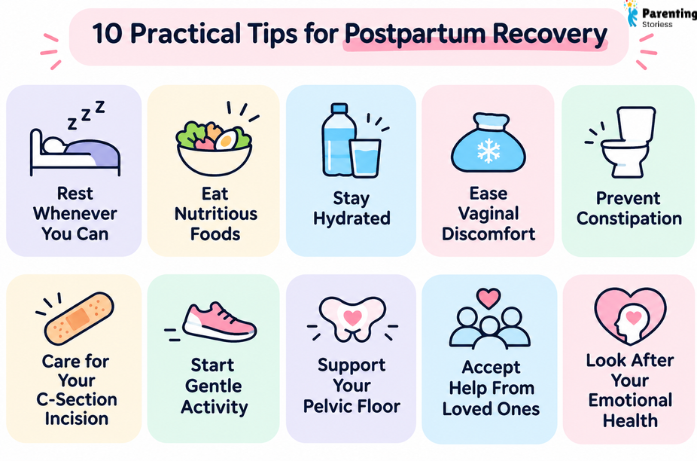
10 Practical Tips for Postpartum Recovery
Recovering after childbirth doesn’t require expensive products or a strict routine. Small habits like eating well, resting, and caring for your body can make a real difference.
Here are 10 simple postpartum recovery tips for new moms to help you feel more comfortable while healing.
1. Rest Whenever You Can
Caring for a newborn can be exhausting, especially when you’re waking up several times at night. Your body needs extra rest to recover from childbirth.
Try taking short naps or lying down when your baby sleeps. Don’t worry about finishing every household chore. If your partner or family offers help, let them handle a few tasks while you rest.
Even a short break can help you feel more refreshed.
2. Eat Nutritious Foods to Support Healing
Your body needs proper nutrition to regain strength and repair tissues after delivery. Eating balanced meals can also help maintain your energy, especially if you’re breastfeeding.
Include these foods in your daily meals:
- Protein: Eggs, lentils, chicken, and yogurt for tissue repair.
- Iron: Beans, spinach, and lean meat to replenish iron.
- Fiber: Fruits, oats, and vegetables to ease constipation.
- Healthy fats: Nuts, seeds, and avocado for essential nutrients.
Simple homemade meals are enough. Focus on nourishing your body rather than rushing to lose pregnancy weight.
3. Stay Hydrated Throughout the Day
Between feeding your baby and managing daily tasks, it’s easy to forget to drink water.
Keep a water bottle near your bed or feeding chair so you can take a few sips regularly. You can also keep healthy snacks nearby for times when you’re hungry.
Drinking enough fluids helps prevent dehydration and constipation, making postpartum recovery more comfortable.
4. Ease Vaginal Soreness and Discomfort
After a vaginal delivery, the area around your vagina may feel swollen or sore, especially if you have stitches.
To ease discomfort:
- Use a peri bottle with warm water while urinating.
- Apply a wrapped cold pack briefly during the first day or two.
- Change maternity pads regularly.
- Gently pat the area dry after cleaning.
According to Mayo Clinic, vaginal soreness may last several weeks, particularly after tearing.
Contact your healthcare provider if pain worsens or you develop a fever or unusual discharge.
5. Prevent Constipation and Bathroom Discomfort
Your first bowel movements after delivery may feel uncomfortable, especially if you have stitches or hemorrhoids.
To make bathroom visits easier, drink enough water, eat fiber-rich foods, and take gentle walks when comfortable.
Avoid straining, and try placing your feet on a small stool while using the toilet.
If constipation continues, ask your healthcare provider whether a stool softener is suitable.
6. Take Extra Care After a C-Section
Recovering from a C-section takes time because your body is healing from abdominal surgery.
Wear loose clothing, keep your incision clean and dry as instructed, and avoid lifting heavy objects until your healthcare provider says it’s safe.
When getting out of bed, try rolling onto your side first to reduce pressure on your abdomen.
Gentle walking may support circulation, but don’t push yourself if you’re in pain.
Contact your doctor if your incision becomes increasingly red, swollen, painful, or starts draining fluid.
7. Start With Gentle Physical Activity
You don’t need to rush back into exercise after childbirth. Start with short walks around your home when you feel comfortable and your healthcare provider says it’s appropriate.
Gentle movement can improve circulation, reduce stiffness, and lift your mood.
Gradually increase your activity as your strength returns. If you notice increased bleeding, dizziness, or pain, stop and seek medical advice.
Focus on healing and rebuilding strength rather than losing weight quickly.
8. Pay Attention to Your Pelvic Floor
Pregnancy and childbirth can weaken or strain the pelvic floor muscles that support your bladder, bowel, and pelvic organs.
You might notice urine leaking when you sneeze, cough, or laugh. Some mothers also experience pelvic heaviness or discomfort.
Gentle pelvic floor exercises may help, but they aren’t suitable for every symptom.
If you continue experiencing leakage, pressure, or pain, speak with your healthcare provider about pelvic floor physical therapy.
9. Accept Help From Family and Friends
You don’t have to manage every household responsibility while recovering from childbirth.
Let your partner, family, or friends help with cooking, laundry, grocery shopping, or caring for your baby while you rest.
Even small things, like having someone prepare lunch or hold your newborn while you shower, can make your day easier.
Remember, accepting help gives your body more time to recover.
10. Look After Your Emotional Health
It’s common to feel emotional, tired, or overwhelmed during the first few days after childbirth.
Hormonal changes and lack of sleep can contribute to the babyblues, which usually improve within two weeks.
However, persistent sadness, intense anxiety, hopelessness, or difficulty managing daily activities may be signs of postpartum depression or anxiety.
Talk to your healthcare provider if these feelings continue, worsen, or become difficult to manage. Seek immediate medical help if you have thoughts of harming yourself or your baby.
Your mental health is just as important as your physical recovery.
Postpartum Belly Recovery Tips: What Really Helps?
After delivery, you might be surprised that your belly still looks pregnant.
This is normal. Your uterus needs several weeks to shrink, while your abdominal muscles and skin may take much longer to recover.
Some mothers also experience diastasis recti, a separation of the abdominal muscles during pregnancy.
If you notice persistent abdominal bulging, weakness, or discomfort, a pelvic health physical therapist can help assess your recovery.
When medically appropriate, gentle breathing exercises, comfortable walking, and gradual core strengthening may support healing.
The most useful postpartum belly recovery tips focus on restoring strength and comfort rather than trying to achieve a flat stomach quickly.
Your body doesn’t need to look exactly as it did before pregnancy to be healthy.
How Long Does Postpartum Recovery Take?
Every mother’s recovery timeline is different.
Although the first six weeks are often considered the initial recovery period, healing can continue for several months.
| Recovery period | What you may experience |
| First week | Bleeding, cramps, soreness, fatigue, and breast changes |
| Weeks 2–3 | Some discomfort improves, but tiredness and bleeding may continue |
| Weeks 4–6 | Movement may become easier as healing progresses |
| Weeks 6–12 | Strength and energy may gradually improve |
| After 3 months | Pelvic floor, abdominal, and emotional recovery may still continue |
This timeline is only a general guide.
Recovery may take longer after a C-section, significant tearing, or childbirth complications.
A Simple Daily Postpartum Recovery Routine
When you’re caring for a newborn, following a strict routine isn’t always possible.
Instead, try a few small habits that fit into your day.
Morning: Drink water, eat a nourishing breakfast, and take prescribed medications as directed.
Afternoon: Have lunch, move gently if comfortable, and try to rest while someone helps with the baby.
Evening: Prepare water, snacks, and feeding supplies near your bed. Share nighttime responsibilities whenever possible.
You don’t have to complete everything perfectly.
Even small moments of self-care can make your day feel more manageable.
Postpartum Warning Signs You Should Never Ignore
Most postpartum discomfort gradually improves, but certain symptoms need urgent medical attention.
The Centers for Disease Control and Prevention (CDC) highlights important maternal warning signs that can occur during pregnancy and up to a year after childbirth.
Seek immediate medical care if you experience:
- Heavy bleeding that soaks through one or more pads in an hour.
- Chest pain or difficulty breathing.
- A severe headache, especially with vision changes.
- Fainting, seizures, or sudden confusion.
- Severe abdominal pain.
- Pain, redness, or swelling in one leg.
- Thoughts of harming yourself or your baby.
A fever of 100.4°F (38°C) or higher also requires prompt medical assessment.
Don’t wait for your next postpartum appointment if something feels seriously wrong.
Don’t Skip Your Postpartum Checkup
With so much attention on your newborn, it’s easy to forget about your own medical appointments.
But postpartum care is important for checking your physical and emotional recovery.
The American College of Obstetricians and Gynecologists (ACOG) recommends contact with a maternal care provider within the first three weeks after delivery and a comprehensive postpartum visit no later than 12 weeks.
Your provider can discuss bleeding, pain, pelvic floor symptoms, emotional health, feeding concerns, and returning to exercise.
You may need earlier or additional appointments depending on your health.
Frequently Asked Questions
1. What helps postpartum recovery the most?
Rest, nutritious meals, hydration, gentle movement, pain management, and support from family can help your body recover after childbirth.
2. How can I recover faster after giving birth?
There’s no safe shortcut to recovery. Focus on proper nutrition, adequate rest, avoiding overexertion, and following your healthcare provider’s advice.
3. How long does it take to feel normal after childbirth?
Many mothers feel physically better within six to eight weeks, but complete recovery can take several months or longer.
4. Is it normal to still have a belly after giving birth?
Yes. Your uterus, abdominal muscles, and skin need time to recover, and some changes in body shape may remain.
5. When can I start exercising after childbirth?
Gentle walking may be appropriate soon after an uncomplicated delivery. Ask your healthcare provider when to resume more demanding exercise, especially after a C-section or complications.
Final Thoughts
Recovering after childbirth takes time, and every mother’s journey is different. Between sleepless nights, caring for your newborn, and adjusting to a new routine, it’s easy to forget about your own needs.
But remember, your postpartum recovery matters just as much as caring for your baby. Small habits like eating nutritious meals, resting whenever possible, staying hydrated, and accepting help can make your recovery more comfortable.
Don’t rush yourself to get back to your normal routine. Listen to your body, take things one day at a time, and reach out to your healthcare provider if you have any concerns.
At Parenting Stories, we believe every new mom deserves the care, support, and time she needs to heal. Be gentle with yourself, because taking care of yourself is an important part of motherhood.
Medical disclaimer
This article is for educational purposes only and does not replace professional medical advice. Consult your healthcare provider about postpartum symptoms, recovery, medications, and exercise.