

Written with love by a caring mom at Parenting Stories
Each baby is beautifully unique, and no two journeys look exactly the same. Still, when it comes to baby development leaps, many parents notice a similar pattern of sudden changes followed by exciting new skills. These leaps are moments when your baby’s brain is growing rapidly, helping them understand the world in deeper and more meaningful ways.
Sometimes, these phases can feel overwhelming. Your calm baby may suddenly become fussy, clingy, or unsettled, and it’s easy to wonder what changed overnight. But the truth is, nothing is wrong. Your baby is simply learning, processing, and adapting to new abilities.
Let’s walk through each of these important leaps together so you can understand what’s happening and feel more confident supporting your little one.
What Are Baby Development Leaps and Why Do They Happen?
Baby development leaps are periods when your baby’s brain is rapidly growing and learning new skills. During these phases, your baby may become fussier, clingier, or sleep differently.
It can feel challenging, but here’s the reassuring truth:
These leaps are actually a positive sign that your baby is developing exactly as they should.
You might notice:
- Increased crying or fussiness
- Wanting to be held more often
- Changes in sleep patterns
- Sudden new skills appearing afterward
your baby’s world is expanding, and that can feel overwhelming for them.
Why Understanding Leaps Baby Development Matters
When you understand leaps baby development, everything starts to make more sense. Instead of wondering “What am I doing wrong?”, you begin to think, “Oh, my baby is growing.”
This shift in mindset can:
- Reduce your stress and anxiety
- Help you respond with patience
- Strengthen your bond with your baby
And most importantly, it reminds you that this phase is temporary.
If you ever want to understand general developmental milestones alongside these leaps, trusted resources like the Centers for Disease Control and Prevention (CDC) can be very helpful.
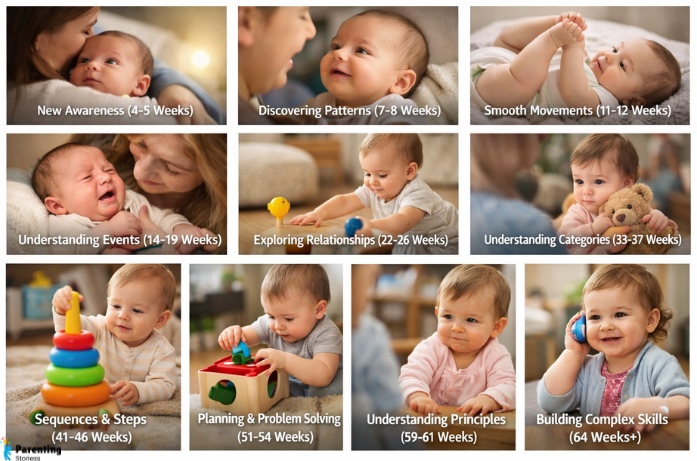
The 10 Baby Development Leaps Every Parent Should Know About
Each baby is unique, but these leaps often follow a general pattern. Let’s explore them one by one. If your baby was born early or you are tracking development closely, the American Academy of Pediatrics offers helpful guidance on adjusted milestones.
1. The First Leap (Around 4–5 Weeks)
New Awareness Begins
This is your baby’s first big developmental shift. After the early newborn days, they begin to notice more of the world around them. Lights, sounds, and everyday surroundings may suddenly feel much stronger and more overwhelming.
Because your baby is processing sensory information in a new way, they may cry more often or seem harder to settle. Many parents notice extra fussiness in the evening, especially when their baby is already tired.
The best thing you can do during this stage is offer comfort. Holding your baby close, using skin-to-skin contact, and keeping the environment calm can help them feel safe and secure.
2. The Second Leap (Around 7–8 Weeks)
Discovering Patterns
At this stage, your baby starts noticing simple patterns in their world. They may begin recognizing your face, following you with their eyes, and reacting more clearly to familiar voices.
This leap often feels very special because your baby seems more connected to you. At the same time, they may also become clingier, and naps can feel shorter or less predictable than before.
Talking, singing, and responding gently to your baby can really help during this phase. Your voice is comforting, familiar, and one of the easiest ways to make them feel calm.
3. The Third Leap (Around 11–12 Weeks)
Smooth Movements and Control
During this leap, your baby begins to gain better control over their body. Their movements start to look smoother, and they may spend more time watching their hands or trying to coordinate simple actions.
This stage can be exciting, but it can also bring frustration. Your baby may want to do more than they are physically able to, which can lead to fussiness during play or active moments.
Giving your baby safe space to stretch, kick, and move freely can be very helpful. These little moments of practice support their growing coordination and confidence.
4. The Fourth Leap (Around 14–19 Weeks)
Understanding Events
This is often one of the most noticeable leaps. Your baby starts learning that actions lead to outcomes, like crying brings comfort or kicking makes something move.
Because this new understanding takes a lot of mental energy, your baby may become fussier than usual. Sleep changes are also common during this phase, including short naps or more frequent night waking.
A simple routine can make a big difference here. Predictable bedtime habits, gentle play, and a calm environment can help your baby feel more secure.
5. The Fifth Leap (Around 22–26 Weeks)
Exploring Relationships Between Things
At this stage, your baby begins to understand how things connect. They may drop toys, watch where they go, or explore how objects move and react.
You may notice more curiosity along with more frustration. Your baby wants to experiment and learn, but they still do not have full control over their actions, which can make them upset at times.
Letting your baby explore safely is one of the best ways to support this leap. Even if it feels repetitive or messy, these small experiments are helping them learn important thinking skills.
6. The Sixth Leap (Around 33–37 Weeks)
Understanding Categories
During this leap, your baby starts sorting the world into groups. They may begin noticing the difference between familiar people and strangers or between one type of object and another.
This is also the time when separation anxiety often begins. Your baby may become clingier, cry when you leave, or want extra reassurance, especially at bedtime or in new places.
The best support during this stage is comfort and consistency. Staying responsive and gently helping your baby through short separations can help them feel safe.
7. The Seventh Leap (Around 41–46 Weeks)
Sequences and Steps
Now your baby begins to understand simple steps and sequences. They may imitate actions, stack objects, or show more interest in daily routines.
You might also notice your baby testing boundaries more often. They may repeat certain actions just to see what happens or how you respond, which is a normal part of learning.
This stage calls for calm and steady guidance. When you stay patient and consistent, your baby feels secure while exploring these new abilities.
8. The Eighth Leap (Around 51–54 Weeks)
Planning and Problem Solving
During this leap, your baby starts thinking ahead in simple ways. They may try different methods to reach a toy, solve small problems, or figure out how to get your attention.
With these new thinking skills often come bigger feelings. Your baby may become more focused during play, but also more upset when something does not go the way they want.
Encouragement matters so much here. When you support their efforts and stay close through the frustration, you help build confidence and resilience.
9. The Ninth Leap (Around 59–61 Weeks)
Understanding Principles
At this stage, your baby begins to understand simple rules and expectations. They may follow basic instructions, show more independence, and start learning what is allowed and what is not.
This is also when you may notice resistance, strong opinions, or early tantrums. Your baby is not trying to be difficult, they are learning about limits and testing how the world works.
Patience and consistency are especially important during this leap. Gentle boundaries help your baby feel safe while they continue to grow emotionally and socially.
10. The Tenth Leap (Around 64 Weeks+)
Building Complex Skills
By this stage, many earlier skills begin coming together. Your baby may use more words, communicate more clearly, and show much more of their personality in daily life.
You may also notice that your baby becomes more social and expressive. Their preferences, emotions, and reactions can feel bigger and easier to understand than before.
This is a beautiful phase of development. Celebrating your baby’s progress and supporting their growing emotions helps them feel confident, secure, and deeply loved.
Final Thoughts
Watching your baby go through these baby development leaps can feel overwhelming at times, especially on the days when nothing seems to soothe them. But when you look a little closer, you’ll see something beautiful behind those कठिन moments, your baby is growing, learning, and slowly understanding the world around them. Every fussy phase is a sign that something new is developing inside their little mind.
So be gentle with yourself during these stages. You don’t need to have all the answers. Your love, your patience, and simply being there is more than enough. These leaps will pass, but the bond you’re building with your baby during these moments will last forever.
Subscribe to Parenting Stories for more real, comforting, and helpful parenting tips
FAQs
1. What are baby development leaps?
Baby development leaps are periods when your baby’s brain grows rapidly, helping them learn new skills like movement, awareness, and communication.
2. How long do developmental leaps last?
Most leaps last anywhere from a few days to a couple of weeks. Every baby is different, so the timing can vary.
3. Why does my baby become fussy during leaps?
Your baby’s brain is processing a lot of new information, which can feel overwhelming. This often leads to clinginess, crying, and sleep changes.
4. Do all babies go through the same leaps?
While most babies experience similar stages, the timing and intensity can differ from one baby to another.
5. How can I help my baby during a leap?
Offer comfort, stay patient, keep routines simple, and give your baby plenty of love and reassurance.
Disclaimer: This article is for general informational purposes only and based on personal parenting experience. Every baby develops differently. If you have any concerns about your baby’s health or development, please consult a pediatrician.