
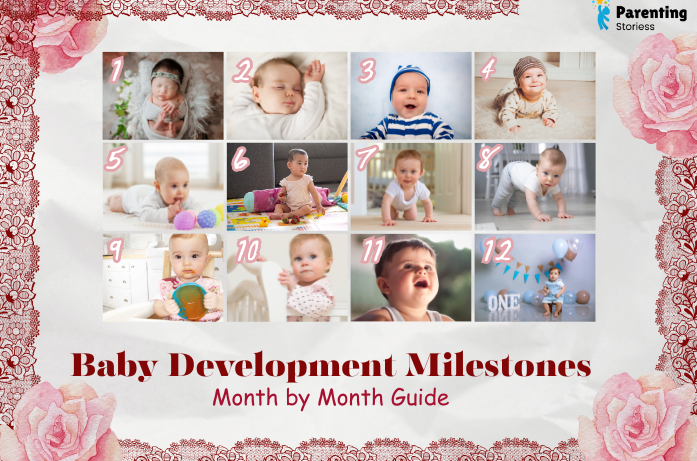
Watching a baby grow and develop is one of the most rewarding experiences for any parent. Every month brings new surprises, from the first smile to the first word, and these little moments become memories you’ll cherish forever. While each child grows at their own pace, understanding common infant development milestones helps parents know what to expect and how to encourage healthy growth.
This month-by-month baby milestone guide takes you through the first year of your baby’s life, highlighting the physical, cognitive, and emotional development you’re likely to see. Remember, milestones are guidelines, not strict deadlines. Some babies may progress faster, while others may take a little longer, both are perfectly normal.
Month 1: Adjusting to the World
In the first month, your newborn is adapting to life outside the womb. Movements are jerky, vision is blurry, and most of their time is spent eating and sleeping. However, even at this stage, babies begin to recognize their parents’ voices and respond to gentle touch and comfort.
Crying is their primary way of communicating, and parents slowly learn to recognize different types of cries, whether for hunger, discomfort, or simply wanting to be held. Skin-to-skin contact is very comforting and helps establish trust, regulate body temperature, and strengthen the bond between parent and child.
Month 2: First Smiles and Growing Awareness
By the second month, many babies start showing intentional smiles, which feels like a magical reward for parents. These social smiles are signs of growing awareness and connection. Babies begin to focus their eyes better and may follow objects or people as they move.
Neck strength improves as they try to lift their head briefly during tummy time. You may also hear the beginnings of cooing sounds, soft, sweet vocalizations that are the first steps toward language development.
Month 3: More Interaction
At three months, your baby’s personality begins to shine through. Smiles become more frequent, cooing evolves into babbling, and they may recognize familiar faces with excitement.
Physical development also progresses as babies lift their head and chest more steadily. Playtime becomes interactive, they may enjoy brightly colored toys or rattles that stimulate their senses. Emotionally, babies thrive on interaction, so singing, talking, and responding to their coos help them feel secure and engaged.
Month 4: Rolling and Laughing
The fourth month often brings one of the most heartwarming sounds: laughter. Babies also begin rolling from tummy to back, giving them a new way to explore. Their vision sharpens, allowing them to track moving objects across a room.
Emotionally, they form stronger attachments and may respond eagerly to your voice or touch. Playtime with caregivers is especially meaningful now, as babies show excitement and joy when engaging with familiar people.
Month 5: Exploring with Hands and Mouth
At five months, babies become curious explorers. They intentionally reach for toys and bring them to their mouth, which is a normal way of learning about the world. Balance improves, and some babies may begin sitting with support.
Giggles and squeals fill the house as babies react to playful interactions. They also start recognizing tone of voice, responding differently to happy or stern sounds. This shows early emotional and social awareness.
Month 6: Sitting with Support and First Solid Foods
Six months marks a major milestone. Many babies can sit with support, and some may balance on their own briefly. This is also the stage when parents introduce solid foods, while breast milk or formula continues to provide primary nutrition. The Centers for Disease Control and Prevention (CDC) provides detailed guidance on When, What, and How to Introduce Solid Foods.
Babbling becomes richer, with repeated sounds like “ba” or “da.” Socially, babies may start showing separation anxiety, looking for parents when they leave the room. This is a healthy sign of attachment and emotional development.
Month 7: Improved Mobility
By seven months, babies become increasingly mobile. They may start scooting, rocking on hands and knees, or even crawling. Their ability to handle toys improves as they pass them from one hand to another.
Playtime becomes more interactive, games like peek-a-boo are favorites because they help babies understand object permanence. Emotional bonds deepen, and babies may cling to parents when uncertain, showing how much they value comfort and security.
Month 8: Crawling and Stronger Recognition
At eight months, crawling becomes more confident, and babies eagerly explore their surroundings. They recognize familiar faces and may show hesitation around strangers, which is a natural stage of development.
Communication improves as babies respond when called by name. Their curiosity drives them to explore textures, shapes, and objects, which supports problem-solving skills, and early learning. Emotionally, they begin expressing joy, excitement, and frustration more clearly.
Month 9: Pulling Up and Babbling
Nine months often brings big physical leaps. Babies may pull themselves up to stand using furniture and start cruising along while holding on. Babbling becomes more advanced, with sounds resembling real words.
Understanding grows, too. Simple instructions like “no” or “come here” may prompt a response, even if they don’t always follow through. Fine motor skills improve as babies begin picking up smaller objects using their fingers, an important fine motor milestone.
Month 10: Increased Independence
At ten months, babies are full of determination. They crawl quickly, stand with support, and may attempt a few steps while holding your hands. Independence also means stronger reactions, joy when they succeed and frustration when they can’t.
Play becomes more purposeful. Babies enjoy placing items in and out of containers, testing cause and effect, and repeating actions to see your response. These are early signs of problem-solving and curiosity-driven learning.
Month 11: First Words and Cruising
By eleven months, babies often say their first meaningful words like “mama” or “dada.” Cruising along furniture continues, and many attempt standing without support.
Fine motor skills strengthen as they develop a pincer grasp, carefully picking up small objects with thumb and finger. Socially, they imitate actions like clapping, waving, or shaking their head, showing they learn by observing. Emotional growth is also clear, they may show affection by hugging or reaching out for comfort.
Month 12: First Birthday and First Steps
The twelfth month is a milestone worth celebrating. Many babies take their first independent steps around their first birthday, although some may begin earlier or later.
Vocabulary expands with a few clear words, and comprehension grows much faster than speech. Babies express strong preferences for people, toys, and routines. They may hug you tightly, show excitement when you return, and even display signs of independence by wanting to feed themselves.
Want to know more about your child’s growth and development? Visit the CDC’s official milestone guide here: CDC’s Developmental Milestones
Encouraging Development Month by Month
While these baby growth milestones are exciting, it’s important to remember that each baby develops at their own pace. Some may walk early, while others may start closer to fifteen months. Both are normal.
Parents can support development by providing a safe, nurturing environment. Talking, reading, and singing encourage language development, while tummy time and play areas support motor skills. Responding with comfort and love builds emotional security. Most importantly, consistent interaction strengthens your bond and gives your baby the confidence to explore the world.
If you’re ever concerned about delays, consult your pediatrician. Trusted sources like Children’s Hospital of Philadelphia’s Developmental Milestones page (a nonprofit hospital site) provide reliable guidance for parents tracking milestones.
Frequently Asked Questions (FAQ)
What if my baby doesn’t reach a milestone on time?
Small delays are common. Every baby develops differently. If your child misses several milestones, consult your pediatrician for reassurance.
When should I worry about developmental delays?
If your baby isn’t smiling by 3 months, rolling by 6 months, or trying to sit by 9 months, it’s a good idea to talk to your doctor.
Do premature babies develop differently?
Yes. Premature babies often reach milestones later, but progress is tracked using their corrected age. Most catch up with time.
How can I support my baby’s growth?
Play, talk, read, and interact daily. Safe spaces for movement and tummy time encourage physical development strength, while loving responses boost emotional security.
Do boys and girls have different milestones?
Generally, no. There may be slight differences, but overall development milestones are similar for both boys and girls.
What if my baby starts walking earlier or later than expected?
Both are normal. Some babies walk sooner, while others take more time. As long as your child is progressing in other areas, small differences in timing are usually not a cause for concern.
Final Thoughts
The first year of your baby’s life is filled with magical transformations. From the first smile to those first steps, each baby milestone reflects not only growth but also the bond you share. While it’s natural to compare your child to others, remember that development is a journey, not a race.
By offering love, patience, and encouragement, you help your baby feel secure and confident in their growth. Cherish these precious moments, they pass quickly but leave lasting memories.
Loved this guide? Explore more baby growth charts, feeding tips, and parenting milestones at ParentingStories, real stories and advice from one parent to another.
Disclaimer
This article is for informational purposes only and should not replace medical advice. If you have concerns about your baby’s growth or developmental milestones, consult a qualified pediatrician or healthcare provider.