Your baby first fever can feel overwhelming, even the most relaxed parent suddenly becomes alert, worried, and unsure of what to do next. But pause for a moment… take a deep breath. A baby fever is often simply your baby’s body doing its job, fighting off germs and building natural immunity. In many situations, it’s one of the first signs that your child’s immune system is growing stronger and learning to protect itself.
Most babies recover quickly with rest, fluids, and gentle care at home. Understanding the early signs of baby first fever, such as fussiness, reduced appetite, or feeling warm to the touch, can help parents stay prepared and calm. Creating a peaceful environment, keeping your baby comfortable, and monitoring their overall behavior often make a big difference.
Remember, in managing fever in babies, what matters most is observing how your baby is acting rather than just the number on the thermometer.
Here’s a warm, easy-to-follow baby first fever guide for new parents to help you handle your baby’s first fever with confidence and calm.
1. What Actually Counts as a Fever?
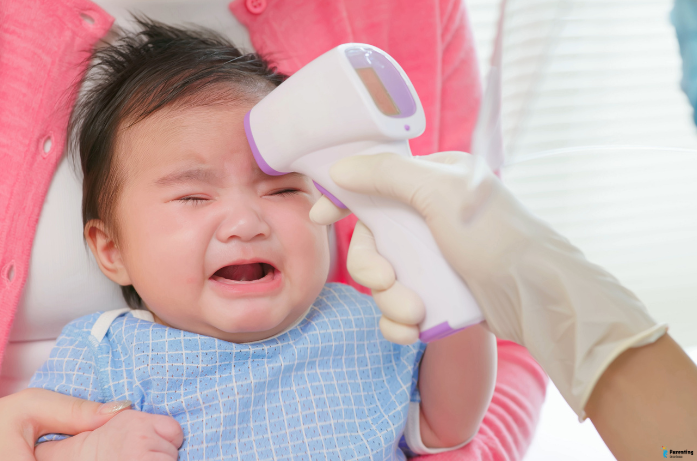
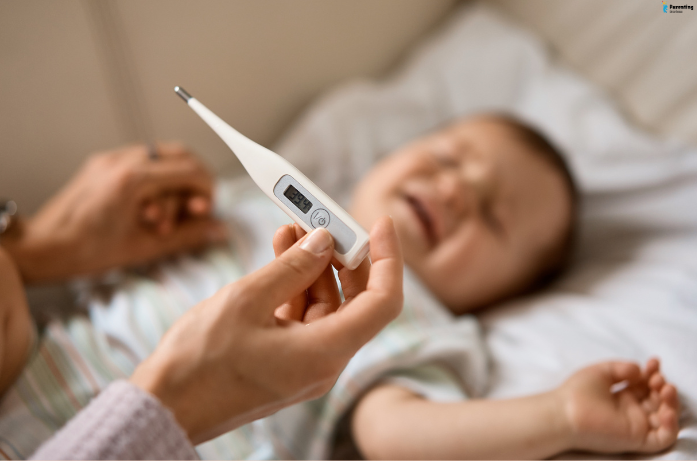
A fever is usually defined as a body temperature of 100.4°F (38°C) or above, when measured with a digital thermometer. Warm hands, flushed cheeks, or a sweaty forehead don’t always mean your baby has a fever; little ones naturally feel warm due to their active bodies and softer skin. That’s why relying on touch alone can be confusing.
A quick thermometer check is the safest and most accurate way to understand what’s really going on. Knowing the correct baby fever temperature helps parents stay calm, make informed decisions, and monitor their baby more confidently.
Pediatric experts from the American Academy of Pediatrics explain that fever itself is not an illness, but a normal response that helps the body fight infection. Trusted guidance from emphasizes focusing on your baby’s comfort and overall behavior rather than panic over the temperature alone.
2. Comfort Comes First
Your baby doesn’t just need medicine; they need comfort, warmth, and a sense of security. During a baby first fever, babies often become clingy, sensitive, or uneasy, so creating a calm environment helps them relax. Gentle touch, soothing words, and close contact can ease their discomfort and support their overall well-being, making recovery feel smoother and safer for them.
Help them feel better by:
- Dressing them in light, breathable clothes
- Keeping the room cool and airy
- Offering frequent feeds (breast milk or formula)
- Giving lots of cuddles and soft reassurance
Avoid wrapping your baby in too many layers; this can trap heat and make the fever worse.
3. Keep Your Baby Hydrated
Babies lose water faster when they have a fever, so offering extra fluids becomes especially important. Even mild dehydration can make them fussier, more tired, or less interested in feeding. Frequent breast milk, regular formula feeds, or small sips of water (for older babies) help maintain hydration and keep your little one comfortable and more energetic during recovery.
Give:
- More breastfeeding sessions
- Formula feeds as usual
- Small sips of water (only for babies older than 6 months)
Good hydration is one of the most important home care tips fora baby first fever. It helps reduce fever and keeps your baby alert and comfortable.
4. Use Medicine Only as Advised by Your Doctor
You can give paracetamol/acetaminophen, but only after confirming with your doctor, as every baby’s needs and medical history are different. Paracetamol is commonly recommended for easing discomfort or reducing fever in babies, yet the correct dose always depends on your baby’s age, weight, and overall health. Never rely on guesswork or general advice online. When in doubt, a quick call to your pediatrician ensures you’re using the medicine safely and appropriately for your little one, but only:
In the correct dose
- After checking with your paediatrician
- According to your baby’s weight
Do NOT give ibuprofen to children under 6 months.
Do NOT give aspirin, ever, to children.
If you’re unsure about dosage, it’s always safer to call your doctor first.
Medical literature also highlights that fever-reducing medicines should be used carefully in infants, with dosing based strictly on age and weight. Clinical guidance published in the National Center for Biotechnology Information (NCBI) reinforces that improper dosing or unnecessary medication can do more harm than good.
5. Avoid Old Home Remedies
Some traditional baby fever home remedies aren’t safe for babies because their bodies are still developing and react more sensitively to sudden temperature changes or harsh remedies. While these old techniques may seem comforting or familiar, they can accidentally irritate a baby’s skin, disrupt their breathing, or even increase discomfort. That’s why it’s best to avoid such practices during a fever. Instead, focus on gentle, age-appropriate, and pediatrician-approved ways to keep your baby comfortable and cared for.
Skip:
- Cold-water sponging
- Ice packs
- Alcohol rubs
- Heavy blankets
These can shock your baby’s body or raise their temperature.
If you want to sponge, use lukewarm water and do it gently on the forehead and limbs.
6. Extra Rest Helps Healing
A fever often makes babies more tired and sensitive than usual because their tiny bodies are working hard to fight off an infection. You may notice changes in their routine, like longer naps, clinginess, reduced playfulness, or needing extra comfort from parents. These behavioral shifts are completely normal and simply reflect their body’s healing process. Paying attention to these signs helps you support them better and provide the calm, restful environment they need to recover smoothly.
- Sleep more
- Act clingy
- Become fussy
- Want comfort and cuddles
7. When You Must Call the Doctor
Reach out to your pediatrician immediately if your baby:
- Is younger than 3 months with any fever
- Has a fever lasting more than 3 days
- Is unusually sleepy or hard to wake
- Has difficulty breathing
- Refuses feeds
- Has vomiting or diarrhea
- Has a seizure
- Develops a rash that doesn’t fade when pressed
And remember, your instincts matter.
If you feel something is off, don’t wait. Call your doctor.
8. Stay Calm, Your Baby Feels What You Feel
Babies sense their parents’ emotions very quickly, so your calmness plays an important role in how secure they feel during a baby first fever and illness. When you stay composed, it helps your baby relax and reduces their stress. If you ever feel overwhelmed, don’t hesitate to seek support from your partner or family members. Sharing responsibilities makes the situation easier. Remember, you don’t have to manage everything alone, and a peaceful environment can comfort your baby and support faster recovery.
Most baby fevers are caused by mild viral infections and settle within 2–3 days.
FAQs Baby First Fever
1. What temperature is considered a baby first fever?
A fever is 100.4°F (38°C) or higher.
2. Should I give medicine immediately?
Give medicine only after talking to your doctor.
3. Can teething cause fever?
Teething may cause slight warmth, but not a true fever.
4. When should I call the doctor?
Call immediately if your baby is:
• Under 3 months
• Not feeding
• Too sleepy
• Having trouble breathing
• Has fever for more than 3 days
5. Is cold sponging okay?
No, avoid cold water.
Use lukewarm water only if needed.
6. How often should I check my baby’s temperature?
Every 4–6 hours, unless your doctor says otherwise.
7. Can I use home remedies?
Avoid them for babies; stick to doctor-approved care only.
Final Thoughts : You’re Doing Better Than You Think
Your baby first fever can shake your confidence, but you’re capable, caring, and doing an amazing job.
With hydration, rest, comfort, and knowing what to do when your baby has a fever and when to call a doctor, you can manage this gently and safely.
Your baby doesn’t just need medicine; they need you.
Your touch, your calm voice, your warm arms.
And you’re already giving them exactly that.
Want more calm, practical, and trusted parenting guides?
Visit our Baby Health & Care section on ParentingStories, where we share simple, reassuring tips to help you navigate every new challenge with confidence.
You’re not alone, we’re here to support you through every fever, milestone, and magical moment of parenting.
Disclaimer: This article provides general parenting guidance and should not replace medical advice. Fever in babies can have many causes, and each baby’s health needs are different. Always consult your pediatrician for proper diagnosis and treatment. Do not give any medicine without medical advice. If your baby shows warning signs such as difficulty breathing, dehydration, seizures, persistent fever, or unusual behavior, seek medical care immediately.