

Welcoming a baby into your life is one of the most joyous experiences, but it also comes with new responsibilities, especially when it comes to skincare. Babies have delicate, sensitive skin that needs extra attention. A proper skincare routine not only keeps your little one clean and comfortable but also helps prevent rashes, irritation, and long-term skin issues. Whether you’re a first-time parent or adding another child to your family, understanding the basics of baby skincare can make a big difference in your baby’s comfort and overall health.
Understanding Baby Skin
Newborn skin is significantly thinner and more sensitive than adult skin. Their natural protective barrier is still developing, which makes it more prone to dryness, redness, irritation, and infections. Common skin concerns in newborns and infants include:
- Diaper rash: caused by wetness, friction, or irritation from diapers.
- Cradle cap: dry, flaky patches on the scalp.
- Eczema: dry, itchy, red patches that can flare up frequently.
- Dry patches: especially in winter or in homes with low humidity.
Since every baby’s skin is unique, what works for one child may not work for another. Monitoring skin changes closely and adjusting routines can prevent minor issues from becoming serious problems.
Why Baby Skincare Matters
Healthy skin isn’t just about appearance, it plays a vital role in your baby’s health. Baby skin acts as a barrier against bacteria, viruses, and irritants. Proper skincare:
- Reduces infections: Healthy skin prevents bacteria and fungi from causing rashes or infections.
- Promotes comfort: Moisturized, protected skin prevents discomfort from dryness or friction.
- Supports bonding: Gentle baby skin care routines allow parents and babies to interact closely, enhancing emotional connection.
- Encourages healthy development: Diaper-free time, gentle massages, and skin-to-skin contact improve circulation and motor skills.
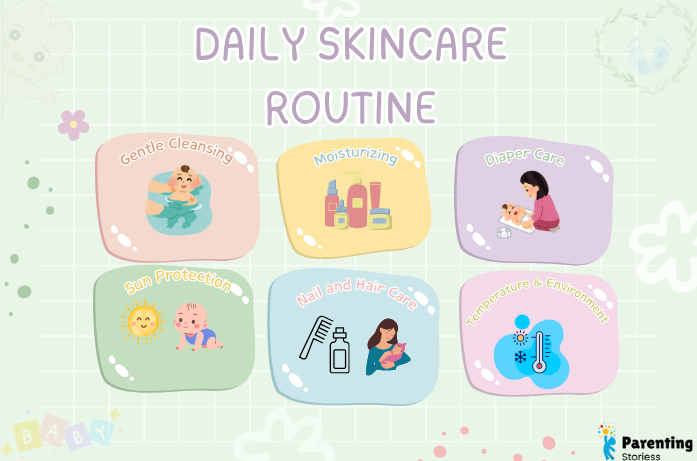
Daily Skincare Routine
Consistency is key in baby skincare. Here’s a step-by-step guide for daily care.
1. Gentle Cleansing
Use lukewarm water and a mild, fragrance-free baby cleanser. Avoid adult soaps, which can strip natural oils from sensitive skin. For newborns, a full bath 3–4 times a week is usually sufficient; daily bathing is not necessary and can cause dryness.
Tip: Pay special attention to skin folds around the neck, behind the ears, and the diaper area. These areas trap moisture and bacteria, increasing the risk of rashes or irritation.
Tip: Use a soft washcloth rather than a sponge or loofah to prevent accidental scrapes.
2. Moisturizing
Even babies need moisturizers to maintain their delicate skin barrier. Apply a hypoallergenic, fragrance-free lotion or cream immediately after bathing, while the skin is still slightly damp. This helps lock in moisture and prevent dryness.
For areas prone to extra dryness, like elbows, knees, and cheeks, a thicker cream or ointment with petroleum jelly or natural oils like coconut or almond oil can provide extra protection.
3. Diaper Care
The diaper area requires special attention because prolonged moisture and friction can lead to diaper rash.
- Change diapers frequently to avoid prolonged contact with wetness.
- Let the area air-dry when possible.
- Apply a thin layer of zinc oxide–based cream to act as a barrier against irritation.
- Fragrance-free wipes are recommended; for sensitive newborn skin, a soft washcloth with warm water works best.
Tip: Give your baby a few minutes of diaper-free time each day to allow the skin to breathe.
4. Sun Protection
Baby skin is extremely sensitive to UV rays. Newborns should be kept out of direct sunlight. For older babies, protective clothing, hats, and baby-safe sunscreen are essential for exposed areas if outdoor time is unavoidable.
5. Nail and Hair Care
Trim nails carefully using a baby nail file or clipper to prevent scratches. For hair and scalp, a soft baby brush can gently remove cradle cap flakes, and avoid using harsh shampoos that can dry the scalp.
Tip: Brushing the hair softly stimulates blood flow and helps strengthen hair follicles.
6. Temperature & Environment
Maintain a comfortable indoor temperature between 68–72°F (20–22°C). Avoid drafts and direct sunlight on the baby’s skin. Use a humidifier in dry environments to prevent dryness.
Tip: Dress babies in soft, breathable fabrics like cotton. Avoid tight or rough fabrics that can irritate the skin.
Managing Common Skin Issues
Even with careful care, babies can develop minor skin problems. Here’s how to manage them:
- Diaper Rash: Frequent changes and barrier creams are essential. Air-dry whenever possible.
- Eczema: Keep skin moisturized and use fragrance-free products. Consult your pediatrician for medicated creams if needed. The National Eczema Association provides parent-friendly guidance on Baby Eczema Care.
- Cradle Cap: Apply baby oil or a gentle moisturizer, then brush softly with a baby brush.
Tip: Always patch-test new products on a small area to prevent allergic reactions.
Bathing Tips
- Keep bath water lukewarm, not hot.
- Use only a small amount of mild, fragrance-free cleanser.
- Limit bath time to 5–10 minutes.
- Pat skin dry gently, avoid rubbing.
Clothing and Laundry
- Dress your baby in soft, breathable fabrics like cotton.
- Avoid rough fabrics or tight clothing.
- Wash baby clothes in mild, fragrance-free detergents and rinse thoroughly to remove residues. The Environmental Protection Agency (EPA) highlights that using fragrance-free and non-toxic laundry products helps reduce chemical exposure and protects sensitive skin (EPA – Safer Choice).
Tip: Avoid fabric softeners with strong fragrances, as they can irritate sensitive skin.
Parent Self-Care: Your Role in Healthy Skin
Healthy baby skin starts with attentive care from parents. A calm, patient, and observant caregiver can monitor for irritation, apply consistent skincare routines, and react promptly to minor issues before they escalate.
Tip: Set up a baby skincare station with gentle cleansers, moisturizers, and soft cloths to make routines smooth and stress-free.
FAQs About Baby Skincare
- How often should I bathe my baby?
3–4 times per week is usually sufficient for newborns. - Can I use regular soap on my baby?
No, use mild, fragrance-free baby cleansers. - How do I prevent diaper rash?
Frequent diaper changes, air drying, and zinc oxide–based cream help prevent irritation. - What moisturizer is safe for newborns?
Fragrance-free, hypoallergenic lotions or creams are recommended. - How do I manage cradle cap?
Apply baby oil, massage gently, and brush with a soft baby brush to remove flakes. - Can I use baby wipes on sensitive skin?
Yes, but fragrance- and alcohol-free wipes are best. - When should I consult a pediatrician about skin issues?
If rashes persist, spread, or show signs of infection like pus, blisters, or fever. - Are there natural remedies for baby skin care?
Gentle coconut oil or almond oil can moisturize skin, but always test on a small patch first. - Can I use sunscreen on my newborn?
No, babies under 6 months should be kept out of direct sunlight. For older babies, use a baby-safe sunscreen on exposed areas along with hats and protective clothing. - Is baby lotion necessary every day?
Not always. Daily moisturizing helps if your baby has dry skin or lives in a dry climate. Otherwise, applying lotion after baths is usually enough to maintain healthy skin.
Final Thoughts
Healthy baby skin is achieved through gentle care, consistent routines, and safe products. Paying attention to small details, from bathing and diapering to clothing and sun protection, can prevent common skin problems and keep your baby comfortable, happy, and thriving.
Remember, every baby’s skin is unique. Observing, adapting, and enjoying these tender moments of care is not just about hygiene, it’s also a beautiful opportunity to bond with your little one.
Loved this guide? Explore more newborn skincare routines, feeding tips, and baby wellness checklists at ParentingStories.com, real advice from one parent to another.
Disclaimer: This article is for informational purposes only and is not a substitute for professional medical advice. Always consult your pediatrician regarding any skin concerns or health issues.