

Welcoming a baby is one of life’s most magical and challenging experiences all at once. Suddenly, the tiny person you carried for months is now in your arms, completely dependent on you for comfort, warmth, food, and love. It feels like your whole world has been condensed into those little hands.
Along with the sweet cuddles come long nights, unpredictable naps, and the constant question that runs through your mind: AmIdoingthisright? That feeling of fatigue, worry, and uncertainty is completely normal, every new parent goes through it in the first few weeks.
The good news is that with simple, loving routines and safe sleep practices for babies, you can gradually guide your newborn toward better rest. Take small steps with patience, like letting your baby enjoy a bit of sunlight during the day, playing soft music or lullabies, and creating a calm, cozy environment at night.
Little by little, you’ll find a rhythm that works for both of you. Those quiet nighttime cuddles and gentle hugs not only help your baby feel safe and loved but also become some of the most cherished memories of your parenting journey. Every small win, like an extra hour of sleep, will boost your confidence and make this early phase even more special.
Understand Newborn Sleep Patterns
Newborns don’t sleep the way adults do, and that’s completely normal. Their tiny tummies need frequent refills, and their fast-growing brains crave comfort, closeness, and reassurance. On average, babies sleep about 14–17 hours in a 24-hour period (National Sleep Foundation), but this rest usually comes in short stretches of 2–4 hours.
That means waking up often to feed, be held, or simply hear your heartbeat is part of healthy infant sleep patterns, not a sign that something is wrong. It can feel exhausting, especially in the middle of the night, but every cuddle, every soothing whisper, and every gentle feed is helping your little one feel safe and loved.
Over time, these short nighttime interruptions often naturally lengthen as your baby grows, and those tiny nightly routines, like gentle rocking, a soft lullaby, or the comfort of your presence, lay the foundation for healthy sleep habits that will benefit both of you in the months ahead.
Create a Calm Sleep Environment
A soothing environment makes all the difference for a newborn sleep schedule. Keep the room dim and cozy at night, using soft, warm light that won’t startle your baby if they stir. Place your little one in a safety-approved bassinet or crib with a firm mattress and a snug fitted sheet , no pillows, blankets, or stuffed toys, as recommended by pediatric sleep experts.
Try to maintain the room temperature between 20–22°C (68–72°F) so your baby stays comfortably warm without overheating. A cool-mist humidifier can also be helpful if the air is dry, as it prevents your baby’s skin and nasal passages from drying out.
Other small touches can make a big difference: swaddling with a safe swaddle sack, dimming lights gradually before bedtime, and keeping nighttime feeds quiet and calm all signal to your baby that it’s time to rest. Over time, these consistent cues help your little one associate a calm, cozy environment with sleep, making both naps and nighttime rest more predictable.
Establish a Gentle Bedtime Routine
Even very young babies benefit from a predictable baby bedtime routine. A simple process , like a quick bath or gentle sponge wipe, followed by a calm feed in a low-light corner, and then soft rocking or swaddling , helps signal that bedtime is near.
Adding small, consistent gestures like a gentle massage, singing a lullaby, or spending a few quiet minutes cuddling can also help your baby relax and gradually learn to associate these cues with sleep.
Over time, these routines encourage longer, more restful stretches of sleep and create a comforting sense of rhythm for both parent and child.
Follow Safe Sleep Practices
Experts emphasize the following safe sleep practices for newborns:
- Always place your baby on their back for naps and nighttime sleep : this is the safest sleep position to reduce the risk of Sudden Infant Death Syndrome (SIDS).
- Keep the sleep area clear : avoid pillows, blankets, bumpers, or stuffed toys in the crib or bassinet, as these can pose suffocation hazards.
- Share a room (not the same bed) with your baby for at least 6 months : room-sharing can significantly reduce the risk of sleep-related deaths.
- Ensure the mattress fits snugly inside the crib or bassinet : a firm, flat mattress with a fitted sheet is recommended; avoid inclined surfaces or wedges.
- Maintain a comfortable room temperature : keeping the room at a moderate temperature helps prevent overheating, which is a known risk factor for SIDS.
- Consider white noise to help your newborn stay calm : gentle white noise or lullabies can mimic the soothing sounds of the womb, helping your baby feel secure and settled.
These steps not only give your baby the safest start but also provide you with peace of mind. Following these guidelines consistently helps your little one develop healthy, safe sleep habits from the very beginning.
Watch for Sleepy Cues
Babies often give subtle hints when they’re ready to sleep , yawning, rubbing their eyes, turning their head away, or becoming fussy. Learning to recognize these infant sleep cues is an important step in helping your baby establish a healthy routine.
Putting your baby down while they’re drowsy, but not fully asleep, allows them to gradually learn how to self-soothe. This can help your little one settle back to sleep independently if they wake up during the night.
Over time, babies start associating these cues with bedtime, which reduces fussiness, promotes longer stretches of rest, and supports the development of natural circadian rhythms.
Feed Responsively
Hunger is one of the biggest reasons newborns wake during the night. Offering milk as soon as you notice early hunger cues, like rooting, sucking on their hands, or smacking their lips, rather than waiting for them to cry, can make a big difference in keeping your baby calm and comfortable.
Responding promptly also reduces stress for both you and your little one. Whether breastfeeding or using formula, responsive feeding helps create a predictable rhythm between hunger and rest.
A well-fed, satisfied tummy often leads to longer stretches of rest, fewer nighttime disruptions, and a calmer, happier baby.
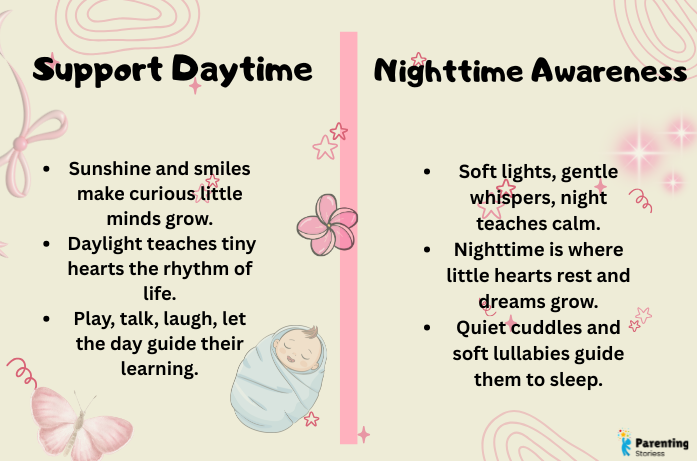
Support Daytime/Nighttime Awareness
During the day, keep curtains open, let natural light in, play with your baby, and interact frequently. Talking, singing, and gentle tummy time all help your little one stay alert and learn about the world around them.
At night, keep lights dim, voices soft, and avoid stimulating play. Simple habits , like a consistent bedtime, soft music, or a quiet cuddle before sleep , can be just as effective in helping babies understand the difference between day and night.
Over time, these cues create a sense of security, gradually making sleep more restful for both you and your baby.
Care for Yourself, Too
Parenting a newborn is incredibly demanding, so it’s important to rest whenever you can. Even short naps during the day can make a big difference in your energy and mood. Accepting help from loved ones isn’t a sign of weakness, it’s an essential part of surviving the early weeks. Sharing night duties, asking someone to prepare a meal, or simply letting a trusted family member watch the baby for an hour can give you the rest you need to be more patient, attentive, and emotionally present.
Many parents feel overwhelmed during this stage, and that’s completely normal. Connecting with support networks, such as Postpartum Support International (PSI), local parenting groups, or online communities, can provide guidance, reassurance, and practical tips. Remember, taking care of yourself is just as important as taking care of your baby. A calm, rested parent creates a secure and loving environment, helping both you and your newborn navigate this early period with more ease and confidence.
FAQs About Newborn Sleep
1. When will my baby start sleeping through the night?
Most babies begin longer stretches of sleep (5–8 hours) between 3–6 months, but every child is unique.
2. Is swaddling safe?
Yes, when done properly and stopped once your baby starts rolling.
3. Can I use a pacifier?
Yes, pacifiers are safe once feeding is well established, and some research shows they may help reduce the risk of SIDS.
4. How do I handle frequent night wakings?
Keep nights calm, with dim lights and soft voices. Over time, your baby learns that nights are for sleep.
5. How much daytime sleep does my newborn need?
Newborns typically take several naps totaling 14–17 hours in 24 hours. Short naps of 30 minutes to 2 hours are completely normal.
6. When should I establish a bedtime routine?
You can start a simple routine in the first few weeks , a gentle bath, feeding, and quiet cuddle , to help your baby recognize sleep cues.
Final Thoughts
Helping your newborn sleep isn’t about strict schedules. It’s about love, patience, and gentle structure. Celebrate small wins, like an extra hour of rest, and remember: this phase is temporary. With safe practices, support, and consistency, healthy sleep habits will follow.
Want more expert parenting guidance? Visit Parenting Stories for trusted advice, relatable experiences, and a supportive community.
Disclaimer
This blog is for educational purposes only and not a substitute for medical advice. Always consult your pediatrician or healthcare provider for your baby’s sleep and health concerns.