If you’re a parent, you already understand how fragile and unpredictable baby sleep can be. One moment your little one is sleeping peacefully, and the next they’re awake, startled by a door closing, traffic noise outside, or even the quiet sound of you moving nearby.
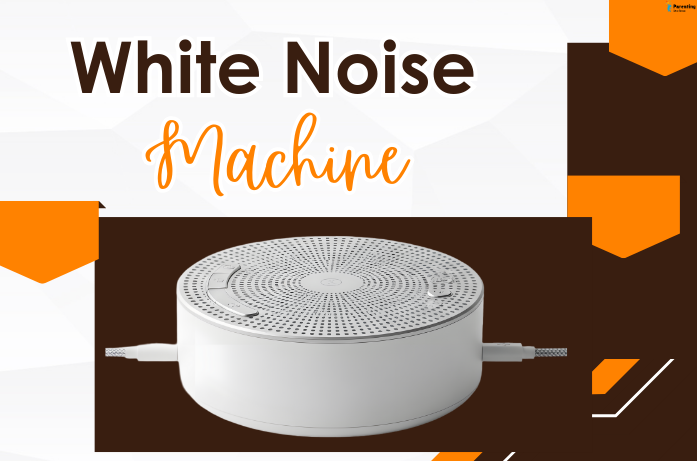
In moments like these, a white noise machine for babies can feel like a gentle relief.
A white noise machine doesn’t force your baby to sleep. Instead, it creates a calm, steady sound environment that helps soothe them. This soft, consistent background noise masks sudden sounds that can cause startle reflexes, making it easier for babies to fall asleep and stay asleep longer.
When used correctly, a white noise machine for baby sleep can become a safe and supportive part of your baby’s sleep routine, offering comfort not just to your baby, but to you as well.
Let’s take a closer look at what white noise machine for babies is, how it helps babies, and how to use it safely.
What Is a White Noise Machine?
A white noise machine for babies gives off a soft, steady sound that gently covers sudden background noises. Think of it like a cozy sound blanket, it smooths out the environment and helps your baby feel calm and settled.
Common sounds include:
- White noise (similar to the steady hum of a fan)
- Soft rainfall
- Gentle ocean waves
- Heartbeat sounds
- Soft humming or static
For babies, these sounds feel comforting because they closely resemble the constant, familiar noises they heard in the womb, helping them feel safe, calm, and secure.
Why White Noise Helps Babies Sleep
1. Mimics the Womb Environment
Inside the womb, babies are surrounded by constant sounds, heartbeat, blood flow, and gentle movement. Complete silence is actually unfamiliar to them.
white noise machine for babies recreates this steady background, helping babies feel safe, secure, and comforted, much like they did before birth.
2. Blocks Sudden Noises
Everyday household sounds such as:
- Doors opening
- Traffic
- Siblings playing
- Barking dogs
can easily startle a sleeping baby. White noise gently masks these sudden sounds, reducing disruptions and helping your baby stay asleep longer.
3. Calms Fussiness and Crying
Many parents notice that white noise:
- Helps calm overstimulated babies
- Reduces crying episodes
- Makes bedtime transitions smoother
This happens because white noise gives the brain one consistent, predictable sound to focus on, which naturally promotes calmness.
When Can You Use a White Noise Machine?
You can begin using a white noise machine for babies right from the newborn stage, as long as it’s set up safely and used following recommended guidelines. It can help create a calm, comforting environment your baby will respond to.
It can be especially helpful for:
- Helping your baby sleep
- Naps and bedtime
- Travel or unfamiliar environments
- Daytime sleep in noisy homes
Parent tip: White noise works best when paired with a consistent sleep routine. This helps your baby feel calm, secure, and sleep more peacefully.
Is White Noise Safe for Babies?
Yes, white noise is safe for babies when it’s used properly and with the recommended safety guidelines in mind.
Safe Usage Guidelines:
- Keep the volume below 50 decibels, about as loud as a gentle shower
- Place the machine at least 6–7 feet away from your baby’s crib
- Avoid placing it inside the crib or too close to your baby’s ears
- Use white noise during sleep times only, rather than all day
White noise is meant to support and protect your baby’s sleep, not overwhelm their sensitive hearing. Used thoughtfully, it can be a gentle and helpful part of your baby’s routine.
The American Academy of Pediatrics emphasizes the importance of safe sleep practices, including safe use of white noise machine for babies, to protect your baby’s hearing and sleep health.
Types of White Noise Machines
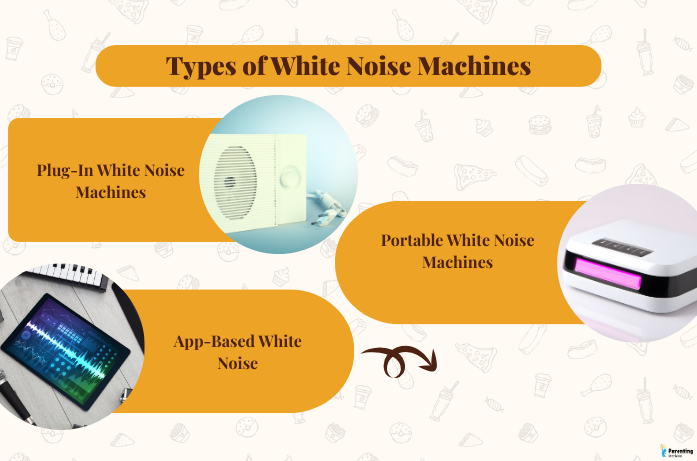
There are different types of white noise machines available, and choosing the right one depends on your baby’s needs and your daily routine.
Plug-In White Noise Machines
These machines are designed for regular, at-home use and work well in a nursery setting.
- Ideal for nurseries
- Provide consistent power and steady sound
- Often include helpful features like timers and soft night lights
Portable White Noise Machines
Portable options are perfect for families who are often on the move or traveling with their baby.
- Great for travel and stroller naps
- Battery or USB powered
- Compact and easy to carry
App-Based White Noise
Apps can be useful occasionally, especially when a dedicated machine isn’t available.
- Convenient in emergencies or short-term use
- Volume levels may be less consistent
- Not ideal for regular, long-term nightly use
For everyday sleep, dedicated white noise machine for babies are usually safer and more reliable than phones.
What to Look for When Choosing a White Noise Machine
Sound Quality
- The sound should be continuous and smooth, not looping or cutting off
- A few essential sound options are enough, more isn’t always better
Volume Control
- Volume should be easy to adjust
- The lowest setting should be soft and gentle for your baby
Timer & Auto-Off
- Helpful for gradually reducing your baby’s dependence on white noise
- Adds convenience for parents during sleep routines
Safety & Design
- No bright lights, or lights that can be dimmed or turned off
- Stable placement so it doesn’t tip over easily
- Made from child-safe materials
Remember: Simple is often best. Your baby doesn’t need dozens of sound options—just a calm, consistent environment that feels safe and soothing.
How to Use White Noise as Part of a Sleep Routine
When it comes to baby sleep, consistency really matters. Doing the same calming steps each time helps your baby feel safe and know what to expect.
A gentle sleep routine might look like this:
- Dim the lights to signal that it’s time to wind down
- Change your baby’s diaper and put on comfortable sleepwear
- Turn on the white noise
- Place your baby in the crib when they’re drowsy but still awake
Over time, white noise machine for babies becomes a familiar sleep cue, gently signaling to your baby that it’s time to rest and fall asleep.
Integrating a consistent sleep routine, as suggested by the American Academy of Pediatrics, can help your baby learn healthy sleep habits with the aid of white noise.
Frequently Asked Questions (FAQs)
1. Can newborn babies use a white noise machine?
Yes, white noise can be used from the newborn stage, as long as it’s set up safely. Keep the volume low, place the machine at a safe distance, and use it only during sleep times.
2. Will my baby become dependent on white noise to sleep?
White noise works as a sleep cue, not a dependency. Babies can slowly be weaned off it later by reducing volume or using a timer as they grow and their sleep patterns mature.
3. How loud should white noise be for babies?
The volume should stay below 50 decibels, roughly the sound of gentle rainfall or a soft shower. If you can easily talk over it, it’s usually at a safe level.
4. Where should I place the white noise machine?
Place the machine at least 6–7 feet away from your baby’s crib. Never put it inside the crib or directly next to your baby’s head.
5. Is white noise safe for long-term use?
Yes, when used correctly and only during sleep times. Avoid running white noise continuously throughout the day, and always keep the volume low to protect sensitive hearing.
6. Should I use a phone app or a white noise machine?
For regular daily sleep, a dedicated white noise machine for babies is usually safer and more reliable than a phone app, as it offers better sound consistency and controlled volume.
Final Thoughts: A Gentle Sleep Support Tool
A white noise machine for babies isn’t a sleep shortcut, it’s a supportive tool. When used mindfully, it can bring calm to bedtime, protect sleep from disruptions, and help babies settle more easily.
Every baby is different. Some love white noise instantly, while others take time to adjust. Trust your baby’s cues, keep volume low, and focus on comfort, not perfection.
At Parenting Stories, we believe better sleep starts with understanding, patience, and small tools that support your baby’s natural rhythms. Because rested babies, and rested parents, make happier days.
Disclaimer
This article is for informational purposes only and does not replace professional medical advice. Always supervise your baby, follow manufacturer instructions, and consult your pediatrician if you have concerns about sleep or hearing safety.