By Parenting Stories Team
From the moment your baby opens their tiny eyes, every sight, sound, and touch becomes a new discovery. Those first coos, giggles, and curious stares are more than adorable moments, they are signs of a mind beginning to explore. Playtime isn’t just about fun; it’s one of the most powerful ways babies learn about the world around them.
Every time a baby shakes a rattle, feels a soft toy, or watches a colorful object move, their brain is making millions of new connections. These simple interactions build the foundation for lifelong learning. Educational toys play a key role in this journey, they help stimulate curiosity, strengthen sensory and motor skills, encourage problem-solving, and boost social-emotional growth.
Experts in child development, including those from the American Academy of Pediatrics (AAP), emphasize that play is essential for healthy braindevelopment and emotional balance. Through playful interaction, babies begin to understand cause and effect, develop fine motor coordination, and even learn the early building blocks of communication and confidence.
The right toy at the right stage can turn simple giggles into meaningful learning moments, transforming play into a powerful form of early education. Whether it’s a soft rattle that strengthens grip, a colorful stacking ring that teaches balance, or a musical toy that enhances auditory skills, each one contributes to your baby’s cognitive and emotional development in a unique way.
In this guide, we’ll explore the best educational toys for babies that support every stage of growth, from newborn to toddler years, helping your child learn, grow, and discover the joy of play in the safest and most nurturing way possible.
1. The First Six Months: Sensory Exploration
In the early months, your baby is learning to make sense of every sound, texture, and movement around them. This stage is all about sensory exploration, when sight, touch, and hearing play key roles in brain development. Simple toys like rattles, soft books, and high–contrast visuals stimulate curiosity and coordination. Sensory play also strengthens emotional bonding as your baby begins to recognize familiar voices, faces, and comforting touches.
Recommended Toy Types:
- Soft rattles and fabric books: Encourage grasping and sound recognition.
- Black-and-white contrast cards: Ideal for newborns’ limited vision; helps visual tracking.
- Tummy time mats: Strengthen neck and shoulder muscles while promoting curiosity.
- Crinkly cloth toys: Babies love the sound and texture, which enhance tactile exploration.
Expert Insight:
Sensory play helps babies reach important developmental milestones by encouraging them to respond to sounds, follow moving objects, and show curiosity about their surroundings.
2. 6 to 12 Months: Cause and Effect Learning
As your baby grows, their curiosity blossoms, and they begin to notice patterns, that their actions can create reactions. This is when they love experimenting, like banging, shaking, or dropping toys to see what happens next. Such playful exploration boosts problem-solving, memory, and logical thinking. Introducing simple interactive toys now helps strengthen fine motor skills and teaches your baby that their actions have meaning and impact in the world.
Recommended Toy Types:
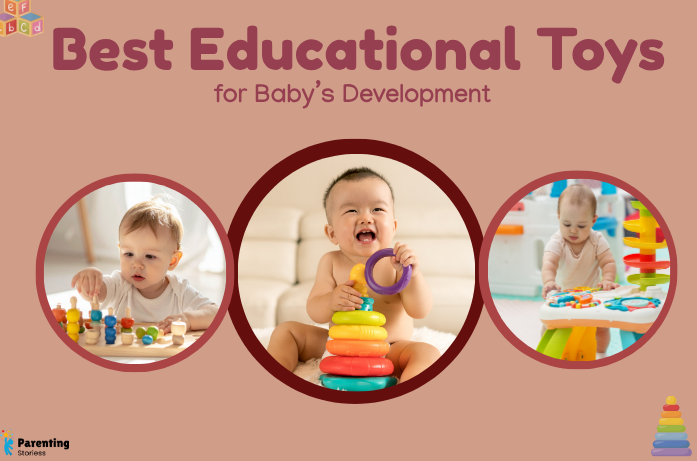
- Stacking rings: Develop hand-eye coordination and problem-solving.
- Activity cubes: Offer buttons, gears, and sliders that enhance fine motor skills.
- Musical instruments (safe versions): Simple drums, xylophones, or shakers support auditory development and rhythm awareness.
- Mirror toys: Encourage self-recognition and emotional development.
Pro Tip: Keep it simple. Overstimulating toys with flashing lights and constant noise can overwhelm a baby. Choose ones that let them control the sound or movement.
3. 12 to 18 Months: Movement and Problem Solving
At this stage, your little one is filled with energy and curiosity, eager to move, climb, and explore every corner. As they begin walking more confidently, they also start solving simple problems, like figuring out how to stack blocks or fit shapes into holes. These playful activities strengthen muscles, improve coordination, and boost confidence. Encouraging safe movement–based play now lays the foundation for lifelong physical and cognitive development.
Recommended Toy Types:
- Push and pull toys: Strengthen walking confidence and coordination.
- Shape sorters: Build logical thinking, color recognition, and spatial awareness.
- Building blocks: Encourage creativity and introduce concepts like balance and size.
- Ride-on toys: Support gross motor skills and provide joyful motion-based learning.
Fun Tip for Parents: Play alongside your baby! Narrate actions (“You’re pushing the car forward!”) to boost language development and bonding.
4. 18 to 24 Months: Imagination and Early Language
During the toddler years, children begin to engage in imaginative play, pretending to be different people or objects. Their language skills grow rapidly, allowing them to express thoughts and emotions more clearly. They start forming simple sentences, asking questions, and exploring cause and effect. Toddlers also develop empathy and an understanding of others’ feelings. Play becomes richer, involving storytelling, role-playing, and creativity that build cognitive, social, and emotional skills.
Recommended Toy Types:
- Pretend play sets: Simple kitchen sets, doctor kits, or dollhouses encourage imagination.
- Chunky puzzles: Improve problem-solving and fine motor control.
- Building sets with larger pieces: Teach spatial awareness and coordination.
- Picture books with textures or flaps: Boost vocabulary and curiosity.
Language Tip:
Read, talk, and sing to your child often. According to the National Institute on Deafness and Other Communication Disorders (NIDCD), frequent language interaction supports stronger speech and communication development.
5. 2 Years and Beyond: Creativity and Social Learning
By age two, play becomes increasingly interactive and social. Children begin to share toys, imitate adults, and participate in simple group games. They start understanding turn–taking, cooperation, and empathy toward others. Their imagination expands as they use objects symbolically, like pretending a block is a car. Educational toys for toddlers help enhance creativity, patience, problem-solving, and teamwork. Through such play, toddlers build essential emotional, social, and cognitive skills that support lifelong learning.
Recommended Toy Types:
- Building blocks (LEGO®-style, safe for toddlers): Develop creativity and persistence.
- Art supplies (non-toxic crayons, playdough): Encourage self-expression.
- Simple board games: Teach sharing, waiting, and cooperation.
- Musical toys: Develop rhythm, coordination, and emotional expression.
Developmental Tip:
According to the Harvard University Center on the Developing Child, creative play supports the development of executive functions, skills like memory, focus, and self-control that are crucial for lifelong learning.
6. How to Choose the Right Educational Toy
When selecting toys, focus on safety, simplicity, and learning value. Choose toys that are free from sharp edges, small choking hazards, or toxic materials. Opt for simple designs that spark creativity rather than overwhelm with lights or sounds. Make sure the toy suits your child’s developmental stage and encourages hands-on exploration. Durable, washable, and interactive toys promote bonding, problem-solving, and motor skills.
Safety: Avoid small parts, sharp edges, or toxic materials, look for BPA-free, non-toxic baby toys.
Simplicity: The best toys invite imagination, not overstimulation.
Age-appropriateness: Match your child’s current developmental stage.
Interaction: Choose toys that encourage parent-child bonding.
Durability: Babies love to throw and chew, choose toys built to last!
You can also refer to the Consumer Product Safety Commission (CPSC) for toy safety guidelines.
7. The Role of Parents in Play
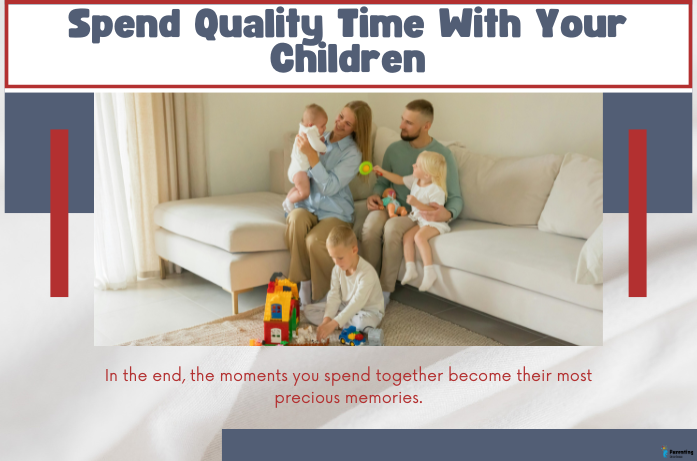
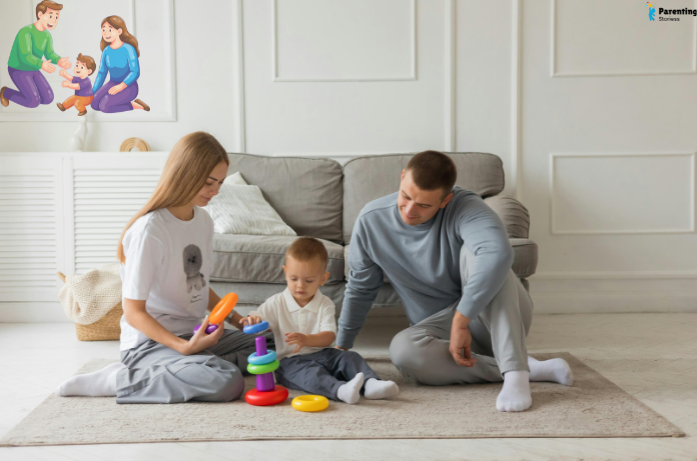
Remember, you are your baby’s favorite toy. Your voice, expressions, and attention teach far more than any gadget ever could. When parents actively play, talk, and laugh with their children, they nurture trust, communication, and emotional security, the roots of lifelong confidence and curiosity. Through shared play, children feel valued and understood, which supports healthy brain development and strong relationships. Play doesn’t need to be expensive or complex; it simply needs love, time, and meaningful connection.
FAQs About Educational Toys for Babies
1. What makes a toy “educational”?
An educational toy encourages your baby to think, explore, and develop new skills, like grasping, balancing, or recognizing sounds and colors. The best toys combine fun with learning.
2. When should I start using educational toys?
Right from birth! Soft rattles, high-contrast cards, and textured toys help stimulate your newborn’s senses and brain development.
3. Do I need expensive toys for my baby’s growth?
Not at all. Babies learn best through simple, safe, and interactive toys, and through everyday play with you.
4. How much playtime is ideal each day?
For newborns, even 10–15 minutes of active play at a time is enough. As your baby grows, extend playtime gradually based on their interest and energy.
5. Are electronic toys good for babies?
Experts recommend limiting flashing lights and loud sounds. Choose toys that let your baby control actions (like pressing buttons or shaking), not passive entertainment.
6. What’s more important, toys or parent interaction?
Your baby’s favorite toy is you! No gadget can replace your voice, touch, and love during play. Educational toys work best when paired with your presence and encouragement.
Final Thoughts
Educational toys are not just playthings, they are stepping stones in your baby’s journey to becoming curious, confident, and capable. Whether it’s a soft rattle, a set of colorful blocks, or a pretend kitchen, each toy plays a role in shaping how your baby learns to think, move, and communicate.
So, fill your home with toys that inspire imagination, laughter, and discovery. Because every giggle, grasp, and aha moment today is the foundation for a brighter tomorrow.
At Parenting Stories, we believe playtime isn’t just fun, it’s the foundation of learning, bonding, and joyful growth.
Explore more expert-backed parenting guides, baby development tips, and play-based learning ideas, designed to help your little one grow curious, confident, and happy every day.
Visit ParentingStories.in to keep discovering, learning, and playing, together!
Disclaimer:
This article is for informational and educational purposes only. It should not replace professional advice from a pediatrician or child development specialist. Always follow safety guidelines and supervise your baby during play.