Written with care by a loving mom at Parenting Stories
The process of welcoming your newborn into your family creates a special experience which combines three different emotions. The experience brings joy and love to your life but it also creates a special duty which you must fulfill. I remember holding my baby and wondering am I doing enough to boost newborn immune system and keep my little one safe from illness?
Newborns enter the world with an underdeveloped immune system because their bodies need time to learn how to combat illnesses. The initial defense system works through maternal antibodies, which the baby receives during gestation, but this protection lasts only for a short time.
Through regular care practices, you will help your baby develop their personal immune system because they will develop strength as they grow.
How to Boost Newborn Immune System Naturally
As parents, it’s easy to feel like we need to do everything perfectly. We read articles, listen to advice, and sometimes feel overwhelmed trying to follow it all.
But when it comes to learning how to boost newborn immune system, the truth is much simpler. It’s not about doing everything, it’s about doing a few important things consistently.
Feeding your baby well, ensuring proper sleep, maintaining basic hygiene, and fostering a loving atmosphere at home all these factors collectively work to strengthen your child’s immunity. The small habits you incorporate into your daily routine will, over time, yield significant and remarkable results.
Rather than worrying about achieving perfection in every endeavor, you should focus on creating a calm and loving environment within your home. Far more than an “ideal parent,” what your child truly needs is for you to be fully present with them in every moment.
Breastfeeding and Passive Immunity
Breastfeeding is one of the most natural and effective ways to provide immune support for newborns. Breast milk is not just food, it’s a living source of protection filled with antibodies, nutrients, and enzymes that help your baby fight infections.
One of the most important components in breast milk is Immunoglobulin A (IgA). If you’ve ever wondered which class of immunoglobulin provides passive immunity to the newborn, the answer is IgA. It lines your baby’s throat and digestive system, creating a protective barrier against harmful bacteria and viruses.
The first milk, called colostrum, is especially powerful. It’s thick, yellow, and produced in small amounts, but it’s packed with immune-boosting properties. Even a few drops can provide incredible protection.
At the same time, it’s important to say this gently, if breastfeeding isn’t possible for you, please don’t feel guilty. Many babies grow strong and healthy with formula feeding. What matters most is that your baby is fed, loved, and cared for.
The Importance of Immunizations for Newborns
Understanding immunizations newborn guidelines can feel confusing at first, especially with so much information around. I remember feeling nervous before my baby’s first vaccine appointment.
But learning more helped me feel calmer. Vaccines are designed to safely train your baby’s immune system. They introduce a very small, harmless part of a virus or bacteria so the body can learn how to fight it in the future.
This means if your baby is ever exposed to that illness later, their body is already prepared to respond quickly and effectively.
Vaccines protect against serious diseases like tuberculosis, polio, and hepatitis, illnesses that can be very dangerous for newborns. Following your doctor’s recommendations helps give your baby a strong and safe start.
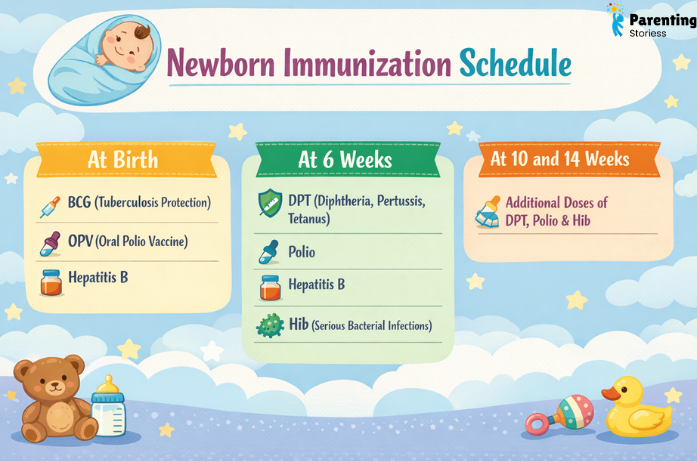
Newborn Immunization Schedule
Following the newborn immunization schedule India is one of the most important steps in supporting your baby’s immunity.
Here’s a simple and easy-to-understand overview:
At Birth
- BCG (protects against tuberculosis)
- OPV (oral polio vaccine)
- Hepatitis B
At 6 Weeks
- DPT (diphtheria, pertussis, tetanus)
- Polio
- Hepatitis B
- Hib (protects against serious bacterial infections)
At 10 and 14 Weeks
- Additional doses of DPT, Polio, and Hib
Your pediatrician may suggest slight variations depending on your baby’s health or location. Keeping up with this schedule helps your baby develop strong immunity during the most vulnerable months.
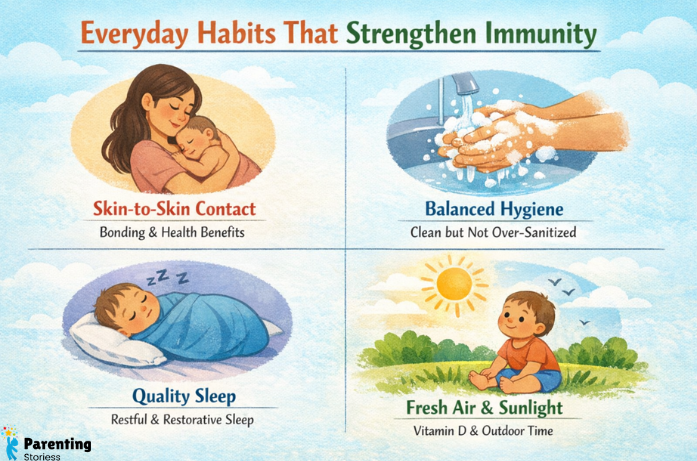
Everyday Habits That Strengthen Immunity
You don’t need complicated routines or expensive products to support your baby’s immune system. Simple, everyday actions can make a lasting difference.
1. Skin-to-Skin Contact
Holding your baby close is more powerful than it seems. Skin-to-skin contact helps regulate your baby’s temperature, breathing, and heart rate. It also supports the development of healthy bacteria that contribute to immunity.
2. Balanced Hygiene
Cleanliness is important, but over-sanitizing everything isn’t necessary. Focus on washing hands before touching your baby, keeping feeding items clean, and avoiding contact with illness.
3. Quality Sleep
Sleep plays a huge role in immune development. Newborns need a lot of sleep because their bodies grow and repair during this time. A calm, quiet environment helps your baby rest better.
4. Fresh Air and Sunlight
Gentle sunlight provides vitamin D, which supports immune function. A few minutes of morning sunlight or fresh air each day can be beneficial for both you and your baby.
Protecting Your Baby from Infections
In the early weeks, your baby’s immune system is still developing, so it’s okay to be a little extra careful.
Try to limit exposure to crowded places and avoid visitors who are unwell. It can feel difficult to set boundaries, especially with loved ones, but your baby’s health always comes first.
At the same time, remember that your baby doesn’t need to be in a completely sterile environment. Gradual exposure to normal surroundings helps their immune system learn and grow stronger.
Signs Your Baby May Need Medical Attention
Most newborns are healthy, but it’s important to stay aware of any changes in their behavior or health.
You should contact your doctor if you notice:
- Fever
- Difficulty feeding
- Unusual sleepiness
- Breathing problems
- Continuous or excessive crying
Trust your instincts. If something doesn’t feel right, it’s always okay to seek medical advice. It’s better to ask than to worry.
Supporting Yourself as a Parent
Caring for a newborn can feel overwhelming. There are moments of joy, but also moments of doubt. I remember asking myself again and again, am I doing enough?
But here’s something I want you to remember:
You are already doing more than you think.
Every cuddle, every feed, every moment you stay awake to care for your baby, it all matters. Your love creates a sense of safety that no medicine can replace.
Take care of yourself too. Rest when you can, ask for help when needed, and be kind to yourself during this journey.
Final Thoughts for Loving Parents
Learning how to boost newborn immune system naturally isn’t about doing everything perfectly. It’s about creating a safe, loving, and balanced environment where your baby can grow at their own pace.
Your baby doesn’t need complicated routines or constant worry. They need your presence, your warmth, and your gentle care. Take it one day at a time. Some days will feel easy, while others may feel overwhelming, and that’s completely normal.
You are learning, growing, and giving your baby exactly what they need. Trust yourself, mama, you are doing an incredible job.
Frequently Asked Questions
1. What are the best ways to provide immune support for newborns?
The best ways include breastfeeding, proper sleep, maintaining hygiene, and following vaccination schedules. These simple steps provide strong immune support for newborns over time.
2. How do immunizations newborn help build immunity?
Vaccines safely train your baby’s immune system to recognize and fight infections, helping protect them from serious diseases.
3. What is the newborn immunization schedule India parents should follow?
The newborn immunization schedule India includes vaccines at birth, 6 weeks, 10 weeks, and 14 weeks to protect against common and serious illnesses.
4. Which class of immunoglobulin provides passive immunity to the newborn?
Immunoglobulin A (IgA) provides passive immunity to the newborn, mainly through breast milk, protecting the baby’s digestive and respiratory systems.
5. How to boost newborn immune system in the early months?
You can boost newborn immune system by focusing on feeding, hygiene, sleep, bonding, and timely vaccinations recommended by your pediatrician.
If this guide helped you feel more confident, share it with another parent who may need reassurance. At Parenting Stories, we’re here to support you with gentle advice, real experiences, and trusted parenting guidance.
Disclaimer: This article is for informational purposes only and does not replace professional medical advice. Always consult your pediatrician for any concerns about your baby’s health or immunity.