

Written with care by a caring mom at Parenting Stories
A breastfeeding skin rash is irritation, redness, itching, dryness, or soreness that appears on or around the breasts while nursing. It is often caused by sweat, trapped moisture, friction from bras or breast pads, eczema, thrush, or a reaction to creams and detergents. In many cases, it can be treated by keeping the skin dry, avoiding irritants, and using doctor-approved treatment if needed. If the rash comes with fever, severe pain, or spreading redness, it is best to speak to a doctor.
Breastfeeding can be beautiful, but it can also be hard on your body. Along with sore nipples, leaking milk, and engorgement, some moms also deal with an uncomfortable breastfeeding skin rash. It may show up as redness, itching, flaky skin, small bumps, or soreness on the breasts or around the nipples. When you are already tired and adjusting to life with a baby, even a small rash can feel like a big problem.
The good news is that a skin rash breastfeeding moms experience is usually treatable once you understand what is causing it. Sometimes it is as simple as trapped sweat or friction from a bra. Other times, it may be eczema, thrush, or irritation from a cream or detergent. In this guide, we will go through the most common causes, symptoms to watch for, safe treatment options, and when you should call your doctor. Research published in PubMed Central (PMC) also highlights how common breastfeeding-related nipple and skin concerns can be and why early care matters.
Table of Contents
What is a breastfeeding skin rash?
A breastfeeding skin rash is any itchy, red, inflamed, flaky, or irritated skin that appears on the breasts while you are nursing. It can affect the nipples, areola, under the breasts, or the surrounding skin.
Some rashes are mild and simply annoying. Others can sting, burn, or make breastfeeding uncomfortable. Because your breasts go through so much during the postpartum period milk leaks, sweat, friction, frequent feeding, and hormonal changes it is not unusual for the skin to become sensitive.
Breastfeeding skin rash symptoms
A breastfeeding skin rash can look different from one mom to another. Some notice dry, itchy patches, while others see red bumps or shiny sore skin around the nipples.
Common symptoms include:
- Red or pink patches on the breast
- Itching, burning, or stinging
- Dry, flaky, or peeling skin
- Small bumps or a prickly rash
- Cracked skin around the nipple
- Sore, shiny, or tender nipples
- Moist or raw skin under the breast fold
If the rash feels hot, spreads quickly, or comes with fever or deep breast pain, it needs medical attention.
Breastfeeding skin rash causes
There are several possible reasons for a breastfeeding skin rash, and the right treatment depends on the cause.
1. Moisture and sweat
Leaking milk, damp breast pads, and sweat can keep the skin wet for too long. This is especially common under the breasts or around the nipples. When skin stays damp, it becomes irritated more easily and may develop redness, itching, or a heat-rash feeling.
2. Friction from bras or breast pads
A tight bra, rough nursing pad, or repeated rubbing during feeding can irritate already sensitive skin. This may cause soreness, redness, or chafing, especially if your nipples are also sore from nursing.
3. Reaction to creams, soaps, or detergent
Sometimes the rash is caused by contact dermatitis, which means your skin is reacting to something touching it. Scented soaps, nipple creams, laundry detergent, and even some breast pads can trigger itching or patchy redness.
4. Eczema
If you have sensitive skin, allergies, or a history of eczema, breastfeeding and postpartum hormones can trigger a flare-up. Eczema often looks like dry, itchy, rough patches that keep coming back.
5. Thrush
Thrush is a yeast infection that can affect both mom and baby during breastfeeding. It often causes shiny, pink, sore, or flaky nipples with burning pain during or after feeds. Your baby may also have white patches in the mouth or a stubborn diaper rash. If you suspect thrush, the Cleveland Clinic’s guide to nipple yeast infections explains the symptoms and treatment in a very helpful way for breastfeeding moms.
6. Heat rash
Heat rash is common in warm weather or when sweat gets trapped under the breasts. It usually appears as tiny red bumps or a prickly, itchy rash.
7. Skin infection
If the skin becomes cracked or broken, bacteria can get in and cause infection. This may lead to redness, swelling, warmth, pain, or even pus. A rash that looks infected should always be checked by a doctor.
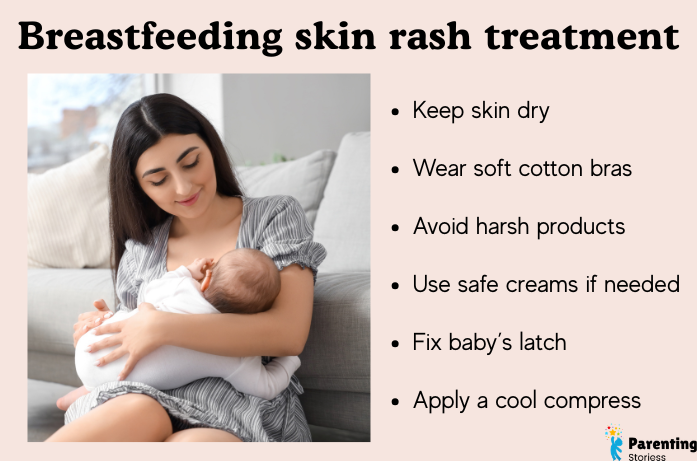
Breastfeeding skin rash treatment
The best treatment depends on what is causing the rash, but these simple steps help in many cases.
1. Keep the area clean and dry
Moisture makes many rashes worse. After feeding, gently pat the skin dry and change damp breast pads quickly. If possible, let the area air-dry for a few minutes each day.
2. Wear soft, breathable bras
Choose cotton nursing bras or soft fabrics that do not trap heat and sweat. Avoid bras that are too tight, rough, or heavily padded if they seem to irritate your skin.
3. Avoid products that may irritate the skin
Pause fragranced soaps, lotions, detergents, or nipple creams if you think they may be making the rash worse. Sometimes simplifying your routine is enough to calm the skin.
4. Use doctor-approved creams if needed
Depending on the cause, your doctor may suggest an antifungal cream, a mild steroid cream, or an antibiotic treatment. Always ask before using medicated creams on the nipple area.
5. Fix latch issues if nipples are damaged
If your nipples are cracked or sore after feeds, latch problems may be part of the issue. A lactation consultant can help make feeding more comfortable and reduce skin irritation.
6. Use a cool compress for relief
A cool, clean cloth can help soothe itching, burning, or inflammation while the skin heals.
Can you keep breastfeeding with a skin rash?
In many cases, yes. A breastfeeding skin rash does not automatically mean you need to stop nursing. Mild eczema, heat rash, friction irritation, or moisture-related rashes can often be treated while continuing to breastfeed.
The exception is when the pain is severe, the skin is badly cracked, or your doctor advises a specific treatment plan. If the rash is on the nipple, always ask whether any cream needs to be wiped off before feeding.
When to see a doctor
Please speak to your doctor if:
- The rash is spreading or getting worse
- You have fever, chills, or body aches
- There is pus, bleeding, or intense pain
- The breast feels hot, swollen, or deeply painful
- You think it may be thrush, mastitis, or infection
- Home care has not helped after a few days
If something feels wrong, trust that feeling. You do not need to wait until it becomes severe. The CDC’s breastfeeding guidance for herpes infections can also help explain when extra precautions may be needed.
Final thoughts
A breastfeeding skin rash can feel frustrating when you are already tired and trying to care for your baby. But in many cases, the cause is something manageable like sweat, friction, eczema, or irritation from products. The key is to notice what your skin is reacting to, keep the area dry, and get help if the rash is painful or not improving.
Most of all, be gentle with yourself. Breastfeeding asks a lot of your body, and skin irritation is one of those postpartum struggles no one talks about enough. If you are dealing with itching, soreness, or a rash right now, know that you deserve comfort too and with the right care, it can get better.
FAQs about breastfeeding skin rash
Disclaimer
This article is for informational purposes only and should not replace professional medical advice, diagnosis, or treatment. Always speak with your doctor or lactation consultant if you have a painful rash, nipple damage, fever, or concerns about breastfeeding.
If you are navigating breastfeeding, postpartum recovery, or newborn care and want guidance that feels practical, supportive, and real, explore more articles on Parenting Stories. We are here to make motherhood feel a little less overwhelming one gentle guide at a time.
About the Author
Geeta Yogi is a parenting writer who shares practical, supportive guidance about breastfeeding, postpartum recovery, newborn care, and everyday maternal wellness. Her writing focuses on helping new moms understand common breastfeeding concerns, care for their bodies gently, and know when professional medical or lactation support may be helpful.