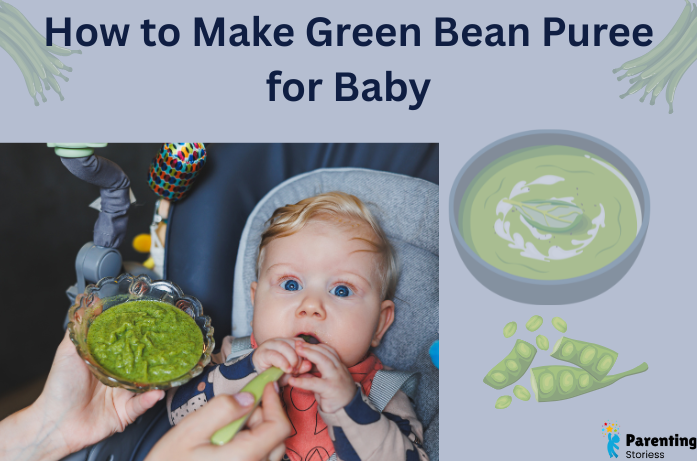
Introducing green bean puree for your baby is a healthy and gentle way to begin your baby’s solid food journey. Rich in vitamins, fiber, and easy-to-digest nutrients, green bean puree makes an excellent first food for babies starting solids. This simple homemade recipe helps support digestion, encourages healthy eating habits, and gives parents peace of mind knowing exactly what their baby is eating.
Why Green Bean Puree for Baby Is a Great First Food
Green beans are often overlooked compared to sweet potatoes or carrots, but they’re a powerhouse of nutrition for little ones. Here’s why they’re an excellent choice for homemade baby puree:
- Nutrient-rich: Green beans contain Vitamin A, Vitamin C, Vitamin K, folate, and fiber. These support vision, immune health, and digestion.
- Low allergy risk: Unlike foods such as eggs or nuts, green beans are considered low-risk for allergies, making them safe for many infants as an early food.
- Mild flavor: Their gentle taste makes them a perfect introduction to vegetables, helping babies get used to non-sweet flavors early on.
- Digestive support: Thanks to their fiber content, green beans can help keep digestion smooth as your baby explores new foods.
According to the American Academy of Pediatrics, most babies are ready to start solids around 6 months of age, when they can sit up with minimal support and show interest in foods.
When Can You Introduce Green Bean Puree for Baby?
Most parents introduce green bean puree between 4 and 6 months, depending on their pediatrician’s advice. Every baby is different, so readiness cues matter more than age. Signs your baby may be ready for puree foods include:
- Sitting upright with support
- Showing interest in your food
- Loss of the tongue-thrust reflex (no longer pushing food out automatically)
- Ability to open the mouth when offered a spoon
It’s always best to check with your child’s doctor before introducing new foods, especially if your baby was premature or has known medical conditions.
How to Make Green Bean Puree for Baby at Home
Making homemade baby food doesn’t have to be complicated. With just a few steps, you’ll have a fresh, nutrient-rich puree your baby will love.
Ingredients for Green Bean Puree for Baby:
- 1 cup fresh green beans (washed, trimmed, and ends removed)
- Water (for steaming/boiling)
- Optional: A small amount of breast milk, formula, or water to thin the puree
Step-by-Step Method to Make Green Bean Puree for Baby:
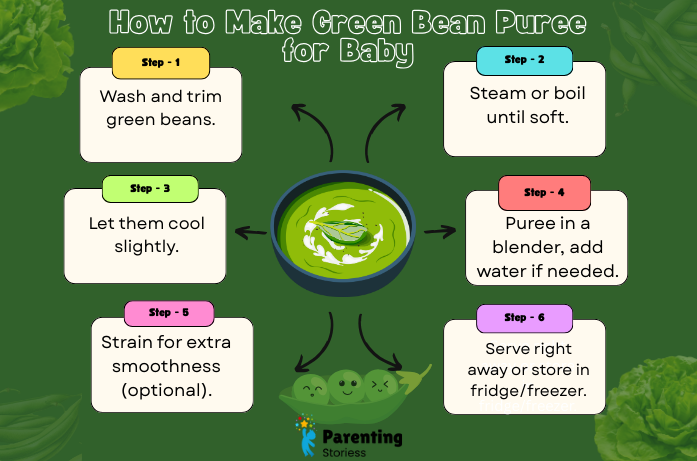
1. Wash and Trim
- Rinse the green beans thoroughly under cool water. Trim the ends and remove any tough strings.
2. Cook the Beans
- Steam or boil the beans until they are soft and tender. This usually takes 6–8 minutes for steaming, or about 5–7 minutes if boiling.
- Steaming is preferred as it preserves more nutrients.
3. Cool Slightly
- Once cooked, let the beans cool for a few minutes to make blending easier.
4. Puree the Beans
- Place the cooked beans in a blender or food processor.
- Blend until smooth, adding small amounts of water, breast milk, or formula as needed to reach your desired consistency.
5. Strain (Optional)
- For younger babies (around 4–6 months), you may want to strain the puree to remove any fibrous bits, ensuring a smoother texture.
6. Serve or Store
- Offer the puree immediately once cooled to a safe temperature.
- Store leftovers in the fridge (in airtight containers) for up to 3 days, or freeze in ice cube trays for up to 3 months.
Tips for Making Smooth Green Bean Puree for Baby
- Choose fresh or frozen beans: Both are healthy options, but avoid canned beans as they often contain added salt.
- Don’t add salt or sugar: Babies’ kidneys aren’t ready for extra sodium, and sugar can create early taste preferences.
- Mix with other veggies: Once your baby has tolerated green beans alone, you can mix with carrots, sweet potatoes, or peas for new flavors.
- Texture matters: Start smooth for younger babies, and gradually increase thickness as your baby grows.
How to Store and Freeze Green Bean Puree for Baby
Batch cooking baby food is a lifesaver for busy parents. To make your life easier:
- Freeze puree in ice cube trays for perfect portion sizes.
- Once frozen, transfer cubes to a freezer-safe bag and label with the date.
- Thaw overnight in the fridge or warm gently in a bowl placed in hot water.
Always check the temperature before serving it to your baby.
FAQs About Green Bean Puree for Baby
1. Can green beans cause gas in babies?
Yes, some babies may experience mild gas when eating fiber-rich foods like beans. Start with small portions and observe how your baby reacts.
2. Should I peel the green beans?
No, peeling isn’t necessary. Cooking and pureeing will soften the beans enough.
3. Can I mix green beans with fruit puree?
Absolutely! Mixing with apples, pears, or peaches can make the taste more appealing for babies who prefer sweeter flavors.
4. How long can I store green bean puree?
Refrigerated puree lasts up to 3 days, while frozen puree can last up to 3 months.
Final Thoughts on Green Bean Puree for Baby
Green bean puree is one of the easiest, healthiest, and most affordable first foods you can prepare for your baby. With just a handful of beans and a blender, you can create a nutrient-packed meal that supports your baby’s development.
Homemade baby food also gives you peace of mind, knowing exactly what your little one is eating. And while it may take some trial and error (since not every baby loves veggies at first bite), introducing green beans early helps nurture a taste for wholesome, nutritious foods.
Green bean puree is one of the easiest and healthiest first foods for babies. If you’re looking for more easy and healthy recipes for your little one, be sure to explore our First Foods for Babies on our website, where you’ll find many nutritious ideas for starting solids.
Want more healthy recipes, feeding tips, and step-by-step guides just like this one?
Visit Parenting Stories, your friendly space for real parent experiences, baby-feeding ideas, and advice to make those first years joyful and stress-free.
Share your story too: which veggie made your little one smile first?
Disclaimer
This article is for informational purposes only and should not replace medical advice. Always consult with your pediatrician before introducing new foods, especially if your baby has allergies, medical conditions, or feeding difficulties.
References & Further Reading
- American Academy of Pediatrics: HealthyChildren.org: Starting Solid Foods
- U.S. National Library of Medicine: Infant Nutrition