
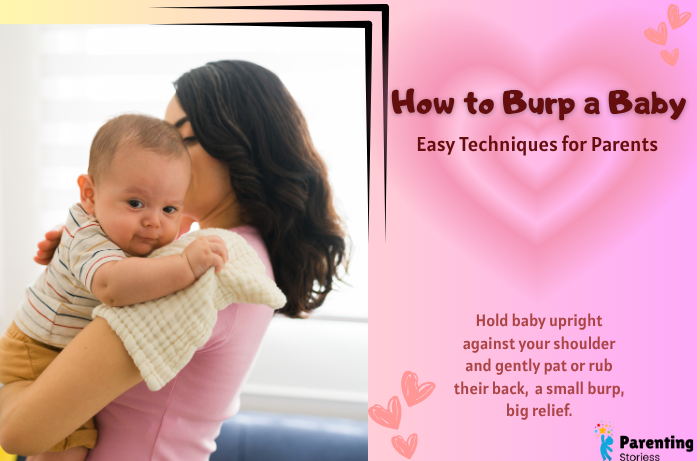
Feeding time is a tender and joyful moment for parents and babies alike. Watching your little one drink peacefully can be deeply satisfying, but sometimes, that calm is interrupted by fussing, squirming, or sudden cries. The culprit is often simple: trapped air.
That’s where burping comes in. Burpinga baby after feeding, may seem like a small act, but it can have a big impact on your baby’s comfort, digestion, and even sleep quality. For new parents, learning the art of how to burp a baby, burping is a valuable skill that makes feeding smoother and more enjoyable.
This complete guide will walk you through everything you need to know: why burping matters, when to burp a baby, different, burping techniques for babies, troubleshooting tips, and how to keep both you and your baby comfortable in the process.
Why Burping Matters
Babies swallow air while feeding, especially during the first few months of life. Their digestive systems are still developing, and they don’t yet have the ability to release gas easily on their own. Too much swallowed air can cause discomfort that shows up in many ways, tight tummies, spitting up, hiccups, or even disrupted sleep.
The American Academy of Pediatrics (AAP) explains that burping newborns helps release swallowed air, easing discomfort and making space in the stomach for more milk. Their Healthy Children guide on newborn feeding tips emphasizes frequent burping during the first few months.
Without regular burping, babies may become fussy, refuse to continue feeding, or wake up shortly after being put down. Something as, simple as helping them burp can transform feeding into a calmer, more rewarding experience.
When to Burp Your Baby
There isn’t a strict rule about exactly when you must burp your baby, because every baby is different. However, there are certain times when burping tends to be more effective and helpful.
Babies who are bottle-fed usually swallow more air because of the flow of milk through the nipple. For them, it’s a good idea to pause every two to three ounces to give a gentle burp before continuing the feed. On the other hand, breastfed babies may not need to burp as frequently, but they often benefit from a short pause when switching sides and a quick burp after the feed is complete.
It’s also wise to attempt a burp after every feeding session, even if your baby doesn’t appear uncomfortable. Some babies release gas easily on their own, but many require a little help. If your baby starts to squirm, arch their back, or pull away from the breast or bottle during feeding, that’s usually a clear sign that they need a quick burping break.
Parents often notice patterns with their own babies. For example, some find their little ones need more burping during the night than in the day, possibly because they are more tired and swallow air differently. Others see that their babies only need extra burping during growth spurts, when they feed more quickly and gulp down more air.
Easy Burping Techniques
Every baby is different, so experimenting with positions helps you discover what works best. Here are the most common baby burping techniques:
1. Burping Over the Shoulder
This is the most commonly used and easiest method. In this position, your baby stays very close to you and feels secure, while you also find it easier to hold them. It is especially recommended for newborns since their neck muscles are still developing.
How to do it:
- Hold your baby upright against your chest.
- Rest their chin gently on your shoulder.
- Support their head and neck firmly with one hand.
- Use your other hand to gently pat or rub their back in small circles..
Benefit:
- Keeps your baby upright and secure.
- Combines comfort with one of the best ways to burp a newborn.
- Works particularly well for newborns who need more head and neck support.
2. Burping While Sitting on Your Lap
This method is especially useful for slightly older babies whose neck muscles are stronger and can hold their heads up for short periods. It gives parents better control and is one of the simplest burping positions for babies, expressions and comfort level. This position is also convenient when you are seated and want to burp your baby without standing up.
How to do it:
- Sit your baby upright on your lap.
- Support their chest and chin with one hand, making sure the baby leans slightly forward.
- Use your other hand to gently pat or rub their back.
Benefit:
- The slight forward lean puts gentle pressure on the tummy, helping gas relief in babies.
- Allows parents to clearly see their baby’s comfort.
3. Burping While Lying on the Lap (Tummy-on-Lap)
This method works really well for babies who are extra gassy, fussy, or having trouble calming down. By laying the baby on their tummy across your lap, gentle pressure is applied to the stomach, which helps release trapped air more effectively. It also provides a soothing effect, as many babies find comfort in lying on their tummy with gentle back rubs. Parents often use this technique when other burping methods don’t work right away.
How to do it:
- Place your baby face down across your lap.
- Make sure their head is turned to one side and positioned slightly higher than the chest for safety.
- Gently pat or rub their back in slow, soothing motions.
Benefit:
- Light pressure on the tummy helps move and release trapped gas.
- Known as the tummy on lap burping method, it is great for colic relief.
4. Walking While Burping
This method is especially helpful for babies who become restless or fussy during burping. The gentle motion of walking, combined with your body’s warmth and soft patting, often comforts babies and makes it easier for them to release trapped gas. It’s a practical option for parents who notice their little one calms down more when they are in motion. This technique works well both for burping and soothing at the same time, particularly in the evenings when babies can be crankier.
How to do it:
- Hold your baby upright against your chest.
- Support their head and neck securely.
- Walk slowly around the room while patting or rubbing their back.
Benefit:
- Combines soothing and baby digestion tips with burping.
- Works well in the evenings when babies are fussier.
For more details, you can check UNICEF’s parenting guide: How to burp a baby.
Extra Tips for Success
Burping isn’t always instant. Sometimes it takes seconds, other times several minutes. The key is patience. Gentle, rhythmic pats or circular rubs work best. Avoid hard slaps; a soft, consistent rhythm is more effective.
Holding your baby upright for about ten to fifteen minutes after feeding is also helpful. Gravity assists digestion and prevents spit-up, which is especially important at night.
And remember, not every feeding produces a noticeable burp. If your baby seems comfortable, it’s okay to let it go.
Troubleshooting: What If Baby Won’t Burp?
Sometimes, no matter how long you try, your baby doesn’t burp. That’s usually fine, especially if they appear calm. But if fussiness continues, you can:
- Change positions. Move from shoulder to lap or tummy-down across your knees. A shift in angle may help.
- Try gentle rocking. Light swaying or bouncing while supporting the head can relax muscles and encourage burping.
- Take a break. If your baby resists, stop for a few minutes and try again later.
If your baby consistently refuses to burp and shows ongoing discomfort, speak to your pediatrician. Occasionally, excessive gas may be linked to feeding issues such as latch problems or formula sensitivity.
Safety Considerations During Burping
Safety is always the first priority. Support your baby’s head and neck in every position, especially in the first few months. Make sure your baby’s airway is clear by turning the head to the side in tummy positions. Avoid pressing on the stomach too firmly, as this may cause spit-up or discomfort.
When burping at night, dim lighting and a calm environment keep your baby relaxed and make it easier to settle them back to sleep afterward.
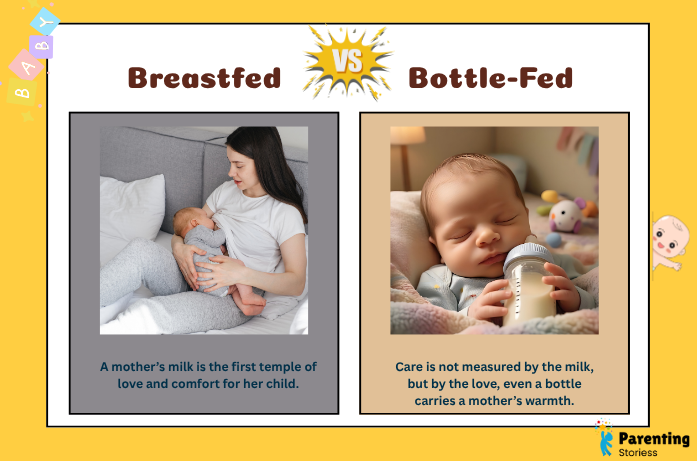
Burping Differences: Breastfed vs. Bottle-Fed Babies
Breastfed Babies
Breastfed babies usually swallow less air during feeding because a good latch creates a natural seal around the nipple. Still, it’s good to pause when switching sides and try breastfeeding and burping together. This reduces the chances of excess air entering the stomach. As a result, they often require fewer burping breaks compared to bottle-fed babies. However, that doesn’t mean burping isn’t needed at all. It’s still wise to:
- Pause for a quick burp when switching from one breast to the other.
- Try burping at the end of the feeding session.
- Pay attention to your baby’s signals, if they squirm, fuss, or pull away, a burp might be needed even in the middle of a feed.
It’s also important to note that some breastfed babies, especially those who feed quickly or gulp milk during let-down, may swallow more air than usual and need extra burping.
Bottle-Fed Babies
Bottle-fed babies swallow more air due to nipple flow and air bubbles. That’s why bottle-feeding burping tips like using vented bottles, tilting the bottle, and feeding upright help reduce gas. Even so, frequent burping is necessary. The flow of milk can be faster than breastfeeding.
- Air bubbles often form inside bottles.
- If the nipple doesn’t fit well in the baby’s mouth, extra air can be swallowed.
For these reasons, burping bottle-fed babies more frequently is recommended, about every two to three ounces of milk. In addition, parents can help reduce swallowed air by:
- Using angled bottles or vented nipples designed to minimize air bubbles.
- Keeping the bottle tilted so that the nipple is always completely filled with milk (not air).
- Feeding the baby in a semi-upright position rather than lying flat.
Even with these precautions, burping remains important because bottle-fed babies almost always swallow more air than breastfed babies.
Cultural Approaches to Burping
Across the world, parents use slightly different techniques. In some cultures, gentle rocking and humming during burping are as important as the physical patting itself. In others, parents massage the baby’s tummy rubs for gas relief in babies. While methods differ, the goal is always comfort and digestion support. afterward to encourage digestion. While techniques vary, the underlying goal remains the same, comfort and relief for the baby.
Signs Your Baby Needs a Burp
Your baby can’t say it out loud, but their body language speaks volumes. Squirming, arching, sudden fussiness, or pulling away mid-feed are common signs of swallowed air. Some babies clench fists, kick legs, or rub their face when uncomfortable. Learning these cues early makes it easier to intervene before fussiness escalates.
Burping at Night
Nighttime burping can feel tricky when everyone just wants to sleep. But skipping it may backfire if trapped gas wakes your baby. Keep the room dim, use calm movements, and choose quieter positions like the lap-sitting method. This way, your baby gets relief without becoming too alert.
Common Questions Parents Ask
How long should I burp my baby?
Most burps happen within two to five minutes. If nothing happens after a few tries and your baby is calm, it’s okay to stop.
What if my baby spits up while burping?
This is very common and not harmful. Keep a cloth nearby and gently keep them upright afterward.
Can burping prevent colic?
Burping may help reduce discomfort caused by swallowed air, but colic often has multiple causes. If crying is excessive, consult your pediatrician or check MedlinePlus for reliable information.
Do all babies need burping?
Not all. Some release air naturally or swallow very little air.
Is burping still needed after six months?
By six months, many babies have stronger digestive systems and swallow less air, especially when starting solids. Burping becomes less necessary but can still help if fussiness occurs.
Can I burp a sleeping baby?
Yes. If your baby falls asleep during feeding, you can try gentle over-the-shoulder burping without waking them fully.
Burping Myths Parents Should Ignore
- Myth: Every feeding must end with a loud burp.
Truth: Even a small, quiet release, or none at all, can be perfectly fine. - Myth: Patting harder works better.
Truth: Gentle, rhythmic motions are more effective than strong slaps. - Myth: If baby doesn’t burp, it’s dangerous.
Truth: Most of the time, it’s not harmful. Discomfort is the main issue, not health risk.
Parent Self-Care During Feeding
It’s easy to focus only on the baby, but your comfort matters too. Choose a supportive chair, use cushions if needed, and keep essentials like water nearby. A relaxed parent makes for a calmer baby.
Feeding and burping sessions may feel endless in the newborn stage, but they’re also moments of bonding. Celebrate small successes, a good latch, a contented sigh after a burp, as milestones in your baby’s growth.
Final Thoughts
Burping may feel like a small step in baby care, but learning how to burp a baby correctly makes a huge difference. From easing digestion to preventing fussiness and improving sleep, the right burping techniques for babies provide comfort and bonding moments.
Every baby is unique, some burp quickly, others hardly at all. With patience and practice, you’ll learn your baby’s rhythm and discover the techniques that bring comfort. And remember, if you ever have concerns about excessive gas, reflux, or discomfort, your pediatrician is the best source of guidance.
Burping isn’t just about air bubbles, it’s also a chance to hold your baby close, provide comfort, and strengthen the bond that grows with every feeding.
Loved this guide? Discover more newborn feeding tips, gentle parenting strategies, and baby digestion tips at Parenting Stories, real-life advice from one parent to another.
Disclaimer: This article is for informational purposes only and is not a substitute for professional medical advice. Always consult your pediatrician for questions about feeding, digestion, or your baby’s health.