

Crying is your baby’s very first language, a way to tell you they’re hungry, tired, uncomfortable, or simply in need of closeness. While it can sometimes feel overwhelming, know this: crying is a completely normal part of newborn development. Every parent has been there, and with patience, observation, and a few tried-and-true techniques, you’ll soon discover what works best for your little one.
This guide brings together proven, parent-tested, and expert-backed methods for soothing a crying baby. Along the way, you’ll also learn why babies cry, how to decode their signals, and when to seek medical support from pediatricians or a certified lactation consultant. You’ll discover the small yet powerful comforts that make a big difference, from swaddling and gentle rocking to the calming effect of skin-to-skin contact. We’ll also explore the role of environment, like lighting, temperature, and sound, in shaping your baby’s comfort. Whether you’re a first-time parent or adding another little one to the family, these insights will help you feel more confident, supported, and in tune with your baby’s unique needs.
Why Babies Cry
Babies cry because it’s their only way to communicate in the early months. By paying attention to patterns and cues, you’ll gradually start to distinguish one cry from another.
Common Reasons Babies Cry:
- Hunger or thirst : especially in the early weeks when they need frequent feeds, supported by nursing pillows or bottle-feeding tools.
- Dirty diaper or discomfort : a wet or soiled diaper can cause irritation; diaper creams help soothe sensitive skin.
- Tiredness or overstimulation : too much noise, light, or activity can overwhelm a baby.
- Need for closeness or cuddling : babies crave physical touch and reassurance; skin-to-skin contact is especially effective.
- Gas, colic, or tummy troubles : immature digestive systems often cause fussiness (baby colic relief techniques such as tummy massage can help).
- Temperature changes : being too hot, too cold, or uncomfortable in clothing.
- Teething pain (from 4–6 months onwards) : swollen gums can make babies extra fussy.
Tip: Keep a simple log with a baby sleep and feeding tracker app to track when your baby cries, eats, and sleeps. Patterns often emerge that make it easier to anticipate their needs.
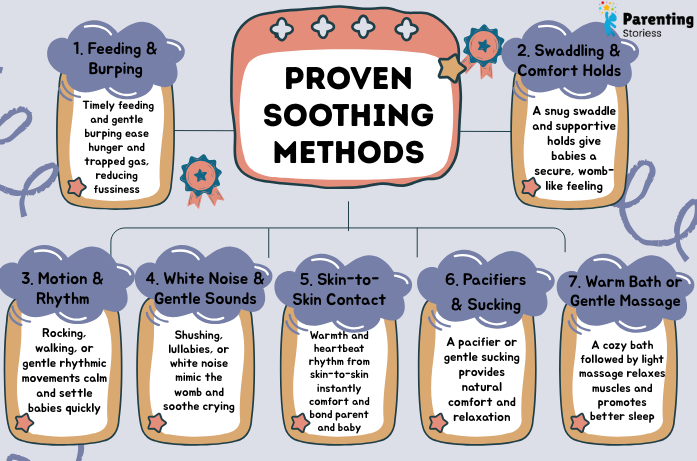
Proven Soothing Methods
Here are research-backed and parent-approved ways to calm a crying baby.
1. Feeding & Burping
Hunger is the most common reason for fussiness. If your baby hasn’t fed in the last 1–3 hours, offer milk (breast or formula). Don’t forget to burp them afterwards, trapped air can make babies cranky. Feeding on demand, rather than by a strict clock, often works best in the early months. Watch for hunger cues like rooting, sucking on hands, or smacking lips before crying escalates, it’s easier to calm a baby before they become very upset.
Parent tip: Try different burping positions (over the shoulder, sitting upright on your lap, or lying face-down across your lap) using a soft burp cloth. Gentle pats or circular motions on the back can help release gas bubbles. Some babies also respond well to being held slightly upright for 10–15 minutes after a feed to aid digestion and reduce spit-up.
2. Swaddling & Comfort Holds
Swaddling mimics the snug, cozy feeling of the womb and helps calm fussy babies by reducing the startle reflex that often wakes them up suddenly. A well-wrapped swaddle can signal safety and comfort, making it easier for newborns to drift into deeper sleep. Swaddling is one of the most effective newborn soothing techniques that parents rely on in the early months.
Parent tip: If your baby resists being swaddled completely, try a modified swaddle, leave one arm out, or use swaddle blankets with Velcro or zippers designed for easier wrapping. Some babies sleep better this way as it gives them a sense of freedom while still feeling secure.
Another soothing technique is the colic carry, where you place your baby tummy-down across your forearm while gently rocking or walking around. This position provides light pressure on the tummy, which can help relieve gas and colic discomfort. Supporting the baby’s head and keeping them close to your body also adds comfort, making them feel safe while you soothe their tummy troubles.
3. Motion & Rhythm
Babies are soothed by gentle, rhythmic movements. Options include:
- Rocking in a chair or glider
- Walking while holding your baby or using a baby carrier
- Using a stroller for short trips
- Trying a safe, pediatrician-approved baby swing
Avoid vigorous shaking, it’s unsafe and can cause serious injury.
4. White Noise & Gentle Sounds
In the womb, babies are surrounded by a constant, soothing symphony of whooshing blood flow and muffled outside sounds. After birth, this sudden quiet can feel unsettling, which is why white noise for babies works so well. It mimics the familiar in-utero environment, providing comfort and a sense of security.
Tools and techniques include white noise machines, heartbeat apps, gentle lullabies, and soft rhythmic shushing. Studies show consistent white noise can help babies fall asleep faster and stay asleep longer.
5. Skin-to-Skin Contact
Holding your baby against your bare chest regulates their heartbeat, breathing, and temperature. Skin-to-skin contact isn’t just calming,it also supports breastfeeding, bonding, and emotional regulation. Try this after a bath, before bedtime, or when your baby is especially fussy.
6. Pacifiers & Sucking
Babies have a natural need to suck for comfort. It’s their way of soothing themselves and feeling secure. If breastfeeding is well-established, introducing a pacifier can be a lifesaver during fussy moments or when your baby just wants to relax without feeding. Pacifiers are also linked with a reduced risk of Sudden Infant Death Syndrome (SIDS) when used at sleep time, making them a helpful tool for many families.This method is often listed among the most effective calming strategies for infants.
Some babies may prefer their fingers or thumbs, which is also completely normal in early development.
7. Warm Bath or Gentle Massage
A warm bath is like magic for many babies. It relaxes tense muscles, resets mood, and prepares them for sleep. Afterward, try a gentle baby massage with baby-safe oil. Massage the tummy in clockwise circles for gas relief, stroke arms and legs for circulation, and rub the back to calm fussiness.
This routine is also part of holistic infant relaxation techniques, promoting both comfort and parent-child bonding. For more insights on soothing babies, visit My Positive Parenting.
Extra Soothing Tips for Parents
- Use dim lights in the evening to reduce overstimulation.
- Try baby-wearing, carriers like Ergobaby or Baby K’tan let you hold your baby close while keeping your hands free.
- Go outside, fresh air and a change of scenery can soothe both baby and parent.
- Offer skin-safe scents, some babies respond well to calming lavender baby lotion (check age-appropriate safety).
Myths About Baby Crying
- Myth: Picking up a crying baby spoils them.
Fact: Responding builds trust and security. - Myth: Colic means something is wrong.
Fact: Colic is common and temporary. - Myth: All babies cry the same amount.
Fact: Every baby is unique.
When Crying Persists
Most crying is harmless, but watch for red flags:
- Crying more than 3 hours a day, 3 days a week, for 3+ weeks (possible colic).
- Signs of illness: fever, rash, difficulty breathing, persistent vomiting.
- Cry that sounds unusually high-pitched, weak, or inconsolable.
When in doubt, call your pediatrician. Trust your instincts, if something feels “off,” it’s always worth checking.
FAQs
- How long is it normal for a newborn to cry?
Newborns may cry 2–3 hours daily, especially in the evening. This usually improves after 6–8 weeks. - What’s the best way to tell why my baby is crying?
Look for cues: rooting = hunger, rubbing eyes = tiredness, arching back = gas. - Is it okay to let a baby cry for a few minutes?
Yes, short spells are safe. Just ensure basic needs are met first. - What’s the best soothing method for colic?
Combination of swaddling, motion, white noise, tummy massage, and sometimes probiotics (under pediatrician guidance). - When should I worry about my baby’s crying?
Seek help if crying is nonstop, accompanied by illness signs, or if you feel overwhelmed and unable to cope.
Parent Self-Care: Don’t Forget Yourself
Caring for a crying baby can be exhausting. Practicing parent self-care during the newborn stage is essential. Rest when your baby naps, eat nourishing meals, stay hydrated, and ask for help. Even short breaks, like 10 minutes outdoors, can help reset your energy.
A calm parent helps a baby feel safe and calm too.
Final Thoughts
Crying is part of your baby’s growth, but it doesn’t make you a “bad” parent. By using gentle infant soothing methods such as swaddling, skin-to-skin contact, white noise, or a warm bath, you’ll gradually discover what your baby needs most.
And when nothing seems to work? It’s okay to put your baby safely in their crib, step away, and take a breather. Parenting is a journey filled with challenges and victories. With patience, knowledge, and self-care, you’ll navigate this stage with confidence.
Explore Parenting Stories for practical tips on newborn care, sleep, feeding, soothing techniques, and must-have baby products. Every parent deserves guidance, and every baby deserves comfort.
Disclaimer
This article is for informational purposes only and does not replace professional medical advice. Always follow your pediatrician’s guidance and consult a qualified healthcare provider if you have concerns about your baby’s crying or overall health.