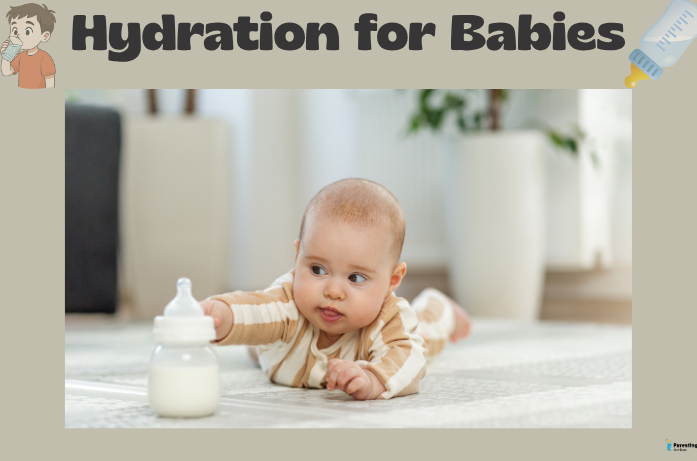
Hydration for babies plays a crucial role in their growth, digestion, and overall health. Many parents wonder when babies need water and how much is safe. Understanding hydration for babies helps prevent dehydration while ensuring breast milk or formula remains the primary source of nutrition during the first year. With the right timing and balance, you can support healthy hydration habits from infancy.
Why Hydration for Babies Comes From Breast Milk or Formula
For the first six months of life, breast milk or formula provides all the hydration and nutrients your baby needs, even in hot weather. Water, while essential for older children and adults, can interfere with your baby’s ability to absorb nutrients and may even lead to a dangerous condition called water intoxication.
According to the American Academy of Pediatrics (AAP), giving water to infants younger than 6 months can:
- Dilute the sodium levels in their bloodstream, causing electrolyte imbalance.
- Make them feel full and reduce their intake of breast milk or formula, which means fewer calories and nutrients.
When to Start Water for Proper Hydration for Babies
Most experts, including the World Health Organization (WHO) recommend introducing small amounts of water once your baby starts solid foods, around 6 months of age. At this stage, a few sips of water can aid digestion, prevent constipation, and help establish healthy hydration habits.
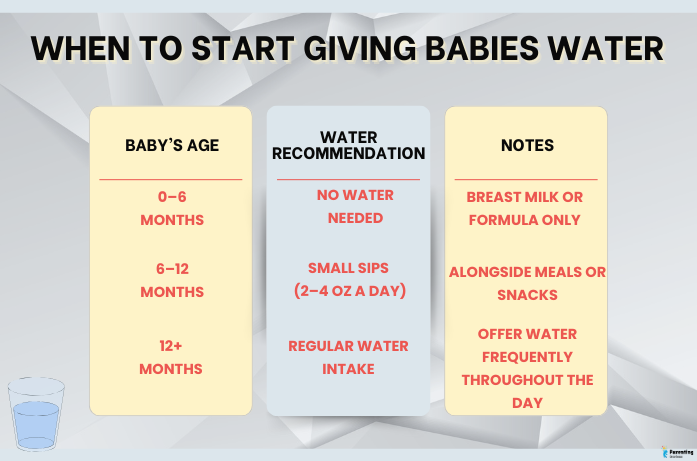
Here’s a simple timeline to guide you:
| Baby’s Age | Water Recommendation | Notes |
| 0–6 months | No water needed | Breast milk or formula only |
| 6–12 months | Small sips (2–4 oz a day) | Alongside meals or snacks |
| 12+ months | Regular water intake | Offer water frequently throughout the day |
Once your baby turns one, you can start encouraging them to drink more water, just like an adult, though their exact needs depend on their activity, weather, and diet.
Signs of Dehydration and Poor Hydration for Babies
Even though young babies usually get enough fluids from breast milk or formula, it’s important to watch for signs of dehydration, especially if your baby is sick, has diarrhea, or is exposed to hot weather. Early detection is crucial, as dehydration can affect growth, energy levels, and overall health.
Common signs of dehydration include:
- Fewer wet diapers (less than 6 in 24 hours)
- Dark yellow or strong-smelling urine
- Dry mouth or lips
- No tears when crying
- Unusual drowsiness or irritability
- A sunken soft spot (fontanelle) on their head
If you notice these symptoms, contact your pediatrician immediately. Babies can become dehydrated quickly, and early care is important.
How Much Water Is Safe for Healthy Hydration for Babies
Once your baby starts eating solids, offering a few sips of water with meals can aid swallowing, digestion, and prevent mild constipation. There’s no need to measure water precisely; the key is to keep it light and balanced. Water also helps develop healthy hydration habits early, complementing the nutrition they still receive primarily from breast milk or formula feeding.
General guideline:
- 6–12 months: 2– 4 ounces (about 60 –120 ml) of water per day.
- 12–24 months: 8 –32 ounces (about 240 –950 ml) per day, depending on diet and activity.
Remember, your baby’s main nutrition still comes from breast milk or formula during the first year. Water is just a small supplement.
Quick Takeaway:
- Under 6 months → No water needed
- 6–12 months → 2–4 oz/day
- 1 year+ → Encourage regular sips
- Breast milk/formula remains main nutrition in year one
Tips to Improve Hydration for Babies Safely
- Use a sippy cup or open cup : This helps your baby practice independent drinking, improves hand-eye coordination, and prevents over-drinking. It also supports oral motor development and encourages healthy hydration habits early on.
- Offer water during meals : It helps with digestion and reduces constipation by keeping the digestive system smooth. Regular sips of water also support nutrient absorption and overall gut health in babies.
- Avoid flavored or sweetened water : Babies don’t need sugar, honey, or juice mixed in their water, as these can cause tooth decay, digestive issues, and increase the risk of early sugar cravings.
- Increase fluids in hot weather : Babies may need extra breast milk, formula, or a few more sips of water when it’s warm to prevent dehydration, maintain energy, and regulate body temperature naturally.
- Don’t replace milk with water : Especially under 12 months, babies still need milk for essential calories, nutrients, and healthy growth. Replacing milk with water too early can cause nutritional deficiencies.
What About Juice or Other Drinks?
Juice might seem like a good way to hydrate, but experts strongly advise against it for babies under one year. The American Academy of Pediatrics recommends avoiding fruit juice for infants younger than 12 months, as it offers no added nutritional benefits, can upset delicate tummies, and increases the risk of tooth decay, obesity, and early sugar dependence.
- Contribute to tooth decay.
- Reduce appetite for nutritious foods.
- Add unnecessary sugar and calories.
After one year, you can offer diluted 100% fruit juice occasionally, but water and milk should always be the main fluids.
(Reference: AAP Juice Recommendations)
Hydration and Solid Foods
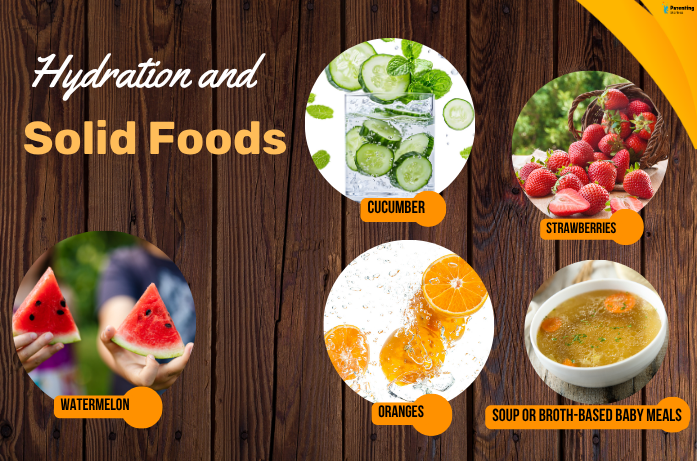
Many solid foods contain water too! Fruits and vegetables like cucumber, watermelon, oranges, and cooked carrots naturally add hydration to your baby’s diet. So don’t worry too much if your little one isn’t drinking a lot of plain water, it all adds up.
Hydrating foods to include:
- Watermelon
- Cucumber
- Strawberries
- Oranges
- Soup or broth-based baby meals
Common Myths About Baby Hydration
Myth 1: Babies need water in hot weather.
Fact: Extra breastfeeds or formula feeds are usually enough until 6 months, providing complete hydration, nutrients, and immune support for your growing baby.
Myth 2: A little water can’t hurt.
Fact: Even small amounts can dilute sodium levels in very young babies, leading to electrolyte imbalance, weakness, and in severe cases, water intoxication.
Myth 3: Juice keeps babies hydrated.
Fact: Juice adds sugar without essential nutrients, it’s not a substitute for water or milk and can contribute to tooth decay and poor nutrition.
When to Talk to Your Pediatrician
Consult your pediatrician if:
- Your baby refuses to feed or drink.
- You suspect dehydration.
- You’re unsure about introducing water with solids.
- Your baby has special health conditions affecting fluid balance (like kidney or heart issues).
Your doctor can guide you on the exact fluid needs for your child’s growth stage and health.
FAQs About Hydration for Babies
Q1. Can I give my baby water before 6 months if it’s really hot?
Even in hot weather, babies under six months don’t need water. Breast milk or formula naturally adjusts to your baby’s needs and keeps them hydrated.
Q2. How do I know if my baby is getting enough fluids?
Check for regular wet diapers, moist lips, soft skin, and a happy, active baby. These are good signs of proper hydration.
Q3. What type of water should I give my baby?
Use clean, boiled, and cooled water for babies under one year. Tap or filtered water is fine for older toddlers if it’s safe in your area.
Q4. Can I flavor my baby’s water with fruit or juice?
No need, plain water is best. Adding juice or fruit can introduce extra sugar and may affect your baby’s taste preferences early.
Q5. My baby doesn’t like drinking water, what can I do?
Try offering water in a colorful sippy cup, open cup, or straw cup to make it fun. You can also include hydrating foods like watermelon or cucumber.
Q6. When should I worry about dehydration?
If your baby has fewer wet diapers, dry mouth, or seems unusually sleepy, contact your pediatrician right away. Early care prevents complications.
Final Thoughts: Balanced Hydration for Babies Builds Healthy Habits
Every baby is unique, and hydration isn’t one-size-fits-all. The most important thing is to follow your baby’s cues, offer breast milk or formula first, and then introduce small sips of water once they start solids.
As your baby grows, water becomes a natural and essential part of their diet, helping them stay energized, cool, and healthy.
Remember, hydration is about balance, not quantity. With a little care and guidance, you can make sure your baby stays happy, nourished, and well-hydrated every day.
Parenting isn’t about perfection, it’s about learning, loving, and growing together.
Get more gentle, expert-backed guides on baby care, feeding, and early milestones, written with real parents in mind.
Explore more at ParentingStories, and make your parenting journey a little calmer, a little brighter, every day.
Disclaimer
This article is for informational purposes only and should not replace professional medical advice. Always consult your pediatrician before introducing water or any new food to your baby’s diet.