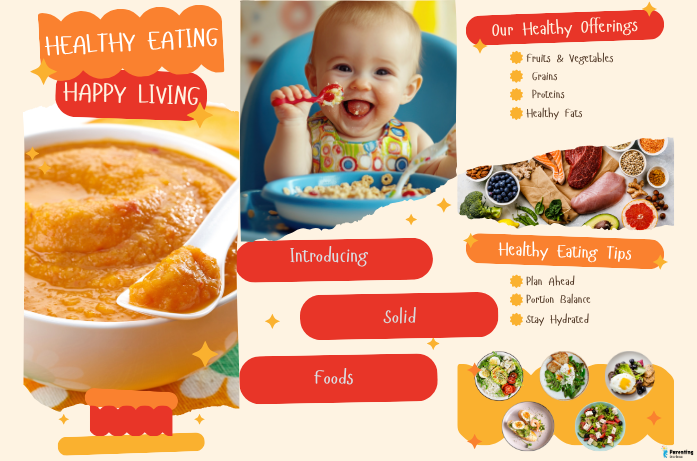
Introducing solid foods is an exciting milestone in your baby’s growth journey. Around six months of age, babies are ready to explore new tastes and textures beyond milk. Introducing solid foods the right way helps support healthy digestion, brain development, and positive eating habits while keeping mealtimes calm and enjoyable for both parents and babies.
1. When Introducing Solid Foods, Know the Readiness Signs
Every baby develops at their own pace, so timing matters more than the date on the calendar. Starting solids too early (before 4 months) may increase the risk of allergies or choking, while starting too late can lead to nutritional gaps. Around 6 months, most babies are ready as breast milk alone may no longer meet growing energy and iron needs.
Signs Your Baby Is Ready:
• Can sit upright with little or no support.
• Has good head and neck control.
• Watches you eat and seems curious about your food.
• Opens their mouth when food is offered.
• Has lost the tongue-thrust reflex (no longer automatically pushes food out).
Parent Tip: Readiness is individual. Some babies might be ready a bit earlier or later, follow your baby’s cues, not pressure or comparison.
2. Best First Foods When Introducing Solid Foods
Your baby’s first foods don’t need to be fancy or complicated. In fact, simple is best. Begin with single-ingredient purees that are easy to digest and less likely to cause allergies. Gradually introduce new flavors and textures every few days to help your baby explore tastes and identify any food sensitivities early.
Best First Foods:
• Iron-fortified baby cereal (rice, oatmeal, or multigrain) mixed with breast milk or formula.
• Mashed fruits: banana, apple, pear, or avocado.
• Pureed vegetables: sweet potato, pumpkin, carrot, peas.
Start with 1–2 tablespoons once a day, and gradually increase as your baby shows interest.
Why Iron Matters: Around 6 months, your baby’s natural iron stores begin to drop. Offering iron-rich foods early supports brain development and healthy growth, as highlighted in a study published on the National Institutes of Health website.
3. Step-by-Step Schedule for Introducing Solid Foods
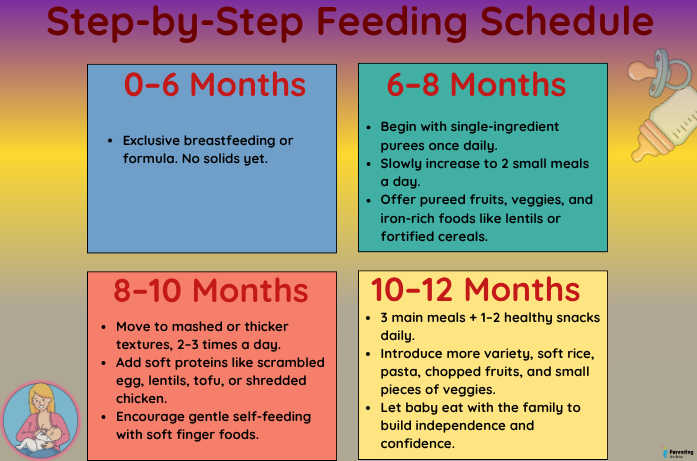
Every baby learns to eat at their own pace, but a general timeline helps guide you. Understanding when and how to introduce different textures supports healthy eating habits and development. A gradual feeding schedule ensures your baby gets the right nutrients, learns chewing skills, and builds a positive relationship with food early on.
Introducing Solid Foods at 6 Months:
Exclusive breastfeeding or formula. No solids yet.
6–8 Months:
• Begin with single-ingredient purees once daily.
• Slowly increase to 2 small meals a day.
• Offer pureed fruits, veggies, and iron-rich foods like lentils or fortified cereals.
Introducing Solid Foods at 8–10 Months:
• Move to mashed or thicker textures, 2–3 times a day.
• Add soft proteins like scrambled egg, lentils, tofu, or shredded chicken.
• Encourage gentle self-feeding with soft finger foods.
Introducing Solid Foods at 10–12 Months:
• 3 main meals + 1–2 healthy snacks daily.
• Introduce more variety, soft rice, pasta, chopped fruits, and small pieces of veggies.
• Let baby eat with the family to build independence and confidence.
Tip: In the early months, it’s okay if your baby only eats a few spoonfuls, milk (breast or formula) still provides most of their nutrition until age one.
4.How to Safely Introduce New Foods One by One
When starting solids, patience pays off. Offer one new food at a time and wait 3–4 days before introducing another. This careful approach helps identify allergies and track your baby’s preferences. Keep a simple food diary to note reactions, likes, and dislikes, it supports safe, confident feeding decisions for your baby.
Watch for signs like rash, vomiting, or diarrhea. If they appear, pause that food and talk to your pediatrician.
The CDC recommends introducing common allergens (like eggs, peanuts, and yogurt) in small, safe amounts once solids are established, early, careful exposure may actually reduce allergy risk later.
5. Gradually Add Texture and Variety
As your baby becomes more comfortable, start increasing the texture of foods. Gradually moving from purees to mashed and soft solids helps develop chewing and swallowing skills. Offering a variety of textures and flavors early supports speech development, encourages self-feeding, and helps prevent picky eating habits later in childhood.
Texture Progression:
- Thin purees → thicker purees
- Mashed foods → finely chopped foods
- Soft finger foods → bite-sized family foods
Examples:
• Steamed veggie cubes (carrot, potato, pumpkin)
• Soft fruits like ripe banana or mango pieces
• Scrambled egg, minced fish, or shredded chicken
• Soft rice or tiny bits of chapati soaked in dal
Tip: Embrace the mess! Letting your baby touch and play with food helps develop fine motor skills and confidence with textures, Pathways.org offers wonderful ideas to make food play both fun and developmentally enriching.
6. Create a Balanced Baby Plate
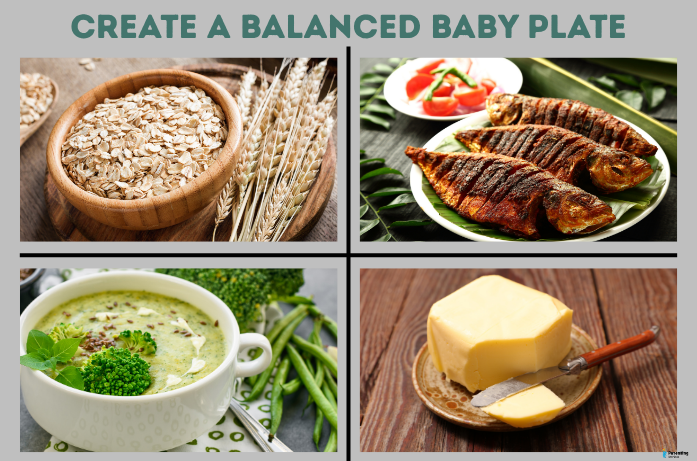
Each meal should offer a mix of nutrients, think of it as a mini rainbow on your baby’s plate. Combining grains, proteins, fruits, vegetables, and healthy fats ensures balanced nutrition. This variety supports brain development, strengthens immunity, and helps your baby develop a healthy relationship with food from the very beginning.
Example of a Balanced Baby Meal:
• Grain: Oats, rice, or soft multigrain roti.
• Protein: Lentils, tofu, eggs, chicken, or fish.
• Fruits/Veggies: A colorful mix of purees or soft pieces.
• Healthy Fat: Ghee, olive oil, avocado, or a thin layer of nut butter.
According to Zero to Three, repeated exposure to new tastes (even those they initially reject) helps prevent picky eating later on.
Keep offering variety, it builds healthy habits for life.
7. Foods to Avoid When Introducing Solid Foods
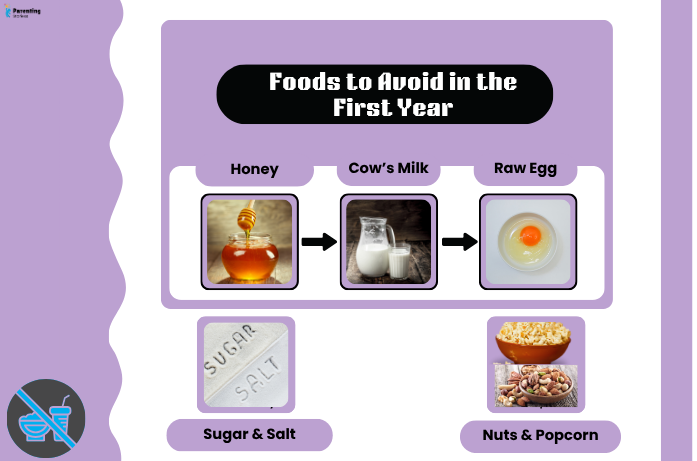
Some foods aren’t safe or suitable for babies under one year. Their digestive and immune systems are still developing, making them more sensitive to certain ingredients. Avoid foods that pose choking risks or may cause allergies and infections. Choosing age-appropriate, soft, and nutrient-rich foods ensures safe feeding and healthy growth.
Avoid:
• Honey : may cause infant botulism.
• Cow’s milk : as a drink (okay in small quantities in food, but not as a main beverage).
• Whole nuts, popcorn, grapes : choking hazards.
• Added sugar or salt : babies’ kidneys and taste buds don’t need them yet.
• Raw eggs, undercooked meat or fish : infection risk.
Parent Reminder: Babies don’t need added flavoring. Their natural curiosity will make simple, wholesome foods exciting enough.
8. Keep Milk as the Main Source of Nutrition
Even after introducing solids, breast milk or formula should remain your baby’s primary source of nutrition throughout the first year. Solid foods are meant to complement, not replace, milk at this stage. Offer solids after milk feeds so your baby still gets enough essential nutrients like calcium, protein, and healthy fats.
Between 10–12 months, babies naturally begin to eat more solids and gradually reduce milk intake. This transition supports independence and balanced nutrition. Continue offering 4–5 milk feeds per day initially, then slowly decrease based on your baby’s appetite.
Remember, every baby’s pace is unique, follow their hunger and fullness cues for a smooth, stress-free weaning journey.
9. Make Mealtimes Relaxed and Fun
Feeding isn’t just about nourishment, it’s about connection and learning. Every mealtime builds your baby’s social, emotional, and sensory skills. When you talk, smile, and make eye contact, it turns eating into a bonding experience that encourages curiosity, trust, and healthy eating habits early on.
• Sit together and eat as a family whenever you can.
• Smile, talk, and make eye contact while feeding.
• Let your baby explore food, even if it gets messy.
• Respect hunger and fullness cues. Don’t force bites.
Parenting Tip: Babies learn by watching you. If they see you enjoying fruits, veggies, and healthy meals, they’ll be more eager to try them too.
Remember, mealtime is about joy, not perfection.
Quick Recap: Starting Solids the Gentle Way
- Wait until your baby shows readiness signs (around 6 months).
- Begin with single-ingredient, iron-rich purees.
- Introduce one food at a time and note reactions.
- Keep breast milk or formula as the main nutrition source.
- Make mealtime relaxed, playful, and loving.
Faqs about introducing solid foods to babies
1. Can I start solids before 6 months?
It’s best to wait until your baby shows readiness signs, usually around 6 months. Starting too early can increase the risk of allergies and choking.
2. Should I give water once solids begin?
Yes, after 6 months, small sips of water with meals are fine. But avoid giving large amounts that might fill their tiny tummy.
3. Can my baby be vegetarian?
Yes. Include iron-rich foods like lentils, tofu, spinach, and fortified cereals. Your pediatrician may suggest supplements if needed.
4. How many times a day should I feed solids?
Start with once daily and slowly increase to 2–3 small meals as your baby’s appetite grows.
5. What if my baby refuses new foods?
Be patient, it often takes 8–10 tries before babies accept a new taste. Keep offering in different ways without pressure.
Q6. How do I know if my baby is allergic to a new food?
Watch for rash, vomiting, diarrhea, or swelling after a new food. If these appear, stop the food and call your pediatrician immediately.
Q7. Can I make baby food at home?
Yes, homemade purees are healthy, affordable, and easy. Steam, mash, or blend fresh ingredients without salt, sugar, or additives.
Q8. What’s baby-led weaning (BLW)?
Baby-led weaning means letting babies feed themselves soft finger foods instead of purees. You can combine both BLW and spoon-feeding for flexibility, just ensure safety and supervision.
Final Thoughts on Introducing Solid Foods
Introducing solids is one of the most memorable parts of early parenting. It’s messy, funny, and sometimes unpredictable, but also magical.
Each spoonful is more than food. It’s discovery. It’s bonding. It’s love in action.
Stay patient, go slow, and enjoy the process. Your baby doesn’t need perfect meals, they need you: your calm voice, your encouragement, and your gentle presence at every meal.
At Parenting Stories, we believe every mealtime is a moment to connect, not just to feed.
Explore more, gentle, expert-backed guides on baby nutrition, milestones, and mindful parenting.
Visit ParentingStories to make every stage, from first bites to first steps, calm, joyful, and full of love.
Disclaimer:
This article is for informational purposes only and does not replace professional medical or nutritional advice. Always consult your pediatrician before introducing solid foods or new ingredients to your baby’s diet.