Written with love by a caring mom at Parenting Stories
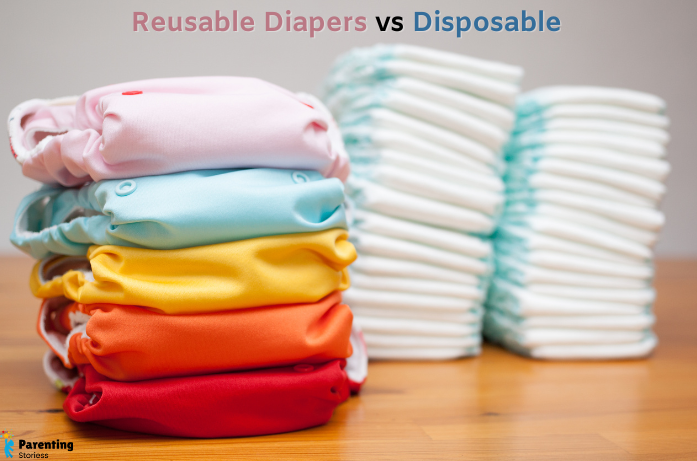
Parents must make numerous minor yet significant choices throughout their parental journey, but parents experience particular difficulty when they try to choose between reusable diapers vs disposable diapers. Those initial store visits remain vivid in my mind because I spent time in the product aisle studying labels to determine which product would provide the safest and mosteffective results for my child.
You should know that everyone else experiences the same feelings of uncertainty which you currently have. Every parent goes through this phase of questioning and comparing. You want your baby to feel comfortable while you find it easy to use the product that matches your personal preferences. The truth is, both options have their own benefits, and neither choice makes you a better or worse parent.
The most important aspect is selecting options which match your personal lifestyle requirements and the necessities of your baby and your typical daily schedule. We will investigate this matter through a straightforward and genuine approach.
Reusable Diapers vs Disposable: Understanding the Basics
Reusable Diapers (Cloth Diapers)
Reusable diapers are designed to be washed and used again. They are made from soft, breathable materials like cotton, bamboo, or microfiber, and usually come with inserts that absorb moisture. These diapers become part of your everyday routine, just like washing baby clothes.
Many modern cloth diapers are designed to look and feel like disposable ones, with snaps or Velcro for easy use. Once you get used to them, they feel surprisingly simple.
Disposable Diapers
Disposable diapers are made for single use. You use them once and throw them away. They are widely available, easy to carry, and designed to absorb moisture quickly and keep your baby dry for longer hours.
For many parents, especially in the early days, disposable diapers feel like the easiest option because they require no extra effort.
Cost Comparison: Which Option Is More Affordable?
Reusable Diapers
Reusable diapers require an initial investment. You may need to purchase around 15–25 diapers depending on your usage. At first, this can feel like a big expense, especially when you already have so many baby items to buy.
But over time, these diapers pay for themselves. You don’t need to keep buying them every month. They can last for years and can even be reused for your next baby, making them a cost-effective choice in the long run.
Disposable Diapers
Disposable diapers may seem budget-friendly at first because you only buy what you need. However, babies go through multiple diapers every single day, especially in the newborn stage.
Over months and years, this recurring cost adds up significantly. Many parents don’t realize how much they are spending until they look back at the total.
From my personal experience, reusable diapers felt expensive in the beginning, but later I realized how much money they helped save.
Are Reusable Diapers Worth It?
Reusable Diapers
If you’re wondering are reusable diapers worth it, the answer depends on what matters most to you. They are a great option if you want to reduce long-term costs, choose something eco-friendly, and keep your baby’s skin in contact with softer, more natural fabrics.
They also give a sense of satisfaction, knowing you’re making a thoughtful and mindful parenting choice.
At the same time, they require effort. Washing, drying, and maintaining them becomes part of your daily routine. But once you adjust, it becomes manageable and even comforting.
Disposable Diapers
Disposable diapers are worth it if your priority is ease and convenience. They are simple, quick, and require no extra steps. Especially during sleepless nights or busy days, they can feel like a blessing.
For many parents, disposable diapers help reduce stress in the early months when everything already feels overwhelming.
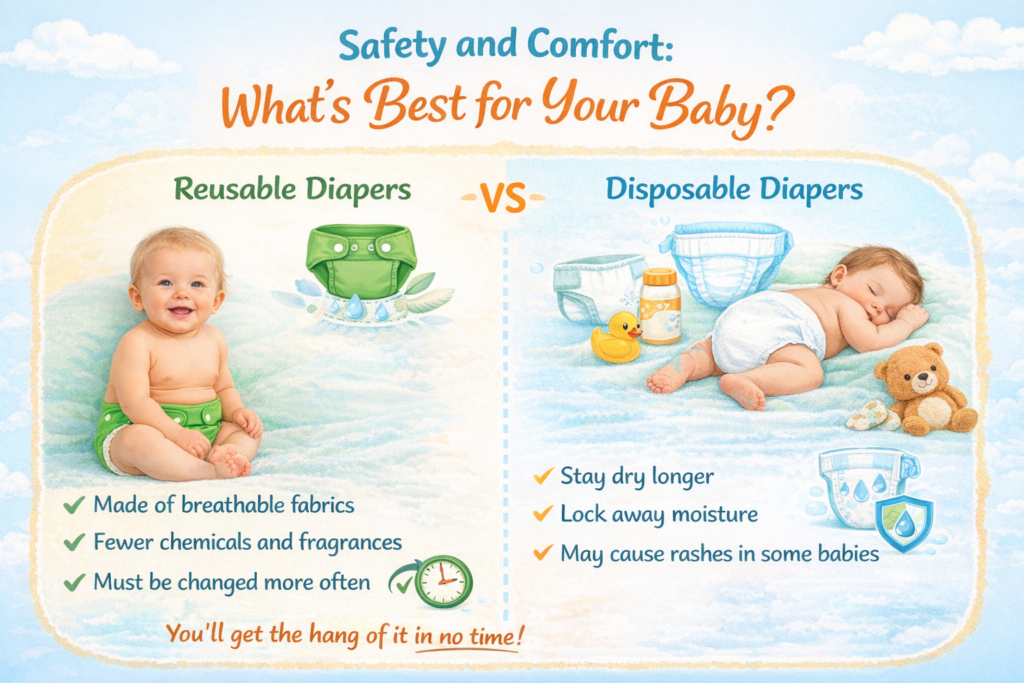
Safety and Comfort: What’s Best for Your Baby?
Reusable Diapers
Reusable diapers are made from breathable fabrics that allow better airflow. This helps keep your baby’s skin cool and comfortable. Many parents notice fewer rashes because these diapers usually contain fewer chemicals and fragrances.
However, they need to be changed more frequently since they don’t lock moisture away for very long. Regular changing is key to keeping your baby comfortable. Research shared by the National Institutes of Health (NIH) explains how moisture and diaper materials can affect infant skin health, making gentle fabric choices an important factor.
Disposable Diapers
Disposable diapers are designed to keep your baby dry for longer periods. They absorb moisture quickly and lock it away, which makes them especially useful during nighttime or long outings.
However, some babies with sensitive skin may react to certain materials, leading to rashes or irritation. Every baby is different, so it’s important to observe what suits your child best.
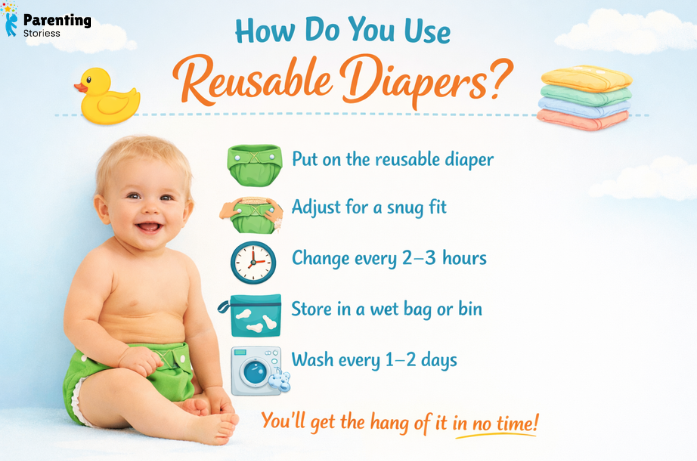
How Do You Use Reusable Diapers?
Reusable Diapers
If you’re new and wondering how do you use reusable diapers, it may feel confusing at first, but it’s actually quite simple once you try it.
You place an insert inside the diaper, put it on your baby like a regular diaper, and adjust it for a snug fit. After use, you store it in a dry bag and wash it later.
Simple routine to follow:
- Put the reusable diaper directly on your baby
- Adjust it for a snug and comfortable fit
- Change every 2–3 hours or when wet
- Store used diapers in a separate bag or bucket
- Wash them every 1–2 days
With a little practice, this becomes part of your natural daily routine.
Disposable Diapers
Disposable diapers are very easy to use. You simply open, wear, and dispose of them after use. There is no washing, no storage, and no extra preparation required.
This simplicity is why many parents rely on them, especially during travel or when they feel overwhelmed.
How Many Reusable Diapers Do I Need?
Reusable Diapers
If you’re asking how many reusable diapers do I need, the answer depends on your routine. For full-time use, around 20–25 diapers are usually enough to maintain a smooth rotation between use and washing.
For part-time use, even 10–15 diapers can work well. Many parents start with a small number and increase gradually as they get comfortable.
Disposable Diapers
With disposable diapers, you don’t need to plan ahead. You simply buy them as needed. However, you may find yourself restocking frequently, especially in the newborn stage.
Environmental Impact: A Thoughtful Choice
Reusable Diapers
Reusable diapers are a more eco-friendly option because they reduce waste. Since they are used multiple times, they don’t end up in landfills as quickly as disposable ones.
Even though they require water and energy for washing, many parents still feel they are a better choice for the environment. Guidance from by the American Academy of Pediatrics also mentions that families often balance convenience with environmental impact when choosing diapers.
Disposable Diapers
Disposable diapers create a large amount of waste because they are thrown away after every use. Over time, this contributes significantly to environmental pollution.
While they are convenient, their long-term impact on the planet is something many parents consider.
Convenience and Daily Life
Reusable Diapers
Reusable diapers require planning and effort, especially with washing and drying. In the beginning, this may feel overwhelming, but with time, it becomes a comfortable routine.
Many parents actually enjoy the process once they get used to it because it feels more mindful and intentional.
Disposable Diapers
Disposable diapers are extremely convenient. They are easy to use, easy to carry, and perfect for busy days or travel. When you are tired or overwhelmed, they make life simpler.
Final Comparison: Reusable Diapers vs Disposable
| Factor | Reusable Diapers (Cloth) | Disposable Diapers |
| Cost | High upfront, low long-term | Low upfront, high long-term |
| Usage | Reusable for months/years | Single use |
| Effort | Requires washing | No washing needed |
| Comfort | Soft and breathable | Highly absorbent |
| Skin Sensitivity | Fewer chemicals | May cause irritation |
| Convenience | Moderate | Very high |
| Eco-Friendly | Yes | No |
| Travel Friendly | Less convenient | Very convenient |
Final Thoughts
When it comes to reusable diapers vs disposable, there is no one perfect answer, only what works best for your baby and your daily life. Some days you may choose reusable for savings and sustainability, and other days you may reach for disposable for ease and comfort, and both choices are completely okay.
What truly matters is not the diaper you choose, but the love, care, and comfort you give your baby every day. Loved this guide? Share it with a fellow mom and explore more simple, real-life parenting tips on Parenting Stories.
FAQs
1. Are reusable diapers better than disposable?
Reusable diapers are better for long-term savings and eco-friendliness, while disposable diapers are more convenient for daily use. The best choice depends on your lifestyle.
2. How do you use reusable diapers?
You place an insert inside the diaper, put it on your baby, and wash it after use. With a simple routine, it becomes easy to manage.
3. How many reusable diapers do I need?
For full-time use, around 20–25 reusable diapers are ideal. For part-time use, 10–15 diapers are usually enough.
4. Are reusable diapers safe for babies?
Yes, reusable diapers are safe and often gentler on baby skin because they contain fewer chemicals and are made from soft fabrics.
5. Are reusable diapers worth it in the long run?
Yes, reusable diapers are worth it for many parents because they reduce overall costs and are more environmentally friendly over time.
Disclaimer: This article is for informational purposes only and is based on personal experience and general parenting knowledge. Every baby is different, so always choose what works best for your child and consult a healthcare professional if you have concerns about your baby’s skin or health.