Have you ever noticed your baby laughing while splashing water, touching a soft blanket, or listening carefully to a rattle? These small moments may seem simple, but they play a big role in early learning. This is sensory play, one of the easiest and most effective ways babies and toddlers explore the world.
Those giggles aren’t just cute, they show that your baby is learning through sensory play.
Sensory play includes activities that engage a child’s senses like touch, sight, sound, smell, and taste. From feeling different textures to pouring water or banging toys together, these actions help build brain connections. With simple sensory play ideas for infants and toddlers, parents can support learning, curiosity, and emotional development without stress or extra cost.
Why Sensory Play Matters
Sensory play activities for babies and toddlers aren’t just fun, they form the foundation of healthy brain development.
The early years of a child’s life are the most crucial for learning and growth. During this time, a baby’s brain is shaped by every new experience. When a child splashes in water, touches toys, listens to different sounds, or looks at colorful objects, their brain actively forms new neural connections that support learning, memory, and creativity.
These simple moments of exploration help children build the ability to think, feel, and respond to the world around them. The benefits of sensory play ideas for infants and toddlers go far beyond entertainment, it’s the first step toward a child’s lifelong learning journey.
Key benefits of sensory play include:
- Brain Development: Every new sensory experience strengthens neural connections. Repeated play builds memory, focus, and flexible thinking.
- Motor Skills: Activities like pouring, squeezing, and stacking help develop fine and gross motor control.
- Language Growth: Describing textures (soft teddy, crunchy cracker) introduces vocabulary and communication.
- Social-Emotional Skills: Playing together teaches sharing, cooperation, and emotional regulation.
- Calming Effects: Many toddlers find repetitive sensory activities, like scooping rice or patting water, soothing.
- Problem-Solving: Experimenting with materials teaches cause-and-effect: If I drop this ball, it bounces. If I squeeze this sponge, water comes out.
Zero to Three notes that sensory play supports cognitive growth, language development, gross and fine motor skills, problem solving, and social interaction.
Sensory Play Ideas for Infants and Toddlers by Age
Every child grows and learns at their own pace, some start talking early, while others begin walking first. However, sensory play ideas for infants and toddlers usually follow a predictable and natural pattern of development.
This means that while milestones may vary slightly from child to child, the way their sensory development usually follows the same order.
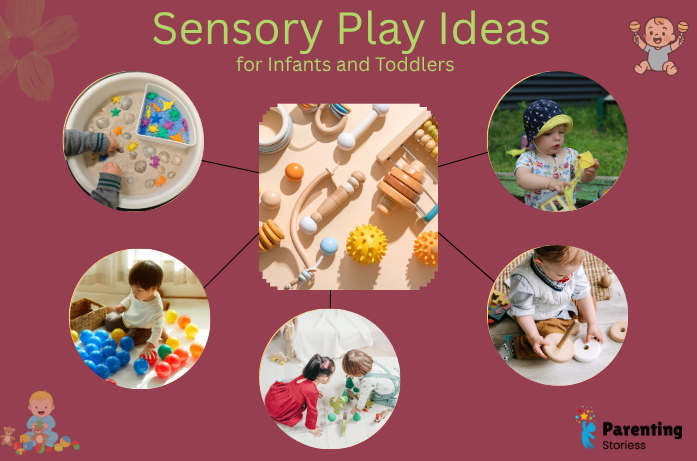
Infants (0–12 months)
At this age, babies are discovering the world through touch, sound, and sight. Sensory play for infants should be gentle, safe, and short.
- Tummy time with textures: Place baby on different safe fabrics (blanket, towel, crinkle mat).
- Sound discovery: Offer rattles, bells, or soft music.
- High-contrast visuals: Show black-and-white or bright colored books.
- Water play in bath: Splashing and feeling water with supervision.
- Gentle massage: Using baby-safe oil builds tactile awareness and bonding.
Young Toddlers (12–24 months)
During the toddler years, curiosity reaches its peak. This is the stage when children want to touch, taste, move, and explore everything around them. Their brains are developing rapidly, and every new texture, sound, or movement helps form lasting neural connections.
At this age, toddlers learn best through hands-on exploration. They use their five senses, touch, sight, sound, smell, and taste, to make sense of their surroundings. Picking up objects, mouthing toys, splashing water, or climbing furniture aren’t just playful acts; they’re powerful ways of learning how the world works.
- Texture bins: Shallow boxes filled with scarves, pasta, or soft balls.
- Bubble play: Blowing and popping bubbles builds coordination.
- Sand and rice play: Scooping and pouring with cups (supervised) classic sensory bin ideas.
- Edible finger painting: Yogurt with food coloring or mashed fruits.
- Outdoor walks: Feeling grass, tree bark, or smooth stones.
These are some fun and easy sensory play ideas for infants and toddlers that you can try at home with minimal setup.
Sensory Play Ideas for Infants and Toddlers for Older Toddlers (2–3 years)
By this stage, toddlers have mastered the basics of sensory play, touching, tasting, listening, and observing. Now, they’re ready to take learning a step further with more complex, imaginative, and Montessori-inspired activities that stimulate creativity, problem-solving, and independence.
At this age, toddlers start to connect ideas, express emotions, and imitate real-world actions. Their curiosity deepens, and their attention span slowly increases, making it the perfect time to introduce sensory play ideas for infants and toddlers that focus on exploration and decision-making.
Montessori-style sensory activities focus on letting children learn by doing, giving them freedom to choose, explore, and create at their own pace. This type of play develops not only fine and gross motor skills, but also builds confidence, concentration, and early logical thinking.
- Playdough fun: Rolling, cutting, and squishing strengthens fine motor skills.
- Water tables: Add sponges, funnels, and cups for pouring.
- Cooking with you: Smelling spices, stirring batter, kneading dough.
- Nature sensory hunt: Collecting leaves, shells, or flowers to feel and explore.
- Sensory storytime: Add props like feathers (soft), bells (loud), or sand (gritty) while reading books.
DIY Sensory Play Ideas at Home
You don’t have to spend money on fancy kits or high-end educational toys.
In fact, DIY sensory activities made with kits. Everyday household items can create engaging sensory play ideas for infants and toddlers.
The true purpose of sensory play is to help children touch, feel, explore, and learn through experience, something that doesn’t require expensive materials at all.
Your kitchen, living room, or backyard can easily become a powerful learning space filled with discovery and fun.
Here are some simple sensory play activities you can set up at home with things you already have.
- Treasure baskets: Fill with safe everyday items (wooden spoon, scarf, whisk).
- Sound jars: Small sealed containers filled with rice, beans, or beads.
- Texture path: Bubble wrap, rugs, and mats to walk on barefoot.
- Scent jars: Cotton balls with vanilla, cinnamon, or lavender (sealed tightly).
- Pour-and-fill station: Plastic cups, funnels, and containers with oats, rice, or water, perfect sensory play at home.
Safety Tips for Sensory Play
Safety is non-negotiable, especially when it comes to babies and toddlers.
Sensory play is fun, educational, and deeply beneficial, but it only works when it’s done in a safe and supervised environment.
Young children learn by exploring, they love to touch, taste, shake, and throw objects. This natural curiosity helps them understand the world, but it also increases the risk of accidents if activities aren’t handled carefully. That’s why setting clear safety guidelines for sensory play is absolutely essential.
- Always supervise play, especially with small items (choking hazards).
- Choose non-toxic, taste-safe materials for babies under 18 months.
- Avoid breakables or sharp objects.
- Contain messy play with a mat, tray, or outdoor setup.
- Watch for overstimulation, take breaks if your child seems fussy or tired.
The CDC reminds parents to monitor milestones; if a child consistently avoids sensory input (e.g., refusing touch or sound), it may be worth discussing with a pediatrician.
Making Sensory Play Part of Daily Life
The best part is, you don’t need to schedule special sessions or set aside extra time for sensory play.
It doesn’t require fancy equipment, expensive toys, or a structured routine, sensory play blends beautifully into your child’s everyday activities.
Everyday moments like splashing in the bath, helping in the kitchen, or exploring outdoors can become powerful learning experiences.
Through these natural interactions, children strengthen their brains, emotions, coordination, and creativity, all while simply enjoying their day.
The best sensory play at home doesn’t require planning, it can happen naturally:
- Mealtime: Let toddlers explore textures of soft foods (mashed potatoes, banana).
- Bath time: Pour water with cups, use sponges, or add floating toys.
- Walks outside: Touch grass, listen to birds, watch clouds.
- Cooking time: Let toddlers stir, sprinkle, or smell ingredients.
- Routine tasks: Folding laundry becomes sensory exploration, different fabrics, colors, and smells.
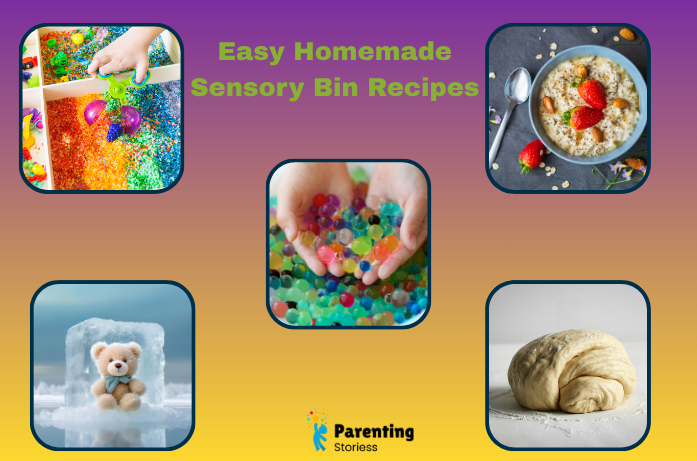
Easy Homemade Sensory Bin Recipes
You don’t need fancy kits or expensive materials to create sensory bins.In fact, everyday items from around your home can become the perfect tools for hands-on learning and exploration.
With just a little creativity, and your supervision , you can set up engaging, educational sensory bins without spending a thing.
- Rainbow rice bin: Dye rice with food coloring; add scoops and cups.
- Oats bin: Fill with dry oats and hidden toys.
- Water beads (for older toddlers): Squishy, bouncy beads to scoop and pour.
- Ice cube play: Add toys inside ice cubes and let them melt in water.
- Cloud dough: Mix flour with vegetable oil until crumbly, classic toddler sensory play.
FAQs About Sensory Play
1. When should I start sensory play with my baby?
From birth! Even newborns benefit from gentle sensory experiences like massage or music.
2. Does sensory play help with speech?
Yes. Describing textures and actions during play expands vocabulary and encourages communication.
3. What if my child dislikes messy play?
Offer clean options: scarves, sound toys, or water in sealed bags. Mess isn’t required for sensory learning.
4. How long should sessions last?
For infants, a few minutes. For toddlers, 15–30 minutes, follow their interest.
5. What if my toddler only wants one type of play?
That’s fine, repetition helps learning. Gradually introduce new textures and activities.
6.“Can sensory play get too overwhelming?”
Yes, watch for fussiness or overstimulation and take breaks, great calm-down activities help.
7.“Does sensory play help picky eaters?”
Yes, exploring food textures through play can make toddlers more open to trying them.
Final Thoughts
Sensory play is one of the most valuable gifts you can give your infant or toddler. Every squeeze of playdough, splash of water, or touch of grass is more than just fun, it’s helping wire your child’s brain, build coordination, and develop problem-solving skills.
Open-ended sensory play also encourages creativity and cognitive growth.
The best part? You don’t need fancy setups. With everyday items, your presence, and a bit of creativity, you can turn each day into a learning adventure. Most importantly, sensory play strengthens bonding, it’s about being present, watching your child explore, and sharing in their joy and discoveries.
At ParentingStories, we believe these small, playful moments are the true building blocks of healthy, happy development. So embrace the mess, celebrate curiosity, and enjoy watching your baby grow through the power of play.
Disclaimer: This article is for informational purposes only. It is not a substitute for medical advice. Always supervise sensory play and consult your pediatrician if you have concerns about your child’s development.