One of the most exciting and yes, messy! milestones in your baby’s feeding journey is learning to use a spoon. If you’ve ever had your little one grab the spoon out of your hand mid-bite, you know they’re eager to take control. This milestone is about more than just food it’s about independence, coordination, and confidence, and marks an important developmental milestone in your toddler’s journey.
But as parents, many of us wonder: When is the right time to start? How do I encourage spoon-feeding skills without endless frustration or mealtime battles?
At Parenting Stories, we’ve created this complete, parent-tested guide to teach your baby to use a spoon filled with tips, step-by-step strategies, and expert-backed advice to make this milestone a positive and joyful experience for the whole family.
Is your baby showing interest in self-feeding? This guide will walk you through everything you need to know and we’d love to hear your baby’s first spoon-feeding story in the comments!
When Can Babies Start Learning to Use a Spoon?
Most babies are ready to start practicing between 10–12 months. By this age, they usually:
- Can sit independently in a high chair.
- Show interest in self-feeding by grabbing food or utensils.
- Have improved hand-eye coordination and fine motor skills.
Remember: every baby develops at their own pace. Some may show interest earlier, while others may need more time. According to the American Academy of Pediatrics (AAP), readiness cues such as sitting well, showing curiosity, and trying to grab food matter more than the exact age.
Benefits of Teaching Spoon Feeding
Teaching your baby to use a spoon is about so much more than eating. The benefits include (CDC – Infant & Toddler Feeding):
- Encourages independence: Babies love doing things on their own. Practicing spoon-feeding skills builds confidence.
- Improves fine motor skills: Scooping, holding, and lifting food to the mouth strengthens coordination and the pincer grasp.
- Supports cognitive development: Babies learn cause and effect When I scoop, I get food.
- Reduces picky eating: Babies who practice self-feeding often become more adventurous eaters.
- Makes mealtime fun: Exploring solid foods, purees, and finger foods through touch and play builds curiosity.
Which of these benefits excites you the most independence, coordination, or mealtime fun? Tell us below!
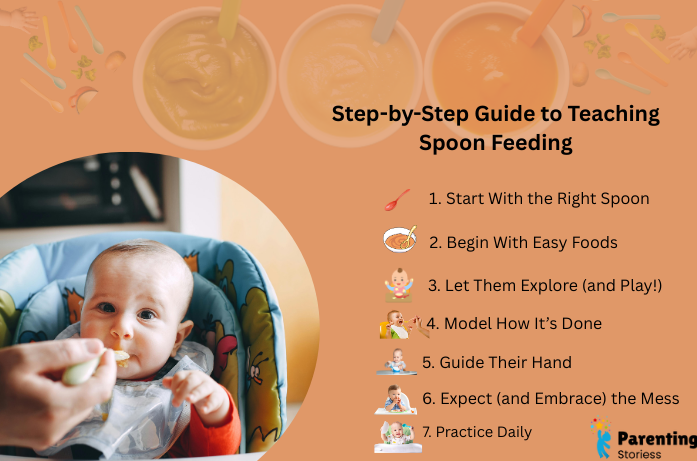
Step-by-Step Guide to Teaching Spoon Feeding
1. Start With the Right Spoon
Choose spoons that are:
- Baby-friendly: Soft-tipped, shallow, and easy to grip.
- Lightweight: Small handles that fit your toddler’s hand.
- Safe: BPA-free, rounded edges, and non-metal for early learners.
Parent Hack: Have two spoons ready one for your baby to hold and practice, and one for you to feed with.
2. Begin With Easy Foods
Pick thick, scoopable foods that stick to the spoon. Great starter options include:
- Mashed potatoes
- Oatmeal or porridge
- Yogurt
- Mashed avocado or banana
- Thick purées like pumpkin or sweet potato
Avoid runny foods at first, as they slip off easily and may frustrate your baby.
3. Let Them Explore (and Play!)
Babies learn best through play. At first, they may just bang the spoon, chew on it, or make a mess and that’s okay. Exploration is the first step to learning spoon-feeding skills.
Offer the spoon and let them practice dipping it into food. Don’t rush this is a skill learned over weeks, not days. Celebrate small wins like food making it to their mouth, even once.
Babies love to imitate. Show them how you scoop food and bring it to your mouth slowly. Smile, exaggerate movements, and make eye contact.
4. Model How It’s Done
Tip: Sit together as a family during meals. Watching older siblings or parents use spoons encourages imitation and helps babies learn self-feeding.
5. Guide Their Hand
In the early days, gently guide your baby’s hand to help them scoop and bring food toward their mouth. Over time, reduce your assistance so they gain confidence.
6. Expect (and Embrace) the Mess
Learning is messy and that’s part of developing spoon-feeding skills!
- Put a bib on your baby and place a washable mat under the high chair.
- Dress your little one and yourself in easy-to-clean clothes.
- Take a deep breath the mess is temporary, but the skill is lifelong.
7. Practice Daily
Offer opportunities to use a spoon at least once a day in the beginning. Even a few minutes of practice daily helps build consistency. Over time, increase the frequency as your baby improves.
Try one of these steps at your baby’s next meal and share how it went every parent’s experience can inspire another!
Tips for Success
- Be patient spoon skills can take months to master.
- Offer finger foods alongside spoon foods to avoid frustration.
- Praise their efforts, even if more food lands on the floor than in their mouth.
- Avoid pressure if your baby resists, take a break and try again later.
What About Forks?
Once your baby gets the hang of spoons (usually around 15–18 months), you can introduce a toddler-safe fork. Start with soft foods like:
- Steamed vegetables
- Soft fruits (melon, strawberries, bananas)
- Small pieces of pasta
Choose forks designed for toddlers with rounded, blunt tips and easy-grip handles.
Safety Reminders
- Always supervise your baby during meals.
- Use age-appropriate utensils (soft edges, small handles).
- Avoid hard, round foods that could cause choking hazards.
- Sit your baby upright in a secure high chair.
For more on food safety, see CDC Infant Feeding Guidelines.
Common Challenges (and How to Solve Them)
- Baby throws the spoon: Stay calm. Offer another spoon, or let them practice dipping.
- Baby refuses the spoon: Try finger foods first, then reintroduce the spoon later. Some babies need time.
- Baby only plays with food: That’s learning, too! Gradually guide toward eating.
Have you faced any of these mealtime struggles? Drop your tips in the comments your hack might help another parent!
FAQs
1. When should I start teaching my baby to use a spoon?
Most babies are ready around 10–12 months, but watch for readiness signs rather than focusing on age.
2. What if my baby refuses to use a spoon?
Don’t force it. Keep offering the spoon casually while letting them self-feed finger foods.
3. How long does it take to learn spoon-feeding skills?
It can take a few months for babies to reliably feed themselves with a spoon. By 18–24 months, most toddlers can self-feed more independently.
4. Is it okay if my baby just plays with the spoon?
Yes! Play is practice. Even banging, chewing, or dipping the spoon helps them learn self-feeding and develop fine motor skills.
5. Should I use training spoons or regular baby spoons?
Training spoons (with ergonomic handles and soft tips) make learning easier and safer in the beginning.
Final Thoughts
Teaching your baby to use a spoon isn’t about rushing it’s about building confidence, independence, and joy at the table. Yes, there will be messes, spills, and giggles along the way, but every small attempt is a big step in your baby’s developmental milestones.
At Parenting Stories, we believe these everyday milestones are more than practical skills they’re moments to cherish, laugh about, and remember. With patience, encouragement, and the right tools, your little one will soon be proudly scooping up their own meals.
Your turn: When did your baby first try to use a spoon? Did they make a huge mess or surprise you with a perfect scoop Share your story with us we’d love to celebrate this milestone together!
Disclaimer: This article is for informational purposes only and should not replace professional medical advice. Always consult your pediatrician or a registered dietitian if you have concerns about your child’s feeding development, nutritional needs, or spoon-feeding progress.