Every parent dreams of giving their baby the best possible start in life. You provide food, warmth, love, and safety, but did you know that the activities you do with your baby every single day also play a huge role in shaping their baby brain development?
From birth, your baby’s brain is buzzing with activity. In fact, during the first three years of life, your baby’s brain makes more than one million new neural connections every second (Harvard Center on the Developing Child). Her story isn’t unique, everyday routines like feeding, changing, or even singing lullabies are quietly building your baby’s brain. These connections lay the foundation for how they will think, learn, and interact with the world throughout their life. This is the core of early brain development and infant cognitive development.
The good news? Helping your baby’s brain grow doesn’t require expensive toys or complicated lessons. The most powerful brain-boosting activities are simple, natural, and rooted in everyday love and play. Talking, reading, cuddling, singing, and exploring are not just fun, they’re building the architecture of your baby’s mind.
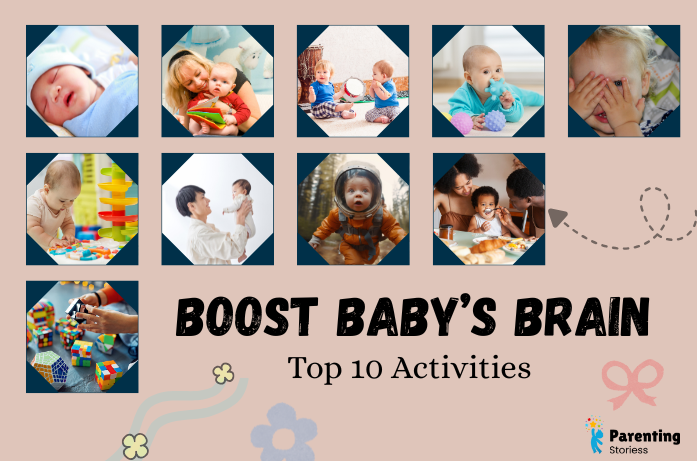
This guide walks you through the top 10 activities that boost your baby’s brain development. Each activity includes why it matters, how to do it, and tips to fit it into your everyday life. You’ll also find extra strategies, common mistakes parents make, FAQs, and bonus activities for even more ideas.
Why the First Three Years Are So Important
The first three years of a child’s life are truly magical. During this time, babies grow faster , both physically and mentally, than at any other stage. Every smile, sound, cuddle, and word you share helps shape their tiny brain, laying the foundation for how they will learn, speak, and connect with others in the future.
Here’s why these early years matter so much:
• Rapid brain growth:
By the age of three, a child’s brain reaches nearly 80–85% of its adult size. This is when billions of new connections form every second, creating the pathways for thinking, memory, and learning.
• Early language learning:
Long before babies can talk, they are already listening and learning. Every song, conversation, and story you share strengthens their language development in infants, helping them speak earlier and more confidently.
• Emotional bonding:
When babies feel loved, safe, and understood, they build trust and security with their caregivers. These early emotional bonds become the base for strong relationships and self-confidence later in life.
• Learning through the senses:
Babies make sense of the world through their eyes, ears, hands, nose, and mouth. Every sensory experience, from feeling textures to hearing your voice, helps stimulate brain growth and curiosity. Thoughtful sensory play for babies accelerates these brain-building connections.
In short:
The first three years open a special window of opportunity for lifelong learning. You don’t need to set aside extra time, just turn ordinary moments like feeding, bathing, or playing into little lessons filled with words, sounds, and love.
Small interactions today build big abilities for tomorrow.
1. Talking and Narrating Daily Life
Why it matters:
Children learn by observing and listening to their family. The way we talk to them becomes the way they learn to speak. Words, sounds, and tones aren’t new to them, they absorb these every day. When you describe what you’re doing as you go about your day, you help your baby’s brain understand language and meaning. This simple habit supports their future learning and social development.
How to do it naturally:
• Describe what you’re doing: “I’m pouring warm milk into your cup,” or “Look, the red ball is rolling under the chair.”
• Pause and let your baby babble back. Even if they can’t form words yet, this teaches the rhythm and turn-taking of conversation. (classic serve-and-return).
• Use rich vocabulary, not just “dog,” but “fluffy brown dog.” Babies don’t need overly simple words; they thrive when they hear variety.
According to the nonprofit Zero to Three, responsive conversations, where parents talk and babies coo or babble back, are among the strongest predictors of early language growth.
Example in daily life:
When changing a diaper, describe each step:
“I’m opening your diaper… oh, it’s wet! Now let’s clean you up and put on a fresh one.”
These small narrations add hundreds of new words to your baby’s daily language exposure, and help them learn to speak faster and more confidently.
2. Reading Aloud
Why it matters:
When we read to babies, they hear new sounds, words, and stories. This helps them understand language and start learning how to communicate. Even if a baby doesn’t understand the story yet, they learn from the tone of your voice, your expressions, and the pictures they see.
When babies are very small, we often use playful prosody and expressions. Through this kind of parent-child interaction, babies learn how to listen, focus, and respond.
How to make it fun:
• Start with sturdy board books or soft cloth books that have big, clear pictures.
• Use different voices, funny expressions, and sound effects while reading.
• Make reading part of your daily routine, maybe before bedtime or during morning cuddles.
By around six months, babies may start reaching for books. By one year, they might babble, point at pictures, and try to turn pages. These are signs that reading is helping them build strong language skills.
Reading together also builds love and trust. A baby who feels safe and happy while listening to stories will grow up seeing books not as homework, but as something fun and full of love.
3. Singing and Music Play
Why it matters:
A parent’s voice is the sweetest sound in the world. Whether you’re singing a lullaby during bath time or humming a gentle tune while dressing your baby, your little one listens with full attention. Music awakens many parts of a baby’s brain, from language and rhythm to memory, movement, and emotion. Music for baby brain development supports pattern recognition, attention, and soothing regulation.
Music isn’t just about melody, it’s a bond. It awakens many parts of a baby’s brain, from language and rhythm to memory, movement, and emotion. Through songs, babies begin to recognize patterns, remember sounds, and feel comforted and secure by your familiar voice.
How to do it:
• Add music into everyday routines, sing a lullaby while bathing, hum a soft tune during feeding, or sing a soothing song at bedtime.
• While singing, clap your hands, sway gently, or move along with your baby.
• As your baby grows, introduce simple instruments like rattles, shakers, or a small drum to make it more interactive and fun.
What research says:
According to the National Institutes of Health (NIH), exposure to music in early childhood supports a child’s cognitive, social, and emotional development.
Example in daily life:
Imagine dressing your baby while singing “This Little Piggy.” With each verse, your baby smiles, looks into your eyes, and wiggles those tiny feet in excitement. This simple, joyful moment becomes more than play, it’s a beautiful way to strengthen connection, rhythm, anticipation, and language learning all at once.
4. Tummy Time and Movement
Physical activity and brain development go hand in hand. Tummy time benefits include strengthening the muscles babies need for crawling, sitting, and walking. It also improves visual and spatial awareness that feeds infant cognitive development.
How to do it safely:
- Start tummy time from day one, just a minute or two, several times a day.
- Increase gradually as your baby gets stronger.
- Lie down face-to-face with your baby and encourage them with toys or your smile.
- As they grow, support rolling, kicking, and crawling with interactive play.
Physical exploration builds both confidence and brain circuits for coordination.
5. Peek-a-Boo & Object Play
Why it matters:
Games like peek-a-boo help your baby learn object permanence, the idea that people and things still exist even when they can’t see them. This is a big brain milestone around 6–9 months boosts memory, attention, and early problem-solving within play-based learning.
Fun ways to play:
- Classic peek-a-boo: Hide your face behind your hands, then pop out with a big smile or a silly “Boo!”, babies love the surprise!
- Hide the toy: Cover a favorite rattle or soft toy with a cloth and cheer your baby on as they lift it to find what’s underneath.
- Play with expressions: Peek out with funny faces or different voices, giggles guaranteed!
- Use everyday objects: Try hiding behind a pillow, blanket, or even the door, keep it playful and gentle.
Why it’s amazing:
- Builds your baby’s memory, attention, and early problem-solving skills.
- Strengthens trust and connection, your baby learns that you always come back.
- Brings pure joy and laughter, making learning feel like love-filled playtime.
Tip: Babies learn best when their senses are engaged, touch, sight, sound, and lots of smiles make every peek-a-boo extra special!
6. Sensory Play
Why it matters:
Babies learn best when they experience the world through their senses. When they touch, smell, see, hear, and sometimes even taste, their brains build new connections that help them understand the world around them.
Ideas for sensory exploration:
• Offer safe objects with different textures, like soft fabric, bumpy balls, or smooth spoons.
• Let babies crinkle paper, shake rattles, or touch cool water (always with supervision).
• Take them outdoors, let them feel the grass, watch the moving clouds, and listen to the birds.
This kind of play allows babies to learn through touching, smelling, and feeling. It builds their curiosity, problem-solving skills, and creativity, helping them make sense of the world as they play.
7. Face-to-Face Interaction
Why it matters:
Babies are wired to study faces. They learn social-emotional skills by copying expressions, cooing, and engaging with caregivers. This is prime parent-child interaction that builds empathy, regulation, and communication.
How to connect:
- Hold your baby close, smile, and exaggerate expressions.
- Copy their coos and sounds to build back-and-forth communication.
- Use a mirror so they can see both your face and theirs.
Face-to-face interaction strengthens the parent-child bond and helps babies regulate emotions.
8. Outdoor Exploration
Why it matters:
Nature is a rich classroom. New sights, sounds, and textures stimulate curiosity; fresh air reduces stress and supports focus. Outdoor play for babies also adds natural sensory play and cause-and-effect learning.
How to explore together:
- Take stroller walks and point out cars, trees, or animals.
- Sit under a tree and let your baby watch leaves fluttering in the wind.
- As your baby grows, let them crawl on grass or safely handle leaves and stones.
Outdoor play also teaches cause-and-effect, when your baby touches grass or watches a dog bark, they’re making sense of new experiences.
9. Building Routines and Predictability
Why it matters:
Babies thrive on consistency. Secure routines for babies reduce stress, improve emotional regulation, and free the brain for exploration and learning.
Simple strategies:
- Establish a bedtime routine: bath, book, lullaby.
- Keep feeding and nap times fairly consistent.
- Use small cues like dimming lights before sleep or singing the same song each evening.
Predictability helps babies feel safe, which frees their brains for exploration.
10. Gentle Problem-Solving Play
Why it matters:
Babies are natural scientists. When they reach, stack, or drop objects, they’re testing cause-and-effect, persistence, and resilience, key parts of infant cognitive development.
Examples:
- Offer stacking cups, blocks, or shape sorters.
- Place toys just out of reach to encourage problem-solving.
- Praise effort, not just success, this builds persistence.
These small challenges strengthen critical thinking and determination.
Bonus Brain-Boosting Activities
Gentle massage and touch relax your baby, lower stress, and create security. Storytelling without books, family stories or narrating routines, supports language development in infants. Safe water play encourages sensory play for babies. Involving your baby in simple chores (folding laundry, cooking) introduces new words and sensory experiences through everyday parent-child interaction.
Mistakes Parents Often Make
- Overloading babies with too much stimulation without enough rest.
- Depending only on toys instead of everyday interactions.
- Comparing babies to others, each develops at their own pace.
- Thinking learning starts later, in reality, brain growth starts at birth.
FAQs About Baby Brain Development
1. Do I need fancy toys to boost my baby’s brain?
No. Your voice, touch, and love are more powerful than any gadget.
2. How much time should I spend on these activities?
There’s no set number. Aim for short, consistent moments throughout the day.
3. What if my baby doesn’t enjoy an activity?
Follow their lead. Switch activities or try again later. Babies learn best when relaxed and happy.
4. Can overstimulation harm development?
Yes, too much at once can overwhelm babies. Balance active play with quiet time.
5. Which activity matters most?
All of them contribute, but responsive interactions, talking, cuddling, and playing, are the foundation of brain growth.
6. Are baby boys and girls different in brain development?
Generally, no. Milestones are the same, though every baby learns at their own pace.
7. Can screen time help with brain development?
No. For babies under 18 months, experts recommend avoiding screen time (except video calls). Real-life interaction is far more effective, according to the American Academy of Pediatrics Media Guidelines
Extra Tips for Parents
- Follow your baby’s cues and stop when they seem tired.
- Keep activities simple and natural, household routines work beautifully.
- Balance stimulation with rest, babies need downtime to process learning.
- Focus on joy, smiles, songs, and cuddles build the strongest connections.
Final Thoughts
Boosting your baby’s brain development doesn’t require flashcards, screens, or expensive lessons. The most powerful learning comes from your everyday love and attention.
Every cuddle, word, smile, and song strengthens brain circuits that last a lifetime. By weaving these activities to boost brain development into daily routines, you’re not only entertaining your baby, you’re shaping a curious, confident, and resilient child.
At Parenting Stories, we believe the best gift you can give your baby is your time, attention, and love. Small daily moments grow into big milestones, creating a strong foundation for a bright and happy future.
Disclaimer: This article is for informational purposes only. It does not replace professional medical advice. Always consult your pediatrician for guidance about your child’s health and development.