

If you’re a new parent, you’ve probably heard your pediatrician, nurse, or other moms talk about tummy time. Many parents share that the first time their baby lifts their head during tummy time feels just as exciting as the first smile, it’s a tiny but powerful sign of growth. At first, it might seem like such a small activity, just placing your baby on their belly while awake. But in reality, tummy time is one of the most important things you can do during your baby’s first year.
It’s more than a cute milestone. Tummy time benefits include helping babies build strength, supporting healthy motor skill development, and even preventing flat head syndrome. Most importantly, it encourages your little one to explore their world in a brand-new way.
This guide will walk you through what tummy time is, when to start, the benefits it offers, how to make it safe and fun, and the infant development milestones it supports. By the end, you’ll feel confident about weaving tummy time into your daily routine.
What Is Tummy Time?
Tummy time is simply placing your baby on their stomach while they are awake and supervised. Think of it as an exercise session for infants. On their tummy, babies work their neck, shoulders, arms, and back muscles, which are essential for later milestones like rolling, sitting, crawling, and eventually walking. Because babies spend so much time on their backs for safe sleep, tummy time balances that by giving them opportunities to strengthen their front and back muscles. It also allows them to experience the world from a fresh perspective.
You can start tummy time as soon as you bring your baby home, even for just a few minutes at a time, gradually increasing the duration as they grow stronger. Using a soft blanket or play mat on the floor provides a comfortable surface, and getting down to your baby’s level helps keep them engaged. Adding toys, mirrors, or gentle music can make it fun and stimulating. Regular tummy time not only supports physical development but also helps prevent flat spots on the back of the head and encourages sensory exploration. Over time, you’ll notice your baby lifting their head higher, pushing up with their arms, and building the confidence needed for future movement milestones.
When Should You Start Tummy Time?
You can begin tummy time from day one, even with a newborn. At first, it may only last for a minute or two, but every bit counts. The key is to build gradually as your baby grows stronger and more comfortable.
You don’t need a strict schedule, but here’s a simple way to build tummy time gradually as your baby grows stronger:
A helpful guideline:
- Newborn to 2 months: 2–3 minutes, 2–3 times a day.
- 2 to 4 months: Work toward 20–30 minutes total daily, broken into short sessions.
- 4 to 6 months: Babies often start enjoying tummy time more, rolling into it themselves.
- 6 months and beyond: Tummy time naturally blends into playtime, scooting, and crawling.
Always practice tummy time when your baby is awake and alert, and supervise closely.
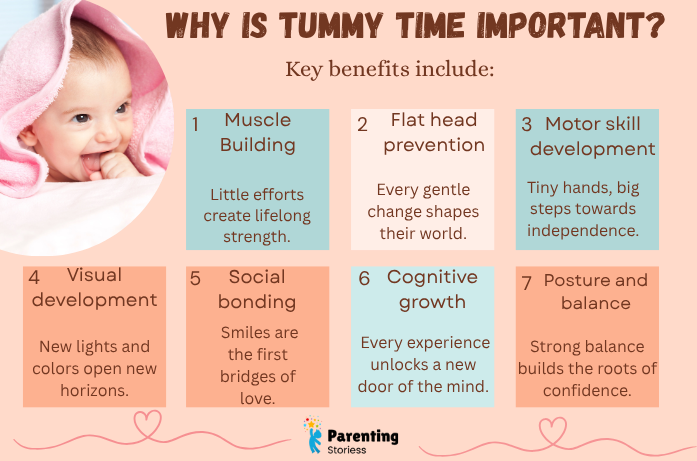
Why Is Tummy Time Important?
Tummy time looks simple, but it does a lot. It helps your baby build strength, learn new skills, and explore the world from a new angle. If you’re new to it and wondering how to do tummy time, start small, just a few minutes while your baby is awake and you’re right there watching. Do it a few times a day and slowly increase the time as your baby gets stronger. A firm, safe surface and your cheerful face are all you need.
Key Tummy Time Benefits for Your Baby’s Growth
- Muscle building
One of the biggest tummy time benefits is muscle building. On their tummy, babies lift their head, push up on their arms, and kick their legs. This strengthens the neck, shoulders, arms, and core, muscles they’ll use for rolling, sitting, crawling, and later walking. More tummy time = better balance and body control. - Helps prevent flat spots
Lying on the back for long stretches can sometimes lead to a flat spot on the head. Tummy time gives the back of the head a break and encourages natural shaping. It also builds neck strength so babies can turn and move their head more freely. - Motor skill development
Reaching for toys, pivoting, and pushing up teaches babies how their body works. These movements are key tummy time benefits because they prepare babies for build both fine and gross motor skills, hand–eye coordination, and the strength needed for sitting, standing, and walking. - Better vision and tracking
Lifting the head to look around strengthens the eye and neck muscles. Following a toy with their eyes improves tracking, depth perception, and focus, important for exploring and later for reading and play. - Social bonding
Face-to-face time on the floor invites smiles, coos, and little chats. Talking, singing, and gentle touch during tummy time deepen your bond and support early language and responsiveness. - Cognitive growth
When babies bat at a rattle or push a ball and it moves, they learn cause and effect. This kind of play builds curiosity, attention, problem-solving, and memory. - Posture and balance
Pushing up, shifting weight, and balancing on the tummy builds a strong core and back. This makes sitting steadier, crawling smoother, and later standing and walking more confident.
Quick how-to (for everyday life)
- Start with 2–3 minutes, a few times a day; add time as baby enjoys it.
- Use a firm mat or blanket; stay close and keep it playful.
- Get down at eye level, talk, sing, or place a toy just within sight.
- A rolled towel under the chest can help early on.
- If baby fusses, switch it up or try again later, little and often works best.
How to Do Tummy Time Safely
Tummy time is safest (and most fun) when your baby is comfy and you’re close by. Start small, just a couple of minutes while your baby is awake, and make it a happy, playful moment. If they fuss, take a short break and try again later. Little and often works best.
Simple steps with quick explanations
- Use a clean, firm surface
Use a play mat or blanket on the floor. A firm surface lets your baby push up safely. Avoid soft beds or couches, they’re not stable and can be risky. - Always supervise
Stay within arm’s reach. Talk, smile, and keep eye contact. Never leave your baby unattended on their tummy, even for a moment. - Begin with short sessions
Start 1–2 minutes at a time, a few times a day. Add a minute every day or two as your baby enjoys it. The goal is steady progress, not long sessions on day one. - Place toys or a mirror nearby
A soft rattle, crinkle book, or baby-safe mirror keeps them curious. Put toys slightly to one side to encourage turning the head and reaching. - Get down on the floor with your baby
Be their playmate, talk, sing, make funny faces. Your face is the best “toy” and helps your baby stay calm and interested. - Pick the right time
Try when your baby is alert and content (after a nap, not right after a feed). Waiting 20–30 minutes after feeding helps reduce spit-ups.
Bonus tips (if baby resists)
- Roll a small towel under the chest for a gentle lift.
- Try tummy time on your chest while you recline, great for bonding.
- Side-lying is a good short break position; switch sides for balance.
Safety do’s & don’ts
- Do: use a firm, flat surface; keep small objects out of reach; stop if baby is very upset.
- Don’t: do tummy time on a soft bed/couch; let baby sleep on their tummy. If they doze off, place them on their back in a safe sleep space.
Making Tummy Time Fun
Tummy time doesn’t have to be a battle. Many babies fuss at first because it’s new and a little hard, that’s normal. Start small: 1–2 minutes while your baby is awake and you’re right there, a few times a day. Choose a calm moment (after a nap, not right after a feed), use a firm, comfy surface, and get down at eye level so your baby sees your face. Little, frequent sessions work better than one long try, and as your baby gets stronger, you can add a minute at a time.
- Lay your baby chest-to-chest on you, they’ll naturally lift their head to look at you.
- Use a rolled towel or tummy time pillow under the chest for support.
- Add toys just out of reach to encourage movement.
- Place a baby-safe mirror in front of them (babies love faces, even their own).
- Sing, talk, or read while they’re on their tummy. Your voice is reassuring.
The goal is to make tummy time feel like play, not a chore.
Common Questions Parents Ask
1. What if my baby hates tummy time?
Start with short, frequent sessions. Try chest-to-chest or supporting them with a towel. Over time, babies usually adjust.
2. How much tummy time is enough?
By 3 months, aim for 20–30 minutes total per day, split into smaller chunks.
3. Is tummy time safe for newborns?
Yes, as long as your baby is awake and supervised. Even a few minutes counts.
4. Can tummy time help my baby crawl earlier?
Yes. The muscle development gained during tummy time supports rolling, sitting, and crawling.
5. What if my baby has reflux?
Try tummy time before feedings or after a break, and keep sessions shorter at first. Babies with reflux may need gentler adjustments.
6. When can I stop tummy time?
Once your baby can roll over, sit up, and crawl on their own, tummy time naturally blends into play. You can continue encouraging it until these milestones are mastered.
7. Do I need special tummy time toys or pillows?
Not necessarily. A soft blanket, your chest, or simple household items work just fine. Special pillows are optional.
Milestones Linked to Tummy Time
Every baby develops at their own pace, but tummy time plays a big role in reaching these milestones:
- By 2 months: Briefly lifts head, turns to the side.
- By 3 months: Pushes up on forearms, holds head steady longer.
- By 4–5 months: Pushes up on hands, may start rolling over.
- By 6 months: Reaches for toys, pivots or scoots on tummy.
- By 7–9 months: Rocks on hands and knees, preparing to crawl.
Extra Tips for Parents
- Make tummy time part of your daily rhythm, like after diaper changes.
- Celebrate progress, even small head lifts.
- Stay positive, your encouragement helps your baby enjoy it more.
- Don’t compare your baby to others; every child develops uniquely.
Final Thoughts
Tummy time benefits may look simple, but it’s a powerful foundation for your baby’s growth. The World Health Organization (WHO) also emphasizes the importance of daily physical activity, including tummy time, for infants under 1 year It helps strengthen muscles, prevents flat head syndrome, encourages motor skills, supports vision, and even creates bonding moments.
Start early, keep it fun, and be consistent. A few minutes here and there add up to strong skills and confident movement. Over time, you’ll see your baby grow more curious, capable, and ready to explore the world.
Loved this guide? Explore more baby growth tips, play ideas, and milestone checklists at Parenting Stories, real-life advice from one parent to another.
Disclaimer:
This article is for informational purposes only. It is not a substitute for professional medical advice. Always consult your pediatrician for guidance specific to your baby’s health and development.