
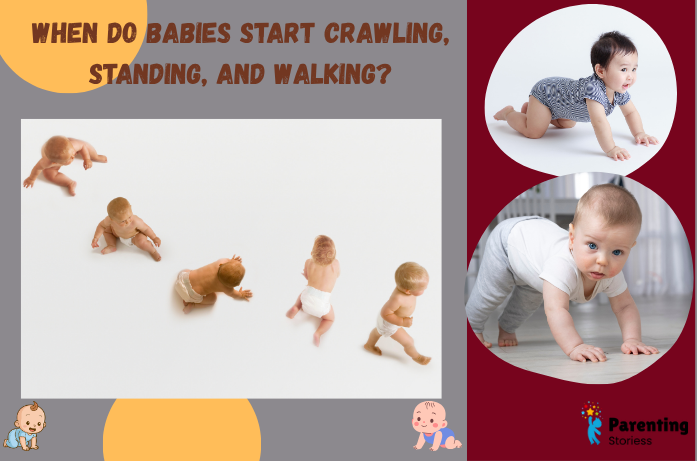
Watching your baby discover how to move, rolling, crawling, pulling up, and finally taking that first wobbly step, is one of the most magical parts of parenting. Each stage marks a burst of growth in strength, coordination, balance, and curiosity across key gross motor milestones.
But every parent wonders at some point:
When will my baby crawl? Is it okay if they skip crawling? What if they walk later than others?
The reassuring truth: every baby develops at their own pace. Some are eager movers who can’t wait to explore, while others are cautious observers, happy to take in the world before they take their first step.
Understanding the typical age ranges, what helps movement develop naturally, and when to reach out to your doctor can help you guide your baby’s journey with confidence and calm.
For parents wondering how to support baby motor milestones naturally, knowing what to expect and how to encourage crawling, standing, and walking helps build both confidence and connection.
The Big Picture: How Babies Learn to Move
Physical milestones like crawling, pulling to stand, cruising, and walking don’t happen overnight, they’re built step by step through everyday movement. From the first stretch in the crib to balancing on two tiny feet, your baby’s body and brain work together in remarkable ways.
According to the Harvard Center on the Developing Child, these movement milestones reflect the brain’s growing ability to coordinate and plan physical actions. Each wiggle, kick, and roll strengthens neural pathways that support not just motor skills, but also focus, problem-solving, and spatial awareness later in life. You can also explore BBC Tiny Happy People for practical insights and videos that show how everyday play supports your baby’s motor development.
Before walking, babies spend months mastering smaller “mini milestones”: rolling over, pushing up on arms, reaching for toys, sitting up, and rocking on all fours. Each skill builds strength and balance for the next.
Movement is learning in action, and every playful moment helps your baby’s brain grow stronger.
Crawling: Your Baby’s First Big Adventure
When Does Crawling Start?
Most babies begin to crawl between 7 and 10 months, though some start as early as 6 months and others closer to 11 or 12 months.
According to Pregnancy, Birth and Baby, an Australian government-backed parenting resource, there’s a wide range of what’s normal when it comes to crawling milestones.
Some babies may even skip traditional crawling altogether and move directly from scooting or rolling to walking. That’s usually perfectly fine as long as they’re active and exploring.
What Crawling Looks Like
There’s no single “right” way to crawl. You might see:
- Classic crawl: The hands and knees move alternately in a steady rhythm.
- Army crawl: Baby drags their belly while pulling with their arms.
- Bear crawl: Knees stay off the ground while moving on hands and feet.
- Scooting: Baby sits and pushes forward with one leg.
Each style works different muscles and teaches coordination. What matters most is that your baby is moving both sides of the body and showing curiosity about reaching and exploring.
How to Encourage Crawling
- Start with tummy time: Give your baby daily floor time from birth, it strengthens neck, arm, and back muscles.
- Motivate with toys: Place favorite objects just out of reach.
- Play on firm, safe surfaces: Avoid slippery floors or prolonged use of walkers/jumpers.
- Get down to their level: Make eye contact, talk, and cheer, it encourages movement and bonding.
When to Check with a Doctor
If by 12 months your baby isn’t showing interest in moving or consistently favors one side, talk to your pediatrician. Sometimes a simple physical therapy exercise can help.
The Centers for Disease Control and Prevention (CDC) suggests observing not just whenyour baby moves, but how, smooth, balanced motion on both sides of the body shows healthy coordination.
Pulling Up and Standing: The Next Leap
When Does It Begin?
Most babies start pulling themselves to a standing position between 9 and 12 months. Before this, they practice by bearing weight on their legs while you support them, often bouncing on your lap or bracing against furniture.
As Pathways explains, these early movements are important exercises for leg strength and balance development. That adorable bouncing around 6–8 months? It’s early leg-strength training!
How Standing Develops
- Supported standing: Holding onto your hands or sturdy furniture.
- Cruising: Sliding sideways while holding onto a surface (around 10–12 months).
- Freestanding: Balancing independently for a few seconds (around 12 months).
Standing takes strength and courage, it’s your baby’s way of saying, “Look, I can do this myself!”
How to Encourage Safe Standing
- Offer stable furniture like a couch or low table for pulling up.
- Let your baby stand barefoot indoors, bare feet help improve grip and balance.
- Avoid baby walkers; they can cause injuries and actually delay walking.
- Place toys or books slightly above your baby’s reach to encourage pulling up.
- Praise their effort, clapping and smiling motivates them to try again.
Signs to Watch
If your baby isn’t putting any weight on their legs by 9–10 months, or seems stiff or floppy, mention it to your pediatrician. Early support, such as guided exercises, can help muscles strengthen effectively.
Walking: The Big Milestone Every Parent Awaits
When Do Babies Start Walking?
Most babies take their first independent steps between 12 and 15 months. Some start early, around 9–10 months, while others take their time and walk closer to 16–18 months.
According to Pregnancy, Birth and Baby, most little ones walk independently anytime between 9 and 18 months, every baby’s pace is unique and perfectly normal within this range.
Remember: being late isn’t necessarily a problem. Focus on steady progress, not the calendar, especially if other gross motor milestones are moving forward.
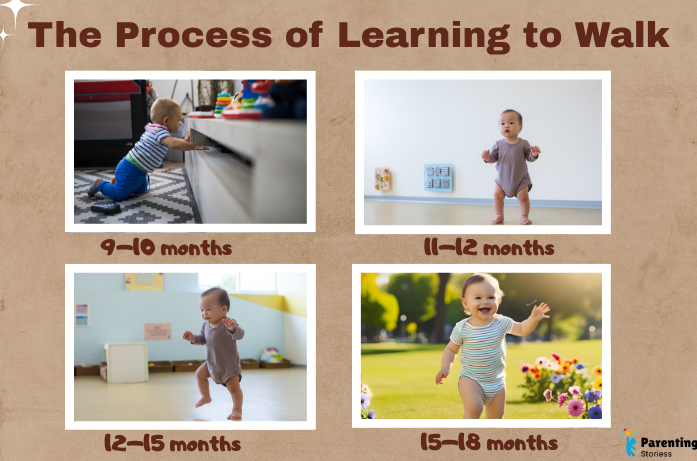
The Process of Learning to Walk
Walking is actually a series of milestones:
- 9–10 months: Cruising, moving sideways while holding furniture.
- 11–12 months: Standing briefly without help.
- 12–15 months: First steps, wide-legged, arms up for balance.
- 15–18 months: Walking more steadily; possibly climbing or running
As noted by the Cleveland Clinic, babies usually follow this pattern as they gain muscle strength, coordination, and balance, but every timeline is individual.
How to Encourage Walking
- Offer push toys or furniture your baby can hold onto while moving.
- Let them walk barefoot indoors, it strengthens muscles and balance.
- Play simple games like “come to mama/dada” for fun motivation.
- Don’t rush with shoes; soft soles are best for early walkers.
- Keep the environment safe and clutter-free for exploration.
When to Be Concerned
If your child isn’t walking by 18 months or shows regression (like losing the ability to stand), consult your pediatrician. Early detection helps rule out muscle or neurological issues.
The American Academy of Pediatrics (AAP) emphasizes that loss of progress is more concerning than slow progress. Trust your instincts, if something feels off, ask your doctor.
Helping Your Baby Reach Motor Milestones
Movement grows best with freedom, safety, and encouragement, not expensive gadgets.
Here’s how to naturally boost development:
- Give Plenty of Floor Time
Babies need free space to stretch, roll, and move. A soft mat or rug is perfect. - Limit Time in Equipment
Long periods in swings, jumpers, or walkers can delay balance skills. - Encourage Curiosity
Let your baby explore safe spaces, under tables, near low furniture, or on grassy lawns. - Be Patient and Positive
Praise effort, not just achievement. Smiles and gentle words motivate learning. - Use Play to Build Strength
Play airplane (lift gently on your legs), let them climb over pillows, or kick in the bath. Fun movement is the best exercise.
The Role of Personality and Motivation
Personality shapes movement. Some babies are bold explorers who take risks early, while others are thoughtful observers who prefer to master skills slowly and perfectly.
- Energetic babies might walk sooner, but tumble often.
- Cautious babies might walk later, but more steadily.
Both are normal. Development isn’t a race, it’s a reflection of personality, confidence, and comfort.
Milestone Summary
| Skill | Typical Age Range | What You’ll Notice |
| Rolling over | 3–6 months | Rolls from tummy to back, then both ways. |
| Sitting without support | 6–8 months | Sits independently for short periods. |
| Crawling | 7–10 months | Moves on tummy or hands and knees. |
| Pulling to stand | 9–12 months | Uses furniture or people for support. |
| Cruising | 10–12 months | Moves sideways while holding onto something. |
| Walking independently | 12–15 months | Takes first steps; steadier by 18 months. |
These ranges are flexible, what matters most is steady progress and engagement.
When to Talk to Your Pediatrician
Reach out for guidance if you notice:
- Your baby isn’t rolling or sitting by 9 months.
- No crawling or weight-bearing by 12 months.
- No attempts to stand or walk by 18 months.
- Movement appears unusually stiff, floppy, or uneven.
- Your baby loses previously learned abilities.
Early evaluation doesn’t label your child, it helps identify simple supports that can make development smoother.
Common Myths About Baby Movement
- “Walkers help babies walk faster.”
In fact, they can delay walking and increase injury risk. - “He’s chubby, that’s why he’s late.”
Body type doesn’t determine movement, muscle strength and confidence do. - “If they walk late, something’s wrong.”
Timing varies widely; as long as milestones progress, it’s normal.
Final Thoughts
Crawling, standing, and walking aren’t just physical milestones, they’re emotional ones too. Each wobbly step teaches your baby courage, persistence, and independence.
As a parent, your job isn’t to rush the journey but to make it safe and full of encouragement. Celebrate the effort, not just the success. Take pictures, cheer them on, and remember, these milestones aren’t just your baby’s achievements; they’re your memories in the making.
When you focus on progress rather than pressure, you’re giving your baby the best start in life. Every moment spent cheering them on is part of learning how to help your baby crawl, stand, and walk confidently.
At Parenting Stories, we believe every movement, no matter how small, is a step toward confidence and growth. The first step isn’t just the beginning of walking, it’s the start of a lifetime of exploration.
Disclaimer: This article is for informational purposes only. It is not a substitute for professional medical advice. Always consult your pediatrician if you’re concerned about your baby’s motor or physical development.