Written with love, real-life experience, and gentle guidance by a caring mom at Parenting Stories.
My first parenting experience began when my baby reached his first birthday because I experienced various emotions including pride and happiness and a subtle fear which only parents understand. The milestone brought beautiful achievements but it also raised numerous new doubts. I kept asking myself the same question repeatedly: which milk is best for baby after 1 year?
I still remember standing in my kitchen one early morning, holding a small cup of milk, wondering if I was making the right choice. Should I switch to cow’s milk now? Should I continue breastfeeding? Was there something gentler or better I should consider?
If you are feeling the same way right now please know you are not alone in this. Every loving parent goes through this phase of confusion. I want to guide you through this process which I learned from my own experience and from pediatricians and trusted sources of information so you can make your decision with confidence and peace of mind.
Which Milk Is Best for Baby After 1 Year?
The nutritional requirements of babies start to change after they reach their first birthday. Breast milk and formula have provided babies their primary nutritional needs until this point. The baby starts to eat solid foods which become their main nutritional source while milk functions as a minor component of their everyday meals.
The most suitable milk choice for babies over one year old is whole cow’s milk according to my personal experience and expert recommendations, except for babies who have allergies or lactose intolerance or specific dietary requirements.
Many trusted health organizations also support this approach. For example, the Centers for Disease Control and Prevention explains that whole cow’s milk can be introduced after 12 months as part of a balanced diet.
Benefits of Choosing Whole Cow’s Milk for Your Baby
- It contains healthy fats essential for brain development
- It provides calcium for strong bones and teeth
- It offers protein needed for steady growth
When I first introduced whole milk to my baby, I didn’t rush it. I started slowly, and over time, it naturally became a part of our routine without stress.
But here’s something important I learned as a mom, the “best” milk is not just about nutrition charts. It’s about what suits your baby’s body, their comfort, and what fits into your daily life with ease.
Understanding Your Baby’s Changing Nutritional Needs
From Milk-Focused to Meal-Focused
Before turning one, your baby depends almost entirely on milk for nutrition. It feels like milk is everything during those early months.
But after their first birthday, something truly special begins. Your baby slowly starts showing interest in real food and new tastes. I remember noticing my baby reaching out for soft fruits like banana and even small pieces of roti. Sometimes, they just wanted whatever we were eating as a family.
It felt like such a proud and emotional moment. At the same time, it reminded me that their needs were growing and changing with them.
As your baby grows, their diet becomes more diverse. According to guidance from Kids Health, toddlers should begin relying more on a variety of solid foods along with milk for balanced nutrition
Why Milk Still Matters After One Year
Even though solid foods become the main source of nutrition, milk still plays an important role in your baby’s daily routine.
Milk helps fill small nutritional gaps, especially on days when your baby doesn’t eat much. It also supports steady growth and development.
For me, milk was also a source of comfort for my baby, especially during fussy or emotional moments. But one important thing I learned is that balance really matters.
In the beginning, I offered too much milk, thinking it was always helpful. But I soon noticed that my baby started eating less solid food.
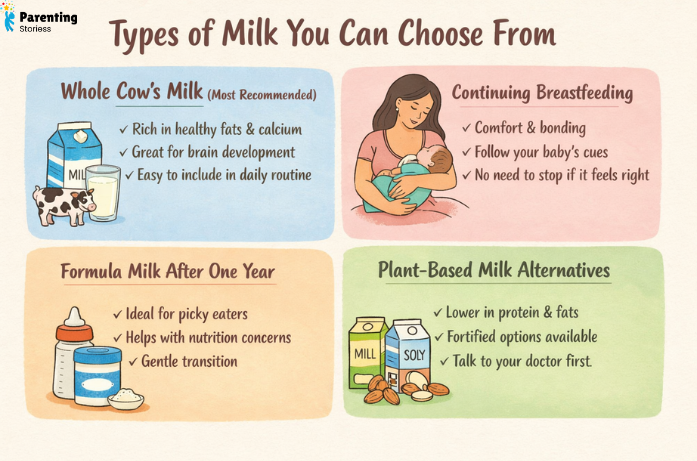
Types of Milk You Can Choose From
Choosing the right milk can feel overwhelming, especially with so many options available today. Let me break it down in a simple, honest way, just like I would with a friend.
It’s also important to remember that cow’s milk is not recommended before the age of one. The American Academy of Pediatrics highlights why babies under 12 months should not be given cow’s milk and instead need breast milk or formula.
1. Whole Cow’s Milk (Most Recommended Choice)
This is what worked best for my baby, and it’s also what most pediatricians suggest.
Benefits of whole milk:
- Rich in natural fats for brain development
- Contains calcium and protein
- Easy to include in daily meals
I began by offering just a few sips and gradually increased the quantity. This gentle approach helped my baby accept the change without resistance.
2. Continuing Breastfeeding
If you are still breastfeeding, please remember, you do not have to stop just because your baby turned one.
I personally continued breastfeeding for some time. It wasn’t just about nutrition, it was about comfort, bonding, and emotional security.
Things that helped me:
- Following my baby’s cues
- Not forcing a schedule
- Balancing breastfeeding with solid foods
Every mother’s journey is different, and there is no right or wrong timeline.
3. Formula Milk After One Year
Some parents choose to continue formula after one year, and that is completely okay.
This can be helpful if:
- Your baby is a picky eater
- You’re concerned about their nutritional intake
- The transition feels too sudden
There is no pressure to rush. Parenting is not about strict rules, it’s about understanding your child’s needs.
4. Plant-Based Milk Alternatives
I remember being curious about plant-based milk options like almond milk and oat milk. They seem healthy, but for toddlers, they are not always ideal as a primary source.
Important points to consider:
- Most plant-based milks are low in protein
- They may not have enough healthy fats
- Fortified versions are better but still not equal to cow’s milk
Soy milk is the closest alternative in terms of nutrition, but it’s best to use it after consulting a pediatrician.
How Much Milk Does a 1-Year-Old Need?
This is one of the most common questions parents have, and honestly, I struggled with this too.
In the beginning, I thought more milk meant better nutrition. But I slowly learned that too much milk can reduce a baby’s appetite for solid foods.
For a 1-year-old, the recommended amount is around 400–500 ml per day (about 2 cups).
When I followed this, I noticed my baby eating better, feeling more active, and enjoying mealtimes more.
One thing that really helped me was not giving all the milk at once.
Instead, I spread it gently throughout the day so it didn’t affect my baby’s hunger for meals.
A simple routine worked well for us 150–200 ml in the morning, a small amount in the afternoon if needed, and 150–200 ml before bedtime.
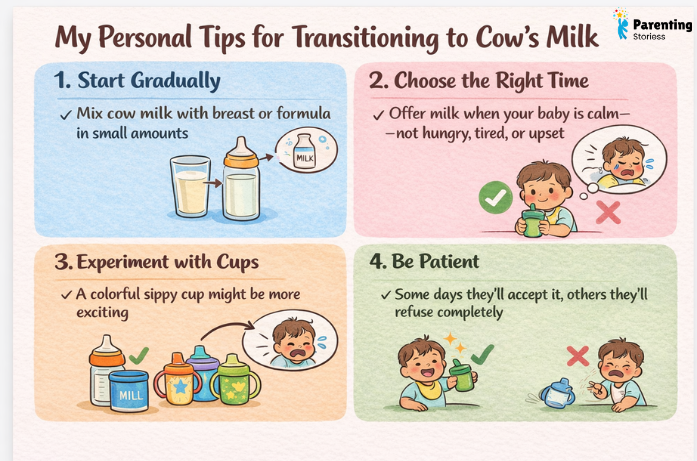
My Personal Tips for Transitioning to Cow’s Milk
Transitioning doesn’t have to be stressful. It’s okay to take it slow.
1. Start Gradually
I mixed cow’s milk with breast milk or formula in small amounts. This made the change feel familiar and easier.
2. Choose the Right Time
I offered milk when my baby was calm, not when they were hungry, tired, or upset.
3. Experiment with Cups
Sometimes the issue isn’t the milk, it’s the cup! A colorful sippy cup made things more exciting.
4. Be Patient
There were days when my baby accepted the milk happily, and days when they refused it completely. Both are normal.
What If Your Baby Refuses Milk?
If your baby refuses milk, don’t panic. This is more common than you think.
Here’s what helped me:
- Avoid forcing or pressuring
- Offer small amounts regularly
- Try different temperatures (warm or slightly cool)
- Include dairy through foods like yogurt, paneer, or cheese
Babies need time to adjust. Gentle consistency works better than force.
Signs Your Baby Is Getting the Right Nutrition
Instead of focusing only on milk, I started observing my baby’s overall health.
Positive signs include:
- Healthy weight gain
- Active and playful behavior
- Good appetite for meals
- Peaceful sleep
These signs gave me confidence that my baby was getting the nutrition they needed.
When Should You Consult a Doctor?
While most babies adjust well, there are times when professional advice is helpful.
Speak to a pediatrician if:
- Your baby has allergies or lactose intolerance
- There is poor weight gain
- Your baby refuses all types of milk
- You are unsure about alternatives
Seeking guidance doesn’t mean you’re doing something wrong, it means you care deeply.
The Truth About Choosing the “Best” Milk
If you’re still wondering which milk is best for baby after 1 year, let me tell you something honestly, from one mom to another.
There is no single perfect answer.
The best choice is:
- What your baby accepts comfortably
- What supports their growth
- What fits naturally into your routine
You know your baby better than anyone else. Trust that instinct.
Conclusion: You Are Doing an Amazing Job
When I look back, I realize how much time I spent worrying about making the “perfect” choice for my baby. But with time, I gently learned something that truly changed my perspective, parenting is not about being perfect, it’s about showing up every day with love, patience, and care.
Choosing the right milk does matter, but it’s just one small part of this beautiful journey. What truly shapes your baby’s world is your warmth, your presence, and the comfort you give them every single day.
So take a deep breath and trust yourself. You are doing an incredible job, even on the days it doesn’t feel like it.
For more real-life parenting tips, gentle advice, and honest mom experiences, stay connected with Parenting Stories, we are here for you every step of the way.
FAQs
1. What type of milk is best for a baby after 1 year?
Whole cow’s milk is generally the best choice after 1 year as it provides healthy fats, calcium, and protein needed for growth and brain development.
2. How much milk should a 1-year-old drink daily?
A 1-year-old should drink around 400–500 ml (about 2 cups) of milk per day to balance nutrition without affecting solid food intake.
3. Can I continue breastfeeding after my baby turns one?
Yes, you can continue breastfeeding after one year. It still provides nutrition, comfort, and emotional bonding along with solid foods.
4. Is plant-based milk safe for toddlers?
Plant-based milk like almond or oat milk is not ideal as a main drink because it lacks important nutrients. Fortified soy milk may be used with a doctor’s advice.
5. What if my baby refuses to drink milk?
If your baby refuses milk, don’t force it. Offer small amounts regularly and include dairy foods like yogurt, cheese, or paneer to meet nutritional needs.
Disclaimer: This article is for informational purposes only and is based on personal experience along with general parenting guidance. Every baby is unique, so it’s always best to consult your pediatrician before making any major changes to your child’s diet or nutrition.