Written with love by a caring mom at Parenting Stories
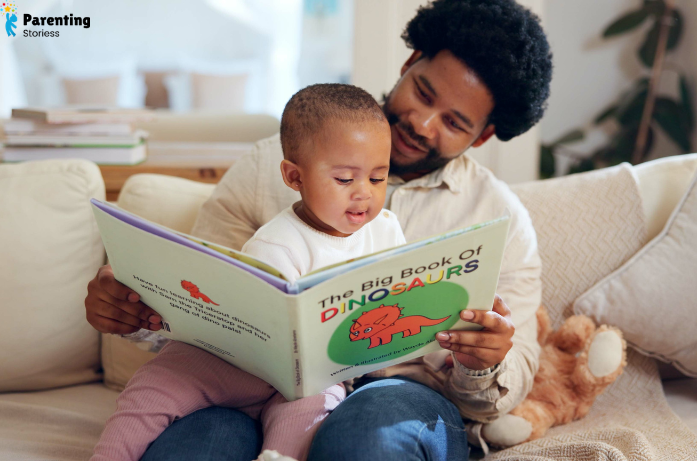
There is something deeply comforting about those early moments when parents read to babies. It may seem like a small act, just sitting quietly with a book and reading aloud, but in reality, it is one of the most powerful things you can do for your child.
I still remember those early days, holding my baby close, flipping through soft board books, and wondering if it really mattered. My baby didn’t respond much. Sometimes they looked away, sometimes they just tried to grab the book. But over time, I began to notice something beautiful. Those simple moments were creating connection, calmness, and a sense of familiarity that words alone cannot explain.
Reading is not just about teaching your baby to recognize words. It is about nurturing their mind, building emotional security, and creating memories that quietly shape their future.
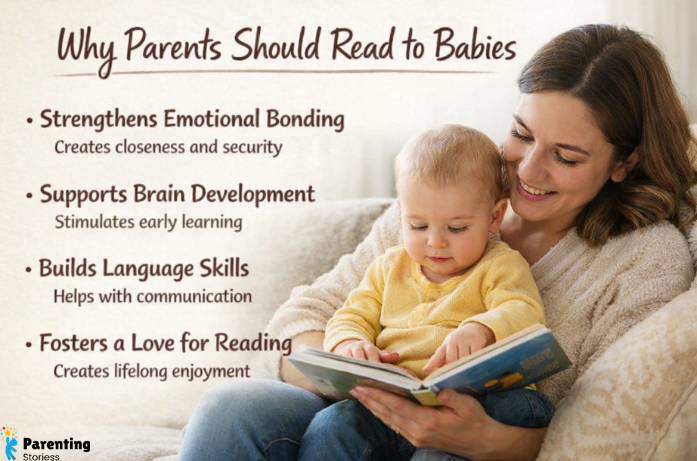
Why Parents Should Read to Babies
When parents read to babies, they are doing much more than sharing a story. They are building the foundation for emotional well-being, learning ability, and communication skills. Even before your baby understands language, their brain is quietly absorbing every word, tone, and expression.
These early reading moments may feel simple, but they play a powerful role in shaping how your baby feels, learns, and connects with the world around them.
1. It Strengthens Emotional Bonding
Reading together creates a special kind of closeness that everyday routines often don’t provide. It is one of the few moments where everything slows down, and your full attention is focused on your baby. In a busy day, this quiet connection becomes deeply meaningful.
Your baby feels comforted by your voice and relaxed by your presence. They begin to associate reading time with warmth, safety, and love, even before they understand the words you are saying.
The gentle closeness during reading helps your baby feel secure. Over time, this sense of security builds trust and strengthens your emotional bond, creating a foundation for a strong and loving relationship.
2. It Supports Healthy Brain Development
In the early years, your baby’s brain is growing rapidly, forming connections with every new experience. Reading is one of the most effective ways to stimulate this development in a gentle and natural way.
When you read aloud, your baby is exposed to patterns, sounds, and the rhythm of language. These repeated experiences help strengthen memory and support early thinking skills, even if your baby cannot yet respond.
Your baby’s brain is constantly processing what they hear. These early interactions help build neural pathways that support learning, problem-solving, and understanding as they grow.
3. It Builds Early Language and Communication Skills
Language learning begins much earlier than most parents expect. Even before your baby says their first word, they are listening carefully and learning how communication works.
By hearing your voice regularly, your baby becomes familiar with the flow of language. They start recognizing sounds, tones, and patterns, which slowly build their understanding of words and meanings.
Over time, this early exposure helps your child develop a stronger vocabulary and express themselves more clearly. Babies who are read to often tend to communicate more confidently as they grow.
4. It Encourages a Lifelong Love for Reading
When reading becomes a regular part of your baby’s routine, it creates a positive and comforting experience around books. Instead of seeing reading as something they have to do, your child begins to see it as something they enjoy.
These early moments help your baby associate books with love, attention, and relaxation. Reading becomes a familiar and happy part of their daily life.
As your child grows, this connection often turns into a genuine interest in books and learning. A simple daily habit in the early years can shape a lifelong love for reading and curiosity.
When Should You Start Reading to Your Baby?
One of the most beautiful things about reading is that there is no “right” time to begin. You can start earlier than you might think.
You can begin:
- During pregnancy, as your baby becomes familiar with your voice
- From the newborn stage, focusing on connection rather than understanding
- As your baby grows, by introducing colorful and interactive books
The key is not timing or perfection. The key is simply starting and staying consistent.
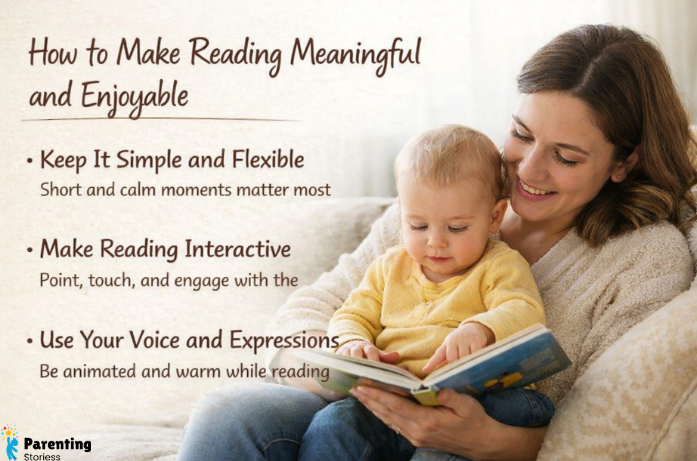
How to Make Reading Meaningful and Enjoyable
Reading doesn’t have to feel like a task or something you need to do perfectly. In fact, the more relaxed and natural it feels, the more your baby will enjoy it. These moments are about connection, not perfection.
1. Keep It Simple and Flexible
Babies don’t need long reading sessions to benefit from books. Their attention span is naturally short, and it’s completely okay if they lose interest quickly. What matters most is showing up consistently, even for a few minutes.
You can read when your baby feels calm and stop when they become restless. Following your baby’s mood instead of forcing a routine makes reading feel easy and enjoyable for both of you.
2. Make Reading Interactive
Reading becomes more meaningful when your baby feels involved. It’s not just about reading words, but about sharing the experience together in a playful and engaging way.
You can point to pictures, name objects, and let your baby touch or turn pages. These small interactions keep your baby curious and slowly help them understand the world around them.
3. Use Your Voice and Expressions
Your baby is more interested in you than the book itself. The way you read, your tone, your expressions, and your energy, makes all the difference.
Try using gentle expressions, changing your voice, and making eye contact while reading. Your voice becomes comforting and exciting, helping your baby stay connected and enjoy the moment.
Common Concerns Parents Often Have
It’s completely normal to feel unsure, especially if you are a first-time parent. Many of us have the same questions and doubts.
“My Baby Doesn’t Pay Attention”
This is one of the most common concerns, and it is completely normal.
Even if your baby:
- Looks away frequently
- Moves around or crawls
- Seems distracted
They are still listening and learning. Babies don’t need to sit still to benefit from reading. What matters is that they hear your voice and feel your presence.
“I Don’t Have Time Every Day”
Parenting can be overwhelming, and some days feel exhausting.
The good news is that reading doesn’t have to be time-consuming. You can:
- Read before bedtime
- Talk about pictures during feeding
- Tell simple stories without a book
It’s not about how long you read. It’s about making it part of your daily rhythm.
Building a Simple Reading Routine
Creating a reading habit does not require big changes. Small, consistent efforts are enough.
You can:
- Keep books within easy reach
- Choose a fixed time like bedtime
- Create a calm and cozy reading space
Over time, your baby will begin to recognize reading as a comforting and familiar routine.
According to Kids Health, reading to babies from an early age helps support language development, strengthens bonding, and builds early learning skills in a natural and enjoyable way.
Long-Term Benefits You May Not Notice Right Away
The benefits of reading often appear gradually, but they are powerful and long-lasting.
Children who are read to early often:
- Develop stronger language and communication skills
- Have better focus and attention
- Show improved learning abilities in school
- Feel more confident expressing their thoughts
But beyond all these developmental benefits, reading builds something even more important, a deep emotional connection between you and your child.
A Gentle Reminder for Every Parent
If you ever feel like you are not doing enough, please pause and remind yourself that you are.
You do not need:
- Perfect reading skills
- Expensive books or materials
- Long, structured sessions
Your baby does not need perfection. They need your presence, your voice, and your love.
Even if you read for just a few minutes, even if your baby is moving around, even if you feel tired, those moments still matter.
Conclusion
At its heart, when parents read to babies, they are doing something truly meaningful. It is not just about building a reading habit, but about creating a space filled with love, comfort, and connection. These small, quiet moments may seem simple now, but they gently shape your child’s emotional security and learning ability in ways you may not immediately see.
One day, your baby will grow, turn pages on their own, and maybe even read back to you. And in that moment, you will realize that those early reading days were never small at all. So hold your baby close, open a book, and read with love, because you are not just raising a reader, you are raising a child who feels safe, confident, and deeply connected to you.
Subscribe to Parenting Stories more heartfelt tips, real-life parenting guidance, and gentle support on your parenting journey.
FAQs
1. When should parents start reading to babies?
You can start as early as pregnancy or right after birth. The earlier you begin, the more your baby benefits from hearing your voice.
2. How long should I read to my baby each day?
Even 5–10 minutes a day is enough. Short, consistent reading is more effective than long sessions.
3. What if my baby doesn’t pay attention while reading?
That’s completely normal. Babies still learn by listening to your voice, even if they seem distracted.
4. What type of books are best for babies?
Simple books with bright pictures, bold colors, and few words work best for young babies.
5. Can reading really help my baby’s development?
Yes, reading supports brain development, language skills, and emotional bonding from an early age.
Disclaimer: The information shared is based on personal experience and general knowledge. Please consult a healthcare professional for medical advice.