

Written with love by a caring mom at Parenting Stories
There’s a very specific kind of exhaustion that comes from hearing your baby waking up crying night after night. It’s not just physical tiredness, it’s the emotional weight of wondering what your baby needs and whether you’re missing something important.
If you’ve been lying awake thinking, “why does my baby keep waking up crying?”, you are absolutely not alone. This is one of the most common challenges parents face in the early months and even beyond. The good news is that frequent night waking is usually a normal part of development, and once you understand the reasons behind it, it becomes much easier to handle with confidence.
Let’s walk through this together, in a calm and practical way, so you can feel more prepared and a little more rested.
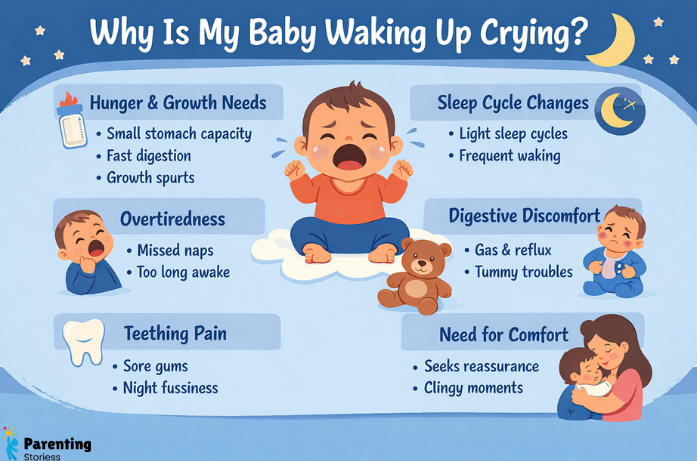
Why Is My Baby Waking Up Crying?
When a baby keeps waking up crying, there’s always a reason, even if it’s not immediately obvious. Babies don’t yet have the ability to self-regulate like adults, so their needs often show up as crying.
Here are the most common causes, explained in a way that helps you recognize what’s happening with your own baby.
1. Hunger and Growth Needs
In the early months, hunger is one of the most common reasons behind night waking. Babies grow quickly, and their tiny stomachs need frequent feeding, even at night.
This becomes even more noticeable during growth spurts, when your baby suddenly needs more nutrition than usual.
Why babies wake due to hunger:
-
- Small stomach capacity
-
- Milk digests quickly
-
- Rapid growth demands
If your baby feeds calmly and falls back asleep easily, hunger is likely the reason.
2. Natural Sleep Cycle Changes
Babies sleep very differently from adults. Their sleep cycles are shorter and lighter, which means they naturally wake more often during the night.
During these transitions, your baby may cry briefly because they are still learning how to fall back asleep on their own. This is completely normal and one of the biggest reasons behind frequent night waking.
3. Overtiredness and Poor Sleep Timing
Keeping a baby awake longer doesn’t help them sleep better, it often makes things worse.
When babies become overtired, their bodies release stress hormones, making it harder for them to settle and stay asleep. This can lead to more frequent waking and crying at night.
Common signs of overtiredness:
-
- Fussiness before bedtime
-
- Short or skipped naps
-
- Difficulty settling
-
- Frequent night waking
4. Digestive Discomfort (Gas, Reflux, Sensitivity)
A baby’s digestive system is still developing, so discomfort like gas or reflux is quite common.
If your baby wakes suddenly crying, especially after being put down, it could be due to tummy discomfort. You might also notice them pulling their legs up or arching their back.
This kind of waking is often linked to feeding and usually improves as your baby grows.
5. Teething and Physical Discomfort
As your baby grows, teething can start to affect sleep. The pressure in the gums can feel more intense at night, leading to restlessness and frequent waking.
You may notice your baby becoming fussier than usual, drooling more, or trying to chew on everything. These are all normal signs that teething may be disrupting sleep.
6. Need for Emotional Comfort
Sometimes, your baby wakes simply because they need you.
During growth spurts, developmental changes, or even small routine shifts, babies may seek extra comfort and reassurance at night.
-
- Wants closeness and reassurance
-
- More clingy during developmental phases
-
- Wakes more during changes in routine
In these moments, your presence is what helps your baby feel safe and settled again.
Baby Waking Up Crying: What You Can Do
Understanding the cause is helpful, but what really matters is what you do in those moments. When your baby wakes crying, your response can gently guide them back to comfort and sleep.
According to American Academy of Pediatrics guidance shared on responding to your baby’s cries with calmness and consistency helps build trust and emotional security, which also supports better sleep over time.
Here are gentle, realistic strategies that support both your baby and your own well-being.
1. Respond Calmly and Consistently
Your response doesn’t have to be perfect it just needs to be calm and reassuring. Babies are very sensitive to their environment, and your tone and energy can help them feel safe.
When your baby wakes, keep the lights dim, speak softly, and avoid too much stimulation. A calm atmosphere makes it easier for your baby to settle back into sleep.
2. Give Your Baby a Moment
It’s okay to pause for a few seconds before responding right away. Not every sound means your baby is fully awake or needs help.
Sometimes babies make small noises or cry briefly as they move between sleep cycles. Giving them a moment allows them the chance to settle back on their own.
3. Build a Predictable Bedtime Routine
Babies feel more secure when they know what to expect. A simple, consistent bedtime routine helps signal that it’s time to wind down and sleep.
This can include a warm bath, gentle massage, feeding, and quiet cuddles. Over time, this routine becomes a comforting cue that helps your baby relax more easily.
4. Follow Age-Appropriate Wake Windows
Sleep timing plays a big role in how well your baby rests at night. Keeping your baby awake too long can lead to overtiredness and more frequent waking.
By following age-appropriate wake windows, you help your baby fall asleep at the right time. This leads to deeper, more restful sleep and fewer night disruptions.
5. Support Gentle Self-Soothing
Helping your baby learn to settle doesn’t mean leaving them to cry. Gentle methods can work beautifully without feeling overwhelming.
Try patting instead of picking up right away or pausing briefly before responding. Your calm presence reassures your baby while helping them slowly learn to settle.
6. Optimize the Sleep Environment
Sometimes the smallest changes in your baby’s sleep space can have a big impact. Comfort and consistency help your baby feel safe and relaxed.
A comfortable room temperature, soft sleepwear, and gentle white noise can create a soothing environment. These small adjustments often lead to longer and more peaceful sleep.
Why Does My Baby Keep Waking Up Crying Repeatedly?
If your baby is waking frequently every night, it’s natural to feel frustrated or even worried.
Let’s look at a few deeper reasons.
Sleep Associations
Babies often depend on certain conditions to fall asleep, such as:
-
- Feeding
-
- Rocking
-
- Being held
If these are always present at bedtime, your baby may expect them again during night waking.
This doesn’t mean you need to change everything overnight, just be aware of the pattern.
Developmental Milestones
As your baby learns new skills like rolling, crawling, or standing, sleep can temporarily regress.
Their brain is processing so much new information that it can interrupt restful sleep.
Growth Spurts and Brain Development
During rapid growth phases, babies may:
-
- Wake more often
-
- Feed more frequently
-
- Seek extra closeness
These periods are temporary, even though they can feel long in the moment.
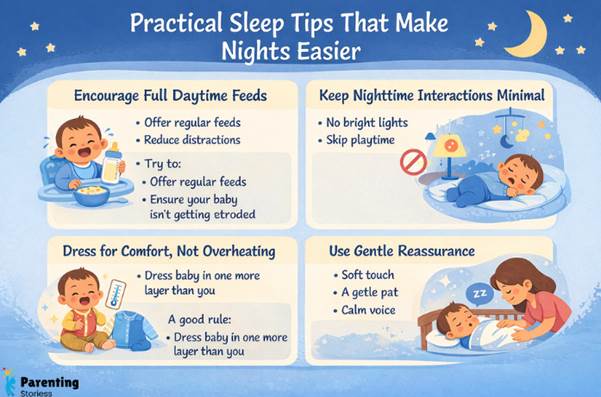
Practical Sleep Tips That Make Nights Easier
Let’s focus on small, realistic habits that truly help.
1. Encourage Full Daytime Feeds
A baby who eats well during the day is less likely to wake frequently at night due to hunger. When babies get enough nutrition during daytime hours, their bodies don’t need as many night feeds.
Try to offer regular feeds, minimize distractions, and watch for early hunger cues. Small adjustments during the day can make a noticeable difference in how your baby sleeps at night.
2. Keep Nighttime Interactions Minimal
At night, less stimulation helps your baby stay in a sleepy state. Bright lights, talking, or playful interaction can fully wake your baby and make it harder for them to fall back asleep.
Keep things calm and quiet. Use dim lighting, a soft voice, and gentle movements so your baby understands that nighttime is for rest, not play.
3. Dress for Comfort, Not Overheating
Temperature plays a bigger role in sleep than many parents realize. If your baby is too hot or too cold, they may wake more often and feel uncomfortable.
A simple rule is to dress your baby in one more layer than you’re wearing comfortably. This helps maintain a cozy, safe sleep environment throughout the night.
4. Use Gentle Reassurance
Not every wake-up means your baby needs to be picked up. Sometimes, a little reassurance is all they need to settle back to sleep.
A soft touch, gentle pat, or calming voice can help your baby feel secure. Over time, these small comforting cues can support your baby in learning to settle more independently.
Take Care of Yourself Too
This part matters just as much.
Interrupted sleep is hard. It’s okay to:
-
- Ask for help
-
- Take naps when possible
-
- Share night duties if you can
You’re not meant to do this alone.
When Should You Seek Help?
Most cases of a baby waking up crying are completely normal. But there are times when it’s best to consult a pediatrician.
Look out for:
-
- Persistent, intense crying
-
- Signs of illness (fever, vomiting, unusual behavior)
-
- Poor weight gain or feeding issues
If something feels off, trust your instincts, you know your baby better than anyone.
Final Thoughts
When your baby waking up crying becomes a nightly pattern, it can feel overwhelming. But most of the time, it’s not something that needs fixing it’s simply a phase of growth, learning, and connection. With gentle adjustments and patience, sleep will slowly improve, and those long nights will begin to feel easier.
Through it all, remind yourself that you don’t need to be perfect. Your love, your presence, and your care are exactly what your baby needs. Even on the hardest nights, you are doing an amazing job and that truly matters.
Subscribe to Parenting Stories for more gentle, real-life parenting tips to support you through every stage of your baby’s journey
FAQs
1. Why is my baby waking up crying at night?
Babies usually wake up crying due to hunger, sleep cycle changes, discomfort, or a need for reassurance. This is normal, especially in the first year.
2. Is it normal for a baby to keep waking up crying?
Yes, it’s very common. Babies have shorter sleep cycles and may wake multiple times at night, especially during growth spurts or developmental stages.
3. How can I stop my baby from waking up crying?
Focus on a consistent bedtime routine, proper feeding during the day, and a calm sleep environment. Gentle soothing can also help your baby settle back to sleep.