Written with love by a caring mom at Parenting Stories
As a parent, I often find myself thinking about the kind of person my child is becoming. Not in a worried way, but in a quiet, thoughtful moment that comes from love. I want my child to grow up happy, confident, and secure in who they are.
These thoughts slowly shape my parenting goals, the small intentions that guide my everyday choices. They are not big or perfect plans, just simple decisions made with care. Over time, these little moments begin to shape my child’s world.
Parenting goals don’t need to be complicated. They grow in simple, everyday moments, when I listen, stay patient, and show love. It’s these small actions that help my child feel safe, understood, and truly supported.
What Are Parenting Goals and Why Do They Matter?
Parenting goals are not about raising a perfect child. They are about raising a child who feels safe, loved, confident, and capable of handling life. For me, that is what truly matters as a parent.
On difficult days, when emotions run high and patience feels low, these goals gently guide me. They remind me to focus on connection instead of control. They help me respond with understanding rather than frustration.
Instead of focusing only on obedience, I try to teach kindness, build confidence, encourage independence, and support emotional expression. When my goals come from love and understanding, parenting feels calmer, and my bond with my child grows stronger.
Start with What Matters to You
Before setting parenting goals, I take a moment to reflect. I ask myself what kind of person I want my child to become. These simple questions help me stay grounded.
I think about values like kindness, honesty, patience, and resilience. These are not things I can force, but things I can model. My everyday actions quietly teach these lessons.
The truth is, I don’t need to have all the answers. My child doesn’t need perfection from me. They just need consistency, warmth, and gentle guidance.
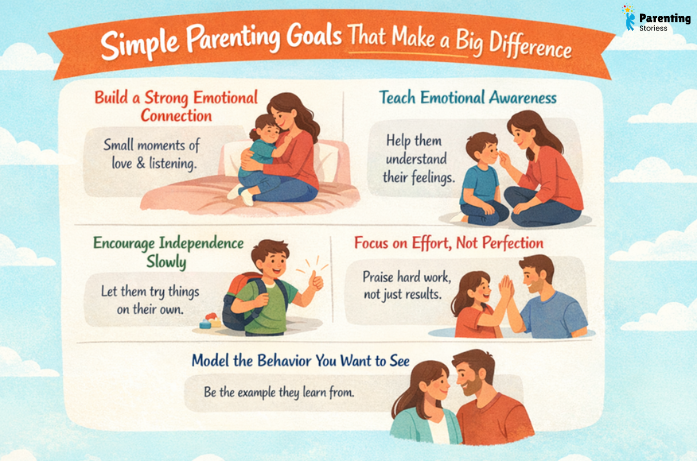
Simple Parenting Goals That Make a Big Difference
I’ve learned that I don’t need a long list of goals. A few meaningful goals practiced daily can create a big impact. It’s the small things that truly matter.
When I focus on simple, intentional parenting, everything feels more manageable. I don’t feel overwhelmed, and my child feels more supported. That balance makes a difference.
1. Build a Strong Emotional Connection
Children thrive when they feel emotionally safe and connected. I try to create small moments every day where my child feels seen and heard. These moments build trust.
It can be a bedtime conversation, a hug after school, or simply listening without distractions. These simple interactions say, “You matter to me.” That feeling stays with them.
Over time, these moments strengthen our bond. My child learns they can come to me with anything. That connection becomes their safe space.
2. Teach Emotional Awareness
Instead of stopping emotions, I try to help my child understand them. Emotions are not wrong, they are signals that need to be understood. This shift changes everything.
When my child is upset, I say things like, “I see you’re feeling frustrated.” This helps them feel heard instead of dismissed. It builds emotional awareness slowly.
Over time, my child learns to express feelings in a healthy way. This is a life skill they will carry forever. And it starts with simple conversations.
3. Encourage Independence Slowly
Letting my child do things on their own can feel difficult. I naturally want to protect them, but I know growth comes from trying. So I step back a little.
I allow small independence like choosing clothes or helping with simple tasks. These small decisions build confidence. They feel capable and trusted.
Even when they struggle, they learn something important. They learn that it’s okay to try and not get it perfect. That’s where real confidence grows.
4. Focus on Effort, Not Perfection
I’ve learned to shift my focus from results to effort. Instead of praising only success, I notice how hard my child tries. That matters more.
I say things like, “You worked really hard on this.” This helps my child value effort over perfection. It reduces fear of failure.
When children are not afraid to make mistakes, they keep trying. That mindset helps them grow stronger over time. And it builds resilience naturally.
5. Model the Behavior I Want to See
Children learn more from what I do than what I say. My actions speak louder than my words. That realization changed my parenting.
If I want my child to be kind, I need to show kindness. If I want patience, I need to practice patience. They are always watching.
The way I handle stress, speak to others, and respond in tough moments becomes their example. These lessons stay with them for life.

Supporting Parents’ Goals for Their Child in School
School is an important part of my child’s life, but I try not to focus only on marks. I remind myself that learning is more than grades. It’s about growth.
My parents’ goals for their child in school include building curiosity and confidence. I want my child to enjoy learning, not fear it. That makes a big difference. Following structured yet flexible approaches, like those shared in the Home Learning Guidelines by the Ministry of Education, can really support this mindset.
Instead of asking only about scores, I ask about their day. “What did you enjoy?” or “Was something challenging?” These questions open real conversations.
This helps my child feel supported instead of pressured. School becomes a place of growth, not stress. And that builds long-term confidence.
Understanding Parent Training Goals ABA (For Support)
For some families, structured approaches like parent training goals ABA can be helpful. These methods focus on guiding behavior with consistency and clarity. They are based on positive reinforcement.
Even in everyday parenting, I use these ideas in a simple way. I praise positive behavior and give clear instructions. Small changes make a big impact.
Instead of saying, “Stop doing that,” I say, “Let’s do this together.” This helps my child understand what to do. It feels more supportive than controlling.
These gentle strategies create a calm and structured environment. And that helps children feel secure and guided. Research shared by the National Library of Medicine (PMC) also highlights how positive parenting strategies can improve a child’s emotional and behavioral outcomes.
Balancing Guidance and Freedom
Finding balance in parenting is not easy. Too much control can make children anxious. Too much freedom can leave them confused.
I try to guide my child while still giving them space. I set clear boundaries but offer simple choices. This creates a healthy balance.
For example, I say, “Would you like to do it now or in five minutes?” This gives my child a sense of control. It also keeps structure in place.
This balance helps my child feel both safe and independent. And that is what builds confidence over time.
Real-Life Parenting Isn’t Perfect (And That’s Okay)
There are days when everything feels messy and overwhelming. Tantrums happen, patience runs out, and nothing goes as planned. That’s part of real parenting.
In those moments, I remind myself that I am human. I don’t need to be perfect. I just need to be present. When I make a mistake, I repair it. I say, “I’m sorry. Let’s try again. These small moments teach powerful lessons.
My child learns that mistakes are okay. They learn that relationships can be repaired. And that builds emotional strength.
Small Daily Habits That Support My Parenting Goals
I don’t need big changes to be a better parent. Small habits make the biggest difference over time. Consistency matters more than perfection.
I try to spend a few minutes each day fully present. I listen, hug, and connect without distractions. These moments build emotional security.
Simple routines like talking before bed or sharing meals help too. They create stability and comfort. And children thrive in that environment.
These small actions build trust and confidence. And they shape my child’s emotional foundation.
When I Feel Like I’m Not Doing Enough
There are moments when I doubt myself. I compare, I worry, and I feel like I’m falling short. Every parent goes through this.
But then I remind myself of something important. My child doesn’t need a perfect parent. They need me.
They need my love, my presence, and my effort. Even on hard days, I am still showing up. And that matters more than anything.
Redefining Success in Parenting
Success in parenting is not about perfection. It’s not about having a perfectly behaved child or top grades all the time. That’s not real life.
Real success looks different. It looks like a child who feels safe sharing their feelings. A child who keeps trying even after failing.
It’s a child who knows they are loved no matter what. That is what truly matters. And that is what strong parenting goals create.
Final Thoughts
Parenting is not about getting everything right. It’s about showing up every day with love and intention. That effort matters more than perfection.
Your parenting goals don’t need to be complicated. They just need to come from your heart. That is enough.
On the hard days, remind yourself of this. You are guiding your child with care. You are creating a safe and loving space.
If you found this helpful, don’t forget to follow Parenting Stories for more gentle, real-life parenting tips and support on your journey
FAQs About Parenting Goals
1. What are parenting goals?
Parenting goals are the values and intentions that guide how you raise your child. They focus on emotional growth, behavior, and overall development.
2. Why are parenting goals important?
They help you stay focused on what truly matters. They guide your decisions and support your child’s emotional well-being.
3. What are parents’ goals for their child in school?
They include building confidence, encouraging curiosity, and supporting learning. It’s about growth, not just grades.
4. What are parent training goals ABA?
They focus on guiding behavior using positive reinforcement and consistency. These methods help children learn in a supportive way.
5. How can I improve my parenting without pressure?
Focus on connection, patience, and small daily habits. You don’t need to be perfect, just present and consistent.
Disclaimer: This article is based on personal parenting experiences and general guidance. Every child is different, so please trust your instincts and consult a professional if you have specific concerns about your child’s development.