

Written with love by a caring mom at Parenting Stories
There’s something incredibly special about running your fingers through your baby’s soft, delicate hair. Whether it’s just a light fuzz or tiny curls beginning to form, those little strands carry so much sweetness, and yes, a few questions too.
If you’ve been wondering how to build the right baby hair care routine, you’re not alone. Many parents feel unsure about what’s normal, what products to use, and how much care is actually needed. The truth is, baby hair care doesn’t have to be complicated or overwhelming.
With a little understanding, gentle care, and the right approach, you can support your baby’s healthy hair growth while enjoying those everyday bonding moments. Let’s walk through everything you need to know, just like a mom guiding another mom.
Understanding Your Baby’s Hair Journey
Before creating a routine, it helps to understand what’s happening with your baby’s hair in the early months.
Many babies are born with soft hair that may fall out within the first 3–6 months. This can feel surprising, but it’s completely normal. Hormonal changes after birth often cause this temporary hair loss, and new, stronger hair gradually grows back.
Some babies:
- Are born with thick hair that sheds quickly
- Have very little hair for months
- Develop curly, wavy, or textured hair over time
There is no “right” pattern. Genetics play a big role, and each baby’s hair grows at its own pace.
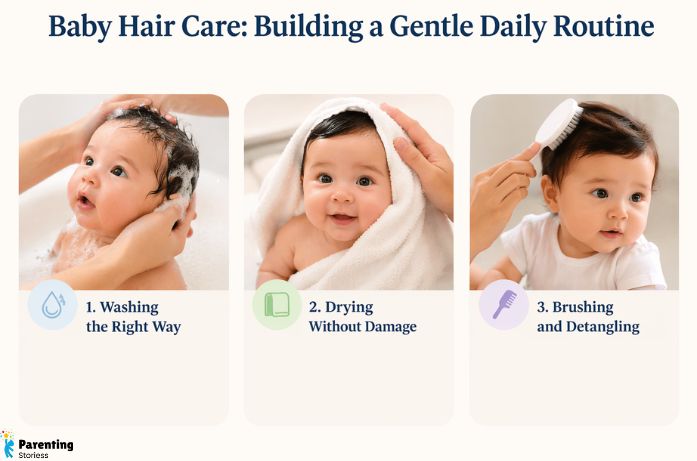
Baby Hair Care: Building a Gentle Daily Routine
A simple, consistent routine is the foundation of healthy baby hair care. You don’t need a shelf full of products, just a few mindful habits.
1. Washing Your Baby’s Hair the Right Way
One of the most common concerns parents have is how often to wash their baby’s hair. The answer depends on your baby’s age and scalp condition.
Newborns usually need hair washing only once or twice a week. As your baby grows, you can increase it to two or three times a week. If your baby sweats more or has thicker hair, you may adjust the routine slightly.
While washing, always use lukewarm water and a mild baby shampoo. Massage the scalp gently using your fingertips instead of nails. This not only cleans the scalp but also improves circulation in a soothing way. Rinse carefully to avoid any product buildup.
Bath time can become a comforting routine that your baby begins to enjoy.
2. Drying Without Damage
After washing, how you dry your baby’s hair matters just as much. It’s important to avoid rubbing the scalp with a towel, as this can cause unnecessary friction and breakage.
Instead, gently pat the hair dry using a soft cotton towel. If possible, let the hair air dry naturally. This keeps the hair soft and reduces stress on delicate strands.
3. Brushing and Detangling
Even if your baby has very fine hair, brushing has its benefits.
It helps:
- Prevent tangles
- Distribute natural scalp oils
- Stimulate gentle blood circulation
What to use:
- A soft-bristle baby brush for fine hair
- A wide-tooth comb for thicker or curly hair
Always brush gently, especially when the hair is dry or slightly damp.
Choosing Safe and Gentle Baby Hair Care Products
When it comes to baby hair care products, keeping things simple is the best approach. Your baby’s scalp is sensitive, so it’s important to choose products that are specifically made for infants.
Look for products that are mild, tear-free, and free from harsh chemicals like sulfates and parabens. Fragrance-free or lightly scented options are usually safer for delicate skin.
In reality, you only need a few basic products. A gentle baby shampoo, a natural oil such as coconut or almond oil, and a soft brush are enough for daily care. Avoid using adult hair products, as they can be too strong and may irritate your baby’s scalp.
Essential Baby Hair Care Products
You really don’t need much. A few basics are enough:
- Gentle baby shampoo
- Natural oil (like coconut or almond oil)
- Soft baby brush or comb
Avoid using adult shampoos, conditioners, or styling products, they can be too strong for your baby’s delicate scalp.
The Power of Oil Massage for Baby Hair
Oil massage is a beautiful tradition that combines care with bonding.
It’s not just about hair, it’s about connection, comfort, and nourishment.
- Keeps the scalp hydrated
- Strengthens hair roots
- Improves blood circulation
- Helps your baby relax and sleep better
How to Do It Gently
- Warm a small amount of oil in your hands
- Apply lightly to the scalp
- Massage using slow, circular motions
- Leave it on for 15–20 minutes before washing
Doing this once or twice a week is more than enough.
Special Care for Different Hair Types
Every baby’s hair is different, and understanding your baby’s hair type can help you care for it better.
Black Baby Hair Care: Focus on Moisture and Protection
Black baby hair care focuses mainly on hydration. This hair type tends to be more delicate and can become dry if not properly moisturized.
It’s important to keep the scalp nourished with gentle oils and avoid frequent washing, which can strip natural moisture. Instead of using combs too often, you can use your fingers or a soft brush to manage the hair.
Also, try to protect your baby’s hair from rough fabrics that can cause breakage. Soft materials like cotton are always a better choice
Baby Curly Hair Care: Gentle and Tangle-Free
Caring for curls requires a little extra patience. Baby curly hair care is all about maintaining softness and preventing tangles.
Always detangle curly hair when it is slightly damp, as this makes the process easier and less painful. Use a wide-tooth comb or your fingers, and avoid brushing dry curls, which can lead to frizz and breakage.
Let the curls dry naturally to maintain their shape and softness.
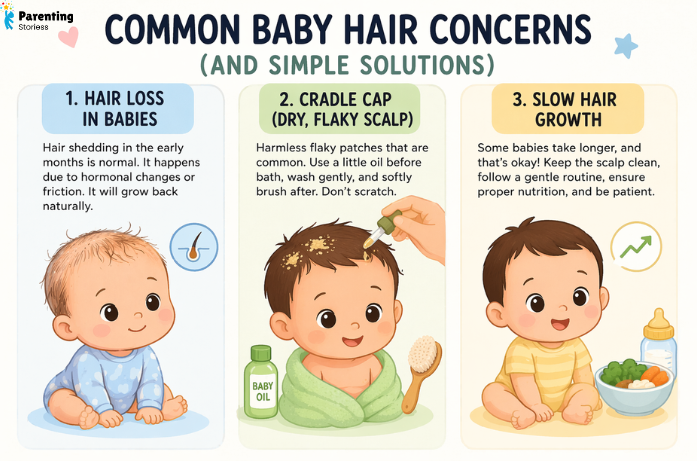
Common Baby Hair Concerns (And Simple Solutions)
As a parent, it’s natural to notice every little change. Here are some common concerns, and how to handle them.
1. Hair Loss in Babies
Hair shedding in the early months is very common and nothing to worry about. It usually happens due to hormonal changes after birth or simple friction from lying down. The good news is that this is temporary, and your baby’s hair will grow back naturally over time.
2. Cradle Cap (Dry, Flaky Scalp)
Cradle cap may look concerning, but it’s harmless and quite common in babies. You can manage it by applying a little oil before bath time, washing gently with a mild shampoo, and softly brushing the scalp afterward. Avoid scratching or forcefully removing the flakes, as your baby’s skin is very delicate.
3. Slow Hair Growth
Some babies take a little longer to grow hair, and that’s completely normal. Keeping the scalp clean, following a gentle care routine, and ensuring proper nutrition can support healthy growth. Most importantly, be patient, every baby grows at their own unique pace.
A Simple Weekly Baby Hair Care Routine
Keeping things simple makes it easier for you and more comfortable for your baby. A basic weekly routine can help you stay consistent without feeling overwhelmed.
Wash your baby’s hair two to three times a week using a gentle shampoo. Include a light oil massage once or twice a week before bath time. On a daily basis, keep the scalp clean, gently brush the hair, and make sure it stays dry and comfortable.
Consistency is more important than doing too much.
Everyday Tips That Make a Big Difference
Sometimes, it’s the smallest habits that protect your baby’s hair the most.
- Avoid tight hairstyles that pull on roots
- Use soft cotton pillowcases or bedding
- Keep your baby’s scalp dry after sweating
- Trim nails to prevent accidental scratches
- Avoid overusing products
And most importantly, keep things gentle.
When Should You Be Concerned?
Most baby hair concerns are completely normal, but there are times when it’s okay to seek professional advice.
If you notice redness, swelling, or signs of infection on the scalp, or if hair loss seems excessive even after several months, it’s best to consult a doctor. Trust your instincts, if something feels unusual, getting reassurance can bring peace of mind.
Final Thoughts: Gentle Care, Real Love, Beautiful Growth
At the end of the day, baby hair care isn’t about expensive products or perfect routines. It’s about the small, loving actions you do every day with care and consistency.
It’s in those gentle moments, massaging your baby’s scalp, softly brushing their hair, and enjoying quiet bath time together, that truly make a difference.
Your baby doesn’t need perfection, they need your love, patience, and warmth. Trust yourself, keep things simple, and remember, you are doing a beautiful job.
Explore more gentle parenting tips and baby care advice on Parenting Stories to support your journey with confidence and love.
FAQs
1. How often should I wash my baby’s hair?
You can wash your baby’s hair 2–3 times a week using a gentle baby shampoo. Newborns may need less frequent washing.
2. Is baby hair loss normal?
Yes, hair loss in the first few months is completely normal and temporary. New hair usually grows back naturally.
3. Which oil is best for baby hair care?
Natural oils like coconut oil or almond oil are safe and commonly used for baby hair care.
4. How can I treat cradle cap at home?
You can gently massage the scalp with oil, wash with mild shampoo, and softly brush the flakes. Avoid scratching.
5. When will my baby’s hair start growing properly?
Hair growth varies for every baby. Some grow hair early, while others take more time it’s completely normal.
Disclaimer: This article is for informational purposes only and is not a substitute for professional medical advice. Always consult your pediatrician for any concerns about your baby’s health or scalp conditions.