
Written by a caring mom at Parenting Stories.
If your baby refuses to sleep in bassinet, nights can start to feel long and exhausting. You gently rock your baby to sleep, place them down carefully, and within moments, they wake again. What should be restful turns into repeated soothing, feeding, and trying all over again.
If you’ve ever wondered why your baby sleeps peacefully in your arms but not in the bassinet, you are not alone. This behavior is not random, there are real developmental and comfort-based reasons behind it. Once you understand them, you can respond in a way that feels calmer, more natural, and supportive for both you and your baby.
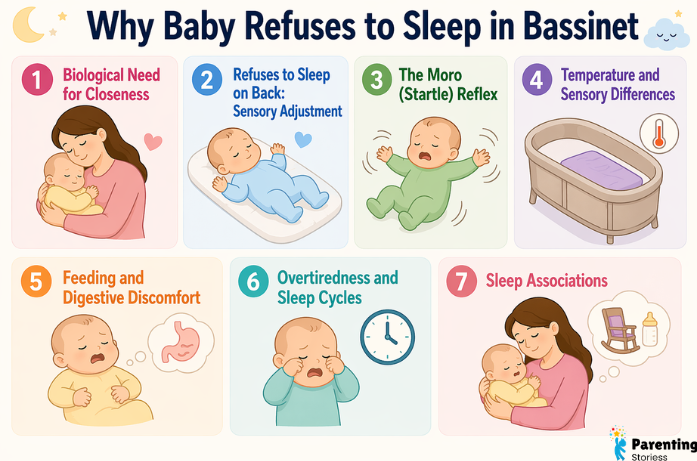
Why Baby Refuses to Sleep in Bassinet
When your baby refuses to sleep in bassinet, it’s often a combination of instinct, comfort needs, and environmental factors. Newborns and young infants are still adjusting to life outside the womb, and independent sleep is a big transition.
Understanding the root causes helps you respond in a way that supports, not fights, your baby’s natural needs.
1. Biological Need for Closeness
Babies are biologically designed to stay close to their caregivers. In the womb, they experienced constant warmth, gentle movement, and the steady rhythm of your heartbeat.
After birth, being placed alone in a bassinet can feel unfamiliar and even unsettling. So when your baby wakes or cries, they are not refusing sleep, they are seeking the safety and comfort they naturally depend on.
2. Baby Refuses to Sleep on Back: Sensory Adjustment
Although placing babies on their backs is the safest sleep position, many babies initially resist it. This is because lying flat feels very different from the curled, snug position they were used to before birth.
Without that sense of being held or supported, your baby may feel less secure. Over time, with gentle reassurance, most babies gradually adjust to this position.
According to American Academy of Pediatrics, placing your baby on their back on a firm, flat surface reduces the risk of sleep-related concerns.
3. The Moro (Startle) Reflex
The Moro reflex is a normal developmental reflex where babies suddenly extend their arms and legs, often in response to movement or a change in position.
When you lay your baby down in the bassinet, this reflex can be triggered, waking them up almost instantly. This is one of the most common reasons babies struggle to stay asleep after being put down.
4. Temperature and Sensory Differences
Your arms provide warmth, softness, and a familiar scent, while the bassinet feels cooler and still in comparison. Babies are highly sensitive to these small changes.
Even a slight difference in temperature or texture can wake your baby during transfer and make it harder for them to settle back into sleep.
5. Feeding and Digestive Discomfort
If your baby refuses to sleep in crib or bassinet, physical discomfort may be the cause rather than the sleep space itself.
Babies may wake soon after being laid down due to hunger, gas, or mild reflux. Since digestion continues after feeding, lying flat can sometimes make them uncomfortable, leading to frequent waking.
6. Overtiredness and Sleep Cycles
When babies stay awake longer than their natural wake window, they can become overtired. This triggers the release of stress hormones like cortisol, which makes it harder for them to relax and fall asleep.
An overtired baby may seem restless, fussy, or resistant to sleep, even though they are very tired.
7. Sleep Associations
Babies learn to associate certain conditions with falling asleep. If your baby usually falls asleep while being held, rocked, or fed, they begin to expect those same conditions when they wake during light sleep cycles.
When placed in the bassinet without those familiar comforts, the change can feel disruptive, causing them to wake up and seek the same soothing method again.
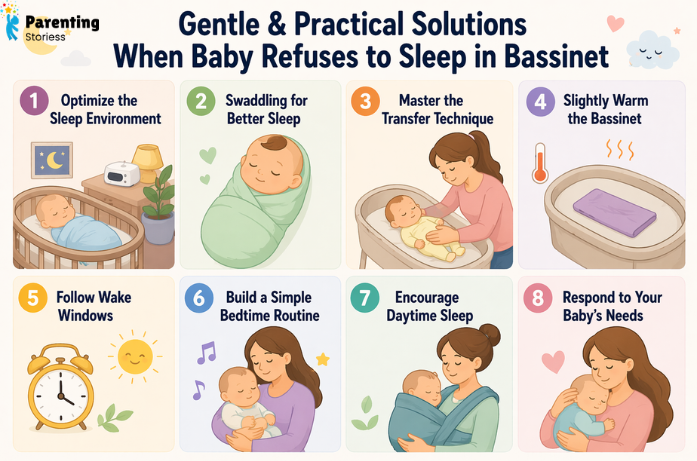
Gentle and Practical Solutions When Baby Refuses to Sleep in Bassinet
There is no one-size-fits-all solution, but these gentle strategies can significantly improve your baby’s sleep over time.
1. Optimize the Sleep Environment
A calm and consistent sleep space helps your baby feel safe. Keep the room softly lit, quiet, and at a comfortable temperature. When the surroundings remain the same, your baby begins to recognize it as a place for rest.
2. Swaddling for Better Sleep
Swaddling can help your baby feel secure and reduce sudden movements that wake them up. It creates a cozy, womb-like feeling and often helps babies stay asleep longer. Always follow safe swaddling practices.
3. Master the Transfer Technique
The way you place your baby in the bassinet can make a big difference. Wait until your baby is in deeper sleep, then gently lower them, feet first. Keep your hand on their chest for a few seconds to help them settle.
4. Slightly Warm the Bassinet
A slightly warm bassinet can feel more comforting. You can briefly place a warm cloth on the mattress before use and remove it before placing your baby down. This helps reduce the sudden temperature change.
5. Follow Wake Windows
Pay attention to your baby’s natural sleep timing to avoid overtiredness.
- Newborns: 45–90 minutes
- Older babies: 1.5–2 hours
Watching your baby’s cues is often more helpful than following the clock.
6. Build a Simple Bedtime Routine
A short and simple bedtime routine helps your baby understand when it’s time to sleep. Feeding, soft talking, or light rocking before placing them in the bassinet can create a sense of predictability.
7. Encourage Daytime Sleep
Good naps during the day can improve nighttime sleep. If your baby struggles to nap, contact naps or babywearing can help them get the rest they need.
8. Respond to Your Baby’s Needs
If your baby cries after being placed in the bassinet, respond calmly. Picking them up when needed builds trust and emotional security, which supports better sleep over time.
Resources like UNICEF explain that frequent waking and the need for closeness are completely normal in infancy.
Common Mistakes to Avoid
Forcing Independent Sleep Too Early
Babies develop sleep independence gradually. Pushing too soon can lead to more resistance and stress.
Comparing Your Baby to Others
Every baby has a unique temperament.
Some adapt quickly, while others need more time and support. Both are normal.
Ignoring Early Sleep Cues
Waiting too long often leads to overtiredness, making sleep harder.
Is It Normal If My Baby Only Sleeps When Held?
Yes, especially in the early months.
If your baby refuses to sleep in bassinet, it simply means they feel safest close to you.
This phase is temporary.
As your baby grows:
- Their nervous system matures
- They feel more secure independently
- Sleep patterns gradually improve
When to Seek Medical Advice
While most cases are normal, consult a pediatrician if:
- Your baby shows signs of discomfort or pain
- Sleep issues are extreme and ongoing
- Feeding or growth concerns arise
Otherwise, trust that this is part of normal development.
A Gentle Reminder for Parents
If you’re feeling overwhelmed, know this:
- You are not doing anything wrong
- Your baby is not difficult
- This phase will pass
Sleep struggles are one of the most challenging parts of early parenting, but they are also temporary.
Final Thought
If your baby refuses to sleep in bassinet, it helps to understand that this is a normal part of early development. Babies are naturally wired to seek closeness and reassurance, especially in the first few months. Wanting to be held, soothed, or near you is not a habit you’ve created it’s a biological need that supports emotional security and healthy attachment.
As your baby grows, their baby sleep schedule will gradually mature, and they will become more comfortable sleeping independently. Gentle consistency, a calm environment, and responsive care will guide this transition over time. For now, focus on meeting your baby’s needs with patience and confidence, knowing that these early moments of closeness are building a strong foundation for their future sense of safety and well-being.
Found this helpful? Share it with another tired parent and explore more gentle parenting tips on Parenting Stories.
FAQs
1. Why does my baby refuse to sleep in bassinet?
Most babies prefer closeness and comfort. The bassinet feels different from your arms, so they may wake up seeking warmth and security.
2. Is it normal if my baby only sleeps when held?
Yes, especially in the early months. Babies naturally feel safest close to you, and this phase is very common.
3. How can I help my baby sleep in the bassinet?
Try gentle steps like swaddling, creating a calm sleep environment, and placing your baby down when they are drowsy but relaxed.
4. Why does my baby wake up as soon as I put them down?
This can happen due to the startle reflex, temperature change, or because your baby isn’t in deep sleep yet.
5. Will my baby eventually sleep independently?
Yes, with time and gentle support, babies naturally learn to sleep on their own as they grow and feel more secure.
Disclaimer: This article is for general informational purposes only and is not a substitute for professional medical advice. Always consult your pediatrician for concerns about your baby’s sleep or health.