Written with love by a caring mom at Parenting Stories
The day your child starts preschool can feel emotional in the most unexpected way. One moment you’re tying tiny shoelaces and packing snacks, and the next, you’re watching your little one walk into a classroom filled with new faces, colorful toys, songs, and first friendships. It’s a big milestone not just for children, but for parents too.
It’s completely natural to wonder, “What should a child learn in preschool?” Many parents quietly worry about whether their child is ready enough socially, emotionally, or academically. But preschool is not about perfection. It’s about helping children grow with confidence, curiosity, communication skills, and a joyful love for learning at their own pace.
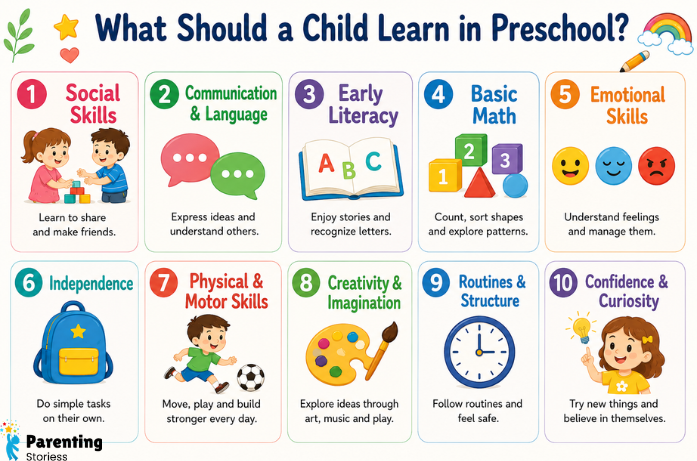
What Should a Child Learn in Preschool?
Many parents think preschool is mainly about learning letters and numbers. While early academics are introduced, preschool education basics go much deeper than that.
The real goal of preschool is helping children become comfortable learners who can communicate, interact, explore, and participate confidently.
The most important preschool readiness skills usually include:
- Social interaction
- Communication and listening
- Emotional development
- Independence
- Early literacy and math skills
- Physical coordination
- Creativity and curiosity
These skills create the foundation children need for future learning and everyday life.
And honestly, children learn these things best through play, routines, stories, music, movement, and relationships, not pressure.
1. Learning Social Skills
One of the biggest preschool learning skills is social interaction. Preschool teaches children how to connect with people outside their family.
Children learn how to share toys, take turns, use polite words, and participate in group activities. They also begin building friendships and understanding personal boundaries.
These small daily experiences help children grow emotionally and socially.
A Gentle Reminder for Parents
Some children adjust to preschool quickly, while others need extra time and reassurance. Both are completely normal.
Every child grows at their own pace.
2. Learning Communication and Language Skills
Preschool is often where children’s language development grows rapidly. You may notice your child asking more questions, speaking in longer sentences, or singing songs they learned in class.
Teachers encourage communication through storytime, rhymes, pretend play, and group discussions. These activities help children build vocabulary and express their thoughts clearly.
How Parents Can Help at Home
Simple conversations matter more than expensive learning tools.
Reading together, talking during meals, asking questions, and singing nursery rhymes all support healthy language development naturally.
3. Learning Early Literacy Skills
Many parents worry their child should already know how to read before kindergarten. In reality, preschool introduces literacy gently without pressure.
What kids learn in preschool often includes recognizing letters, listening to stories, understanding rhymes, identifying sounds, and practicing simple writing movements.
The goal is not perfection.
The goal is helping children feel comfortable and excited about books and learning.
What Matters Most
Children who enjoy learning often build stronger confidence later than children who feel pressured too early.
Positive learning experiences are incredibly important during these early years.
4. Learning Basic Math Skills
Preschool math is playful and hands-on. Children learn simple math concepts through games, songs, and daily activities.
They begin understanding counting, shapes, colors, patterns, sizes, and sequencing. Most of the time, learning feels like ordinary play to children.
Easy Math Practice at Home
Parents can support early math learning naturally by counting snacks, sorting laundry, building with blocks, or talking about shapes during walks.
Young children learn best when learning feels fun and relaxed.
5. Learning Emotional Skills
One of the most important preschool readiness skills is emotional development. Preschool helps children understand and manage their feelings in a safe environment.
Children slowly learn how to express emotions with words, wait patiently, ask for help, and handle frustration calmly.
These emotional skills are important not only for school but also for future relationships and confidence.
For Parents Worried About Drop-Off Tears
If your child cries at preschool drop-off, it does not mean something is wrong.
Many children need time to adjust to new environments. With patience, consistency, and reassurance, most children settle comfortably over time.
6. Learning Independence
Preschool also teaches children how to become more independent in simple everyday ways.
Children practice washing hands, carrying backpacks, putting toys away, opening lunch containers, and following routines independently.
These small tasks help children feel capable and confident.
Encouraging Independence at Home
You can build independence naturally by allowing your child to help with simple tasks like choosing clothes, cleaning up toys, or practicing shoes and zippers.
Children love feeling trusted and responsible.
7. Learning Physical and Motor Skills
Physical movement is a very important part of preschool education basics. Preschoolers are still developing coordination, balance, and muscle strength.
Fine motor skills include holding crayons, drawing shapes, using scissors, and buttoning clothes. Gross motor skills include running, climbing, balancing, jumping, and throwing balls.
Movement helps children grow physically, mentally, and emotionally.
Helpful Activities at Home
Simple activities like playdough, coloring, dancing, playground visits, and obstacle courses help strengthen motor skills naturally.
For young children, movement and learning go hand in hand.
8. Learning Creativity and Imagination
Creativity is another essential part of preschool learning. Through pretend play, storytelling, music, and art activities, children learn how to think creatively and solve problems.
When children pretend to run a store, care for dolls, or build castles, they are practicing communication, organization, empathy, and imagination.
Why Creative Play Matters
Creative play helps children express emotions, build confidence, and explore ideas freely.
For preschoolers, play is one of the most powerful ways to learn.
9. Learning Routines and Structure
Preschool also helps children understand routines and classroom expectations. Predictable routines make children feel emotionally secure and safe.
Children gradually learn how to follow directions, transition between activities, participate in group time, and wait patiently.
These small routines prepare children for future school experiences.
Creating Routines at Home
Simple daily routines like bedtime schedules, cleanup habits, storytime, and regular mealtimes can help children feel calm and prepared for preschool life.
10. Learning Confidence and Curiosity
One of the most beautiful things children learn in preschool is confidence in themselves. Preschool gives children opportunities to try new activities, ask questions, explore ideas, and solve simple problems independently.
Teachers encourage children to participate, speak up, and express their thoughts without fear of making mistakes. Over time, this helps children become more curious and willing to learn new things.
Curiosity is one of the strongest foundations for lifelong learning.
How Parents Can Encourage Confidence
Celebrate your child’s effort instead of focusing only on results.
Simple encouragement like “I’m proud of you for trying” helps children feel safe, capable, and confident in their abilities.
Final Thoughts: Preschool Is About Growth, Not Perfection
Preschool is not about raising perfect students or expecting children to know everything at an early age. It is a gentle beginning where little ones slowly learn confidence, curiosity, independence, communication, and emotional security through everyday experiences and play.
Some children settle in quickly, while others need extra time, hugs, and reassurance along the way. Every child grows differently, and that is completely okay. The most important thing children truly need during these early years is love, patience, encouragement, and support from the people who care for them most.
Share your experience or favourite preschool tip in the comments. We’d love to hear your parenting journey at Parenting Stories!
FAQs About Preschool Learning
1. What should a child know before preschool?
Children should have basic communication, simple social interaction, and growing independence, but they do not need advanced academic skills.
2. What are the most important preschool learning skills?
Social skills, communication, emotional regulation, independence, and curiosity are some of the most important preschool readiness skills.
3. Do preschoolers need to know letters and numbers?
Not perfectly. Preschool introduces letters, sounds, numbers, and shapes through playful activities.
4. How can I prepare my child for preschool?
Reading together, practicing routines, encouraging independence, and offering emotional reassurance can help children feel more prepared.
5. Is crying during preschool drop-off normal?
Yes, many children need time to adjust to separation and new environments. Consistency and patience usually help them settle in over time.
Disclaimer: This article is for informational and parenting support purposes only. Every child develops at their own pace, so always consult your child’s teacher or pediatrician if you have specific concerns about development or learning.