
Written by a caring mom at Parenting Stories,
Starting kindergarten is a big milestone for both children and parents, often bringing a mix of excitement and concern. If you’re thinking about preparing for kindergarten, it’s natural to wonder if your child is ready and how you can make this transition easier. These questions simply show that you care and want the best start for your child.
Kindergarten is not just about learning basics like letters and numbers. It’s about helping your child feel confident, independent, and emotionally ready for a new environment. With simple preparation, patience, and support, you can make this transition smooth and positive for your child.
Preparing for Kindergarten: What Your Child Really Needs
When most parents think about preparing for kindergarten, they focus on academics. But real readiness goes beyond that.
Your child doesn’t need to know everything before school starts. What matters more is how they feel when they step into that classroom.
Kindergarten readiness is a mix of emotional confidence, social comfort, independence, and curiosity to learn. It’s about being able to follow simple routines and feeling safe enough to try new things.
Think of it this way, it’s not about what your child knows, but how ready they are to learn. According to the New Hampshire Department of Education, school readiness includes social, emotional, and physical development, not just academic skills.
Emotional Readiness Comes First
One of the most important parts of how to prepare your child for kindergarten is emotional readiness.
Many children feel nervous before starting school. Some may feel excited, while others feel unsure about being away from home. These emotions are completely normal.
Instead of trying to remove these feelings, help your child understand them. Talk about school in a positive and calm way. Let them ask questions. Listen to their worries without rushing to fix them.
Simple reassurance can go a long way. Let them know you will always come back for them. That sense of security helps them feel safe even when you’re not there.
Helping Your Child Feel Comfortable Around Others
Kindergarten is often the first time children spend regular time in a group setting. This makes social skills an important part of kindergarten preparation.
Your child doesn’t need to be outgoing or talkative. They just need to feel comfortable being around other children.
Encourage everyday interactions like playing at the park or spending time with other kids. These simple experiences teach sharing, waiting, and communicating naturally.
Over time, your child begins to understand how to connect with others without feeling overwhelmed.
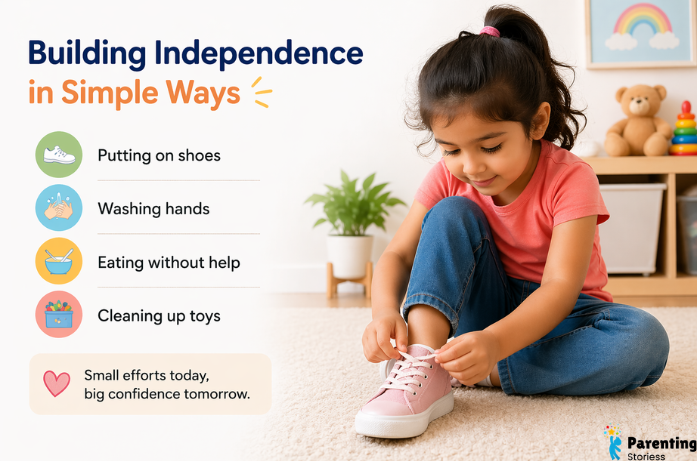
Building Independence in Simple Ways
If you’re wondering how to prepare child for kindergarten, start with independence at home.
Children feel more confident when they can do small things on their own. It gives them a sense of control and comfort.
You can gently encourage this by letting them handle everyday tasks. These don’t need to be perfect, just practiced.
- Putting on shoes
- Washing hands
- Eating without help
- Cleaning up toys
It may take time, but every small effort builds confidence.
Learning Without Pressure
Academic learning is part of preparing your child for kindergarten, but it should feel natural, not forced.
At this age, children learn best through play and everyday experiences. Sitting them down for structured lessons is not necessary.
Instead, read together, talk about things around you, and make learning part of daily life. Counting toys, identifying colors, or singing songs are simple ways to build early skills.
When learning feels fun, children stay curious. And curiosity is the most important skill they can take to school.
Creating a Routine That Feels Safe
A consistent routine can make a big difference when preparing for kindergarten.
Children feel more secure when they know what to expect. A predictable day helps reduce anxiety and makes transitions easier.
Start adjusting your child’s routine a few weeks before school begins. Focus on regular sleep and meal times, and include a calm activity like reading.
This small step helps your child adjust to the structure of school life without stress.
Experts at American Academy of Pediatrics also highlight that emotional readiness and a child’s ability to separate comfortably from parents play a key role in school success.
Preparing the School Bag Together
Packing the school bag may seem simple, but it plays an important role in helping your child feel ready for kindergarten. Instead of doing it alone, involve your child in the process so they understand what goes inside and feel more connected to their daily routine. This small step helps build responsibility and confidence.
Include basic essentials like a water bottle, snacks or lunch, and an extra pair of clothes. Show your child where everything is placed so they can easily find their things. When children feel familiar with their belongings, they feel more secure and independent during the school day.
Making School Feel Familiar
Starting school can feel overwhelming for children because it is something new and unknown. That’s why it’s important to make the idea of school feel familiar before the first day. Talking about school in a simple and positive way can help reduce fear and build excitement.
Explain what a typical day might look like, such as meeting teachers, playing with other children, and listening to stories. If possible, visit the school or use pretend play at home. These small steps help your child feel more comfortable and confident when they start kindergarten.
Encouraging Communication
Good communication helps children feel understood and supported.
Your child should feel comfortable expressing simple needs. They don’t need perfect language, just confidence to speak.
Encourage them to talk openly at home. Ask questions and listen patiently. When children feel heard, they become more confident in expressing themselves outside.
Teaching Basic Self-Care
Self-care skills may seem small, but they make a big difference in school.
Before kindergarten, help your child practice managing simple daily tasks independently.
- Using the toilet
- Washing hands
- Opening lunch boxes
These small abilities help your child feel capable and reduce their dependence on others.
Preparing Your Child for Separation
Separation anxiety is a natural part of preparing your child for kindergarten.
To make this easier, start with short periods of separation before school begins. Keep goodbyes simple and consistent.
Avoid long emotional farewells or leaving without telling them. A calm, confident goodbye helps your child feel secure.
Your reaction shapes how they respond.
The First Few Weeks: What to Expect
The first few weeks of kindergarten can feel overwhelming for children.
You may notice they are more tired than usual or need extra comfort. This is a normal part of adjusting to a new routine.
Be patient during this time. Offer support, listen to their experiences, and keep home routines steady.
Every child adapts differently, and that’s completely okay.
Common Mistakes to Avoid
While learning how to prepare for kindergarten, many parents unintentionally put too much pressure on their child by focusing only on academics or expecting them to be fully ready from the start. Comparing your child to others can also create stress, as every child grows and learns at their own pace. Kindergarten is not a test, it’s a place where learning begins.
Another common mistake is ignoring emotional readiness. A child who feels secure and supported will adjust much faster than one who feels anxious. Instead of rushing, focus on building confidence through encouragement, simple routines, and being emotionally available. This strong foundation helps your child settle in and enjoy learning.
Final Thoughts
As your child steps into kindergarten, remember that readiness is not about being perfect. It’s about feeling safe, supported, and confident enough to try something new. Every child adjusts at their own pace, and small daily efforts at home make a bigger difference than you might think. Your love, patience, and reassurance are already preparing them in the best possible way.
There may be a few emotional mornings or uncertain moments in the beginning, and that’s completely normal. With time, your child will grow more comfortable, make new friends, and begin to enjoy this new routine. Kindergarten is not just the start of school, it’s the beginning of your child’s independence, confidence, and a beautiful journey of learning.
Found this helpful? Explore more tips on Parenting Stories and share with other parents!
FAQs
1. Preparing for kindergarten, where should I start?
Start by building a simple daily routine, encouraging independence, and helping your child feel emotionally secure about starting school.
2. How to prepare your child for kindergarten emotionally?
Talk positively about school, listen to their feelings, and reassure them that they will be safe and you will return after school.
3. Preparing your child for kindergarten, what matters most?
Focus on confidence, social comfort, and basic independence rather than only academic skills.
4. Ways to prepare your child for kindergarten effectively?
Create routines, practice self-care skills, encourage social interaction, and make school feel familiar through simple activities.
5. Kindergarten preparation, what skills are important?
Important skills include communication, emotional readiness, independence, and the ability to follow simple instructions.
Disclaimer: This article is for general guidance only. Every child develops differently, so for specific concerns, consult a professional.