Written by a caring mom at parenting stories
After having a baby, you’re probably prepared for sleepless nights, frequent feedings, and feeling exhausted most of the day. But waking up with dry, burning, or irritated eyes? That’s something you might not have expected.
If you’re experiencing dry eyes postpartum, several things could be contributing to the discomfort. Hormonal changes after childbirth, lack of sleep, and even spending more time on your phone during nighttime feedings may affect your eyes. You might notice itching, a gritty feeling, or occasional blurry vision.
So, are dry eyes simply another change that can happen after childbirth, or could they be a sign of something that needs attention? Let’s explore what causes eye dryness after delivery, how long it may last, and what you can do to find relief.
What Are Dry Eyes Postpartum?
Dry eyes after childbirth occur when your eyes don’t produce enough tears or when tears dry up too quickly, leaving them feeling irritated, uncomfortable, or gritty.
Your eyes need a healthy layer of tears to stay moist, protect against irritation, and maintain clear vision. When this natural moisture balance is disturbed, you may experience burning, redness, or occasional blurry vision.
As explained in the NCBI Bookshelf, dry eye disease can develop when the tear film becomes unstable, affecting eye comfort and sometimes causing blurred vision.
Some moms notice eye dryness during pregnancy, while others develop symptoms after giving birth, possibly due to hormonal changes, lack of sleep, or other factors.
Fortunately, mild dry eyes may improve with simple care, such as using lubricating eye drops and taking regular screen breaks. However, if the discomfort continues or worsens, it’s best to consult an eye care professional.
Why Do Dry Eyes Happen After Giving Birth?
After childbirth, your body goes through hormonal and physical changes that may affect tear production. Along with sleepless nights and daily newborn care, these changes can leave your eyes feeling dry or irritated.
Here are five possible causes of eye dryness after delivery.
1. Hormonal Changes After Childbirth
During pregnancy, estrogen and progesterone levels increase, then drop quickly after delivery. These hormonal changes may affect tear production and tear film stability, causing dryness, burning, or irritation.
Hormones can influence how well your eyes produce and maintain tears. You can explore more about this connection through research published on PubMed Central (PMC).
Some moms may notice these symptoms even if they never had dry eyes before pregnancy.
2. Breastfeeding and Hormonal Fluctuations
Breastfeeding causes ongoing hormonal changes, including lower estrogen levels in some women. These changes may contribute to eye dryness, although research on the connection is limited.
If your eyes feel uncomfortable, ask your healthcare provider about suitable treatments. You usually don’t need to stop breastfeeding.
3. Lack of Sleep and Exhaustion
Frequent nighttime feedings and interrupted sleep can leave your eyes feeling tired and uncomfortable.
Poor sleep may affect tear film stability, making dryness and irritation worse. Try resting whenever possible and accepting help with baby care to support your recovery.
4. Increased Screen Time
Many moms spend time on their phones while feeding their babies or during quiet moments.
Looking at screens reduces how often you blink, allowing tears to evaporate faster. Taking regular screen breaks and blinking fully may help prevent dryness and discomfort.
5. Dehydration and Dry Indoor Air
Busy newborn routines can make it easy to forget to drink enough water. Inadequate hydration may contribute to discomfort, although drinking extra water isn’t a cure for dry eyes.
Air conditioning, fans, heaters, and dry weather can also increase tear evaporation. Staying hydrated and avoiding direct airflow toward your face may help keep your eyes comfortable.
Common Symptoms of Postpartum Eye Dryness
Eye dryness doesn’t feel the same for every mom. Some experience mild irritation, while others notice discomfort throughout the day.
Common symptoms include:
- Burning or stinging eyes
- Gritty or sandy sensations
- Redness and irritation
- Blurry or fluctuating vision
- Sensitivity to bright light
- Heavy or tired eyes
- Difficulty wearing contact lenses
- Excessive watering
Interestingly, dry eyes can sometimes produce extra tears. This happens when irritation triggers reflex tearing, which may not provide lasting moisture.
If your symptoms continue or become worse, don’t assume they’re simply caused by exhaustion.
What May Help Relieve Dry Eyes Postpartum?
Dealing with dry, irritated eyes while caring for a newborn can be frustrating. Thankfully, a few simple changes to your daily routine may help soothe your eyes and reduce discomfort.
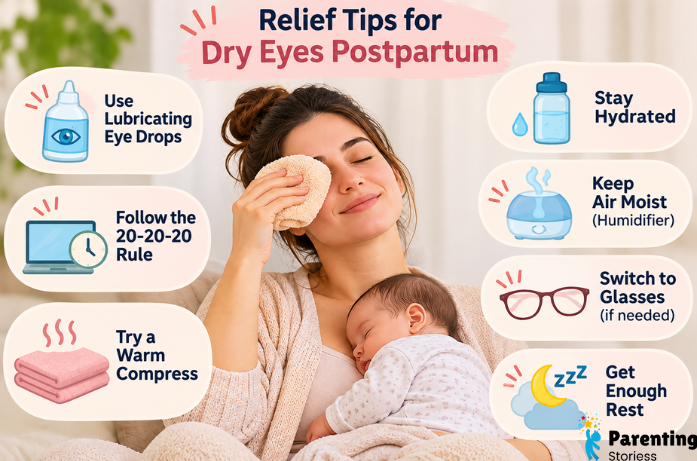
Here are seven practical ways to find relief.
1. Use Lubricating Eye Drops
Artificial tears can help keep your eyes moist and relieve burning, dryness, or a gritty feeling. Preservative-free eye drops may be a better choice if you need to use them frequently.
According to the Mayo Clinic, artificial tears are often enough to manage mild dry eye symptoms, while more persistent cases may need additional treatment.
Avoid redness-relief drops unless recommended by your eye doctor. If you’re breastfeeding, check with your pharmacist or healthcare provider before choosing eye drops.
2. Follow the 20-20-20 Rule
Spending time on your phone during late-night feedings can make dry eyes worse because you blink less often while looking at screens.
Try the 20-20-20 rule: Every 20 minutes, look at something 20 feet away for 20 seconds. Remember to blink fully to help spread tears across your eyes.
3. Try a Warm Compress
A warm compress may help improve the flow of natural oils from your eyelid glands, which prevent tears from evaporating too quickly.
Place a clean, comfortably warm cloth over your closed eyes for 5–10 minutes. Make sure it isn’t too hot. You can try this during a quiet moment when your baby is resting.
4. Drink Enough Water
Between breastfeeding, diaper changes, and household tasks, it’s easy to forget to drink water.
Keep a water bottle near your feeding chair and take regular sips throughout the day. Staying hydrated supports your overall health, although drinking extra water alone won’t cure dry eyes.
5. Protect Your Eyes From Dry Air
Air conditioners, ceiling fans, heaters, and dry weather can make your tears evaporate faster, increasing eye irritation.
Avoid sitting directly in front of fans or air vents. If your home feels dry, a properly maintained humidifier may help. Wearing sunglasses outdoors can also protect your eyes from wind.
6. Take a Break From Contact Lenses
If you wear contact lenses, you may notice more irritation when your eyes are dry.
Try switching to glasses for a few days to give your eyes a break. Avoid sleeping in contact lenses unless they’re prescribed for overnight wear.
If you experience eye pain, significant redness, or light sensitivity while wearing contacts, remove them and seek prompt medical advice.
7. Get Rest Whenever Possible
Sleepless nights are a familiar part of caring for a newborn, but lack of sleep can also make eye dryness and irritation worse.
Try resting when your baby sleeps or asking your partner or family for help so you can get some uninterrupted rest.
Even small opportunities to recharge may help you feel better while your body recovers after childbirth.
Can Breastfeeding Make Dry Eyes Worse?
Some moms notice more eye discomfort while breastfeeding.
Hormonal changes during lactation may influence the tear film, but researchers haven’t established exactly how often breastfeeding contributes to dry eye disease.
Interrupted sleep, screen time, medications, and environmental conditions may also play a role.
If your symptoms are uncomfortable, an eye care professional can recommend suitable treatment options.
Don’t stop breastfeeding or change prescribed medications without consulting your healthcare provider.
How Long Do Dry Eyes Last After Pregnancy?
Dry eyes after childbirth can last anywhere from a few weeks to several months, depending on what’s causing them.
For some moms, symptoms gradually improve as hormone levels adjust and sleep routines become more regular. However, dryness may last longer if you have an underlying eye condition or continue experiencing irritation from screens or dry air.
Simple changes, such as using lubricating eye drops, taking screen breaks, and avoiding direct airflow, may help relieve discomfort.
If your eyes remain dry for more than a couple of weeks, symptoms keep returning, or your vision is affected, consult an eye care professional. Early treatment can help prevent ongoing discomfort and protect your eye health.
When Should You See a Doctor?
Mild dryness is often manageable, but certain symptoms need medical attention.
See an eye care professional if your eyes remain uncomfortable, frequently become red, or don’t improve with basic care.
Seek urgent medical attention if you experience:
- Sudden vision loss or significant vision changes
- Severe eye pain
- New flashes of light or visual disturbances
- Marked sensitivity to light
- A very red, painful eye
- Eye pain or redness while wearing contact lenses
After childbirth, vision changes accompanied by a severe headache, swelling of the face or hands, shortness of breath, or upper abdominal pain may indicate postpartum preeclampsia.
This potentially serious condition requires immediate medical evaluation.
Never dismiss sudden visual changes as ordinary tiredness.
Simple Daily Eye Care Routine for New Moms
You don’t need an elaborate wellness routine. Small, consistent habits may help keep your eyes comfortable.
| Time | Eye Care Habit |
| Morning | Drink water and notice any irritation |
| During feeding | Avoid direct airflow and keep water nearby |
| Screen time | Take short breaks and blink regularly |
| Afternoon | Switch to glasses if contacts feel uncomfortable |
| Evening | Use a comfortably warm compress if helpful |
| Bedtime | Apply recommended lubricating drops if needed |
Remember, this isn’t another task you must complete perfectly.
Choose the habits that fit naturally into your day.
Frequently Asked Questions
1. Are postpartum dry eyes normal?
Dry eye symptoms can occur after childbirth because of hormonal changes, poor sleep, or environmental factors. Persistent symptoms should be evaluated by an eye care professional.
2. Can dry eye postpartum symptoms go away naturally?
Mild symptoms may improve as contributing factors change. However, ongoing or worsening dryness may require treatment.
3. Can I use eye drops while breastfeeding?
Many lubricating eye drops are considered compatible with breastfeeding. Ask your pharmacist or healthcare professional about the specific product.
4. Can lack of sleep cause dry eyes after childbirth?
Yes. Insufficient sleep may affect tear film stability and worsen irritation, although other factors can also contribute.
5. Can postpartum hormones affect eyesight?
Hormonal changes may affect the tear film and cause temporary visual fluctuations. Sudden or significant vision changes require prompt medical attention.
Final Thoughts
After having a baby, it’s easy to focus so much on your little one that you forget about your own health. But even something as simple as dry, irritated eyes can make those long days and sleepless nights more uncomfortable.
If your eyes have been bothering you since childbirth, try making a few small changes. Using lubricating eye drops, taking breaks from screens, and getting some rest when you can may help. And if the dryness doesn’t improve, it’s worth talking to an eye doctor.
At Parenting Stories, we know that caring for yourself isn’t always easy when you have a newborn who needs you around the clock.
Just remember, mama, your health matters too. You deserve the same love, patience, and care you give your baby every day.
Remember to take care of yourself, too, mama. For more simple tips to help you feel better and recover after childbirth, explore our helpful guides at Parenting Stories.
Medical Disclaimer: This article is for informational purposes only and does not replace professional medical advice. Consult a qualified healthcare professional for persistent eye discomfort, medication questions during breastfeeding, or changes in vision.