Written by a caring mom at Parenting Stories
Have you ever noticed your baby’s tiny feet feeling cold, even when the rest of their body is warm? This is something many parents experience, especially during the first few months. It’s natural to wonder whether your baby needs extra clothing or if something is wrong.
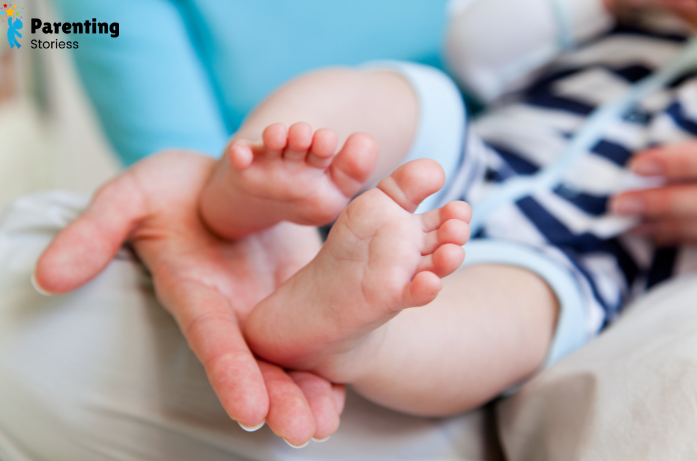
If you’ve noticed your baby’s feet cold to the touch, there’s usually no need to worry. Cold hands and feet are common in newborns because their blood circulation and ability to regulate body temperature are still developing. Their fingers and toes may feel chilly while their chest and tummy remain comfortably warm.
In this article, we’ll explain why babies have cold hands and feet, how to check if your baby is actually cold, simple ways to keep them comfortable, and the warning signs parents should know.
Why Are My Baby’s Feet Cold? 5 Common Reasons
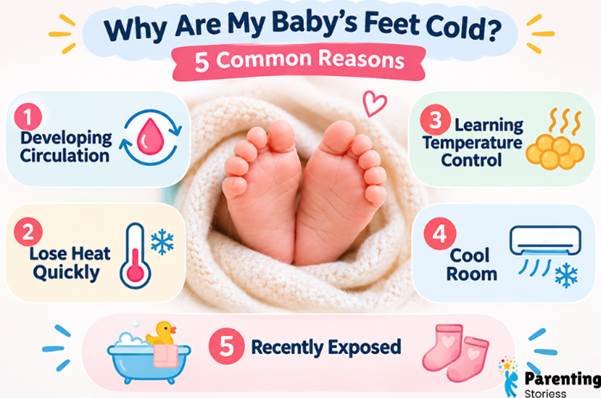
Cold feet don’t always mean your baby is uncomfortable. There are several normal reasons why babies have cold hands and feet, especially during the newborn stage.
1. Their Blood Circulation Is Still Developing
Newborn babies have a developing circulatory system. Their bodies are still learning how to control blood flow and maintain a comfortable temperature.
When it’s cool, less warm blood may reach their hands and feet, making them feel chilly even when their chest is warm. This usually improves as your baby grows.
2. Babies Lose Body Heat Quickly
Babies lose heat faster than adults because their bodies are small and have a larger skin surface compared to their weight.
They also have less insulating body fat, making them more sensitive to cold surroundings. Premature and low-birth-weight babies may have more difficulty staying warm.
3. Their Body Is Still Learning to Control Temperature
Newborns cannot regulate their body temperature as well as adults. Instead of relying on shivering, they use special body fat called brown fat to produce warmth.
Since this system is still developing, their hands and feet may sometimes feel cold even when their body temperature is normal.
4. The Room Is a Little Cool
Air conditioning, cool drafts, or uncovered feet can make your baby’s toes feel chilly.
Before adding extra clothes, touch your baby’s chest or upper back. If these areas feel comfortably warm and your baby seems fine, they may not need another layer.
5. Their Feet Were Recently Exposed
Your baby’s feet may feel cold after a bath, diaper change, or spending time without socks.
Wet or uncovered skin loses warmth quickly. Dry your baby properly after bathing and dress them in comfortable clothes or soft socks to help keep their feet warm.
Is It Normal for Babies’ Hands and Feet to Be Cold?
Yes, it’s quite normal for babies to have cold hands and feet, especially during the newborn stage. Their blood circulation and body temperature control are still developing, so their fingers and toes may feel cooler than the rest of their body.
According to the NHS, cold hands and feet are common in babies. Instead of checking their toes, gently feel their tummy or back to see if they’re comfortably warm.
If your baby is feeding well, breathing normally, and behaving as usual, cold hands and feet are generally nothing to worry about. However, if your baby seems unusually sleepy, refuses feeds, or has trouble breathing, seek medical attention.
Baby Hands and Feet Cold but Body Warm: What Does It Mean?
Have you noticed that your baby’s hands and feet feel cold, but their chest or tummy is warm? This is quite common in babies and usually isn’t a reason to worry.
It happens because a baby’s blood circulation is still developing. Their body may reduce blood flow near the skin to conserve warmth, making their fingers and toes feel cooler than the rest of their body.
If your baby is feeding well, breathing normally, and behaving as usual, there’s generally no need to add extra layers of clothing. Just make sure their chest or back feels comfortably warm.
Remember: Cold hands and feet don’t always mean your baby is feeling cold.
How to Tell if Your Baby Is Actually Cold
Cold hands and feet don’t always mean your baby is feeling cold. Instead of checking their toes, here are three simple ways to know if your baby is comfortable.
1. Check Their Chest or Back
Gently touch your baby’s chest, tummy, or upper back. These areas give you a better idea of their body warmth than their hands or feet.
If their chest feels comfortably warm, they’re probably dressed appropriately. If it feels unusually hot or cold, check their temperature and adjust their clothing if needed.
2. Watch Your Baby’s Behavior
Pay attention to how your baby is acting. If they’re feeding well, breathing comfortably, and responding as usual, these are reassuring signs.
However, unusual sleepiness, difficulty waking, weak crying, or poor feeding may indicate something is wrong. Contact your pediatrician if you notice these changes.
3. Use a Thermometer
If you’re unsure about your baby’s temperature, use a reliable digital thermometer rather than relying on touch alone.
For babies younger than 3 months, a temperature of 100.4°F (38°C) or higher needs immediate medical evaluation. A newborn with a temperature below 97.7°F (36.5°C) also needs prompt medical advice, especially if they seem unwell.
Why Are My Baby’s Hands and Feet Cold While Sleeping?
It’s common for babies to have cold hands and feet while sleeping, even when the rest of their body feels warm. This happens because their blood circulation and temperature control are still developing.
Their fingers and toes may also feel chilly when exposed to cooler room air. If your baby is sleeping comfortably and their chest feels warm, there’s usually no need to worry.
Should You Cover Your Baby’s Hands at Night?
Not always. If your baby’s chest or back feels comfortably warm, they may not need extra clothing.
Choose soft, well-fitting pajamas or an appropriately sized sleep sack to keep your baby comfortable.
According to the American Academy of Pediatrics, parents should avoid overheating and keep loose blankets, pillows, and soft bedding out of their baby’s sleep area.
Always place your baby on their back on a firm, flat mattress, and keep their head uncovered during sleep.
1 Year Old Baby Cold Hands and Feet: Is It Normal?
Yes, cold hands and feet can still be normal in one-year-old babies. Although their circulation has developed since birth, their fingers and toes may sometimes feel cool.
If you’ve noticed your 1 year old baby cold hands and feet, it could be because they’ve been crawling on a cold floor, walking barefoot, or playing in an air-conditioned room.
If your toddler is active, eating well, and behaving normally, there’s usually no reason to worry. However, if their hands or feet remain unusually cold or you notice swelling, skin color changes, or unusual tiredness, contact your pediatrician.
Why Do Some Babies Have Blue or Purple Feet?
Sometimes, a newborn’s hands and feet may look slightly blue or purple, especially when they’re cold. This is often caused by a temporary condition called acrocyanosis.
It happens when small blood vessels near the skin narrow, reducing blood flow to the hands and feet. The color usually returns to normal as the baby warms up.
According to American Academy of Pediatrics, newborns may have bluish hands and feet because their blood vessels are sensitive to temperature changes.
However, blue or gray lips, tongue, or face are signs of a medical emergency, especially if your baby has trouble breathing.
If the discoloration doesn’t improve or only one hand or foot appears unusually cold, pale, or swollen, seek prompt medical advice.
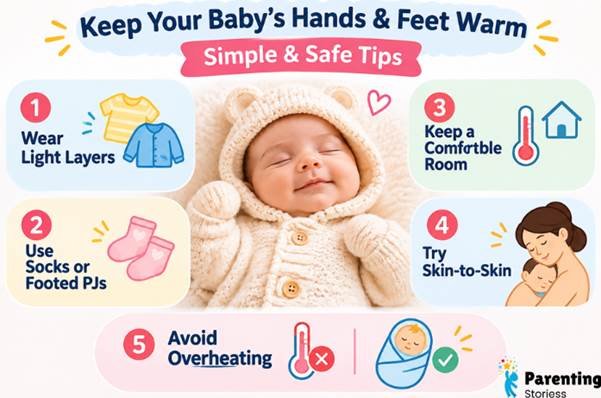
How to Keep Your Baby’s Hands and Feet Warm Safely
If you notice your baby’s hands and feet are cold, a few simple steps can help keep them warm and comfortable without overheating.
1. Dress Your Baby in Comfortable Layers
Choose soft, breathable clothes that suit the room temperature. Babies usually need one more light layer than adults to stay comfortable.
Check your baby’s chest or back before adding extra clothing. If these areas feel warm, another layer may not be necessary.
2. Use Socks or Footed Pajamas
Soft socks or footed pajamas can help keep your baby’s tiny toes warm, especially during cooler weather.
Make sure the clothes fit comfortably and aren’t too tight around their feet or ankles. For sleep, choose well-fitting pajamas or a suitable sleep sack.
3. Keep the Room Temperature Comfortable
Keep your baby’s room at a comfortable temperature, avoiding direct air conditioning or heating airflow near the crib.
Never use heating pads, hot-water bottles, or electric blankets to warm your baby, as they can cause burns or overheating.
4. Try Skin-to-Skin Contact
Holding your newborn against your bare chest can help regulate their body temperature while providing warmth and comfort.
Make sure you’re fully awake, and keep your baby’s face and nose uncovered. If you feel sleepy, place your baby in their own safe sleep space.
5. Avoid Overheating
Adding too many layers can make your baby too hot, even if their hands and feet feel cold.
Watch for signs such as sweating, flushed skin, or an unusually hot chest. Remove an extra layer if needed.
Remember: Your baby’s hands and feet don’t need to feel warm all the time. Keeping their body comfortably warm is what matters most.
When to Worry About Baby Cold Hands and Feet
Most cases of cold hands and feet are harmless, but certain symptoms need immediate attention.
Here’s a simple guide.
| What you notice | What to do |
| Cold feet but warm chest, baby acting normally | Usually reassuring; monitor comfort |
| Cool feet after a bath or in a cool room | Dry and dress your baby comfortably |
| Temporary bluish hands and feet in a healthy newborn | May be normal; monitor for improvement |
| One foot suddenly colder, paler, or swollen | Seek prompt medical assessment |
| Cold, clammy skin with poor feeding or unusual sleepiness | Seek urgent medical care |
| Blue lips, tongue, or difficulty breathing | Seek emergency medical care |
Contact your pediatrician promptly if your baby has persistent coldness, unusual skin changes, poor feeding, or a low body temperature.
For babies younger than 3 months, a fever of 100.4°F (38°C) or higher needs immediate medical evaluation.
And if your baby seems seriously unwell, don’t wait for a thermometer reading before getting help.
Frequently Asked Questions
1. Why are my baby’s feet cold even with socks on?
Babies’ feet can feel cool because of normal circulation and temperature regulation. Socks don’t always make their toes warm. Check their chest and overall comfort instead.
2. Are cold hands and feet a sign of fever in babies?
Not necessarily. Cold extremities alone don’t indicate fever. Use a thermometer if you suspect illness.
3. Should I put socks on my baby at night?
Socks are optional if they fit securely and your baby needs a light layer. Footed pajamas or an appropriately sized sleep sack are often more practical.
4. When do babies stop having cold hands and feet?
Temperature regulation improves as babies grow, particularly during the first few months. However, occasional cool hands and feet can remain normal in older babies.
5. Can dehydration cause cold hands and feet?
Severe dehydration can affect circulation, but cold feet alone aren’t a reliable sign. Fewer wet diapers, poor feeding, and unusual sleepiness deserve medical advice.
Final Thoughts
If you’ve noticed your baby’s feet cold to the touch, there’s usually no need to worry. Cold hands and feet are common in babies, especially newborns, as their circulation and body temperature control are still developing.
Instead of checking their toes, focus on their chest warmth, feeding, breathing, and overall behavior. Keep your baby comfortably dressed, avoid overheating, and contact your pediatrician if you notice anything unusual.
Remember, every baby is different, and you will gradually learn what’s normal for your little one. Trust your instincts, and don’t hesitate to ask for help when needed.
For more helpful baby care tips and parenting advice, keep reading Parenting Stories.
Medical Disclaimer
This article is for general educational purposes and does not replace professional medical advice. If you are concerned about your baby’s temperature, circulation, or health, consult your pediatrician. Seek emergency care for serious warning signs.