
Written by a caring mom at Parenting stories
Nighttime feeding can be particularly exhausting for new moms and dads, especially when their baby wakes up hungry just as they’ve finally managed to fall asleep. During the first few weeks, night feeds for newborns are essential because their tiny stomachs can only hold small amounts of milk. As a result, they need frequent feeding to support healthy growth and development.
Most newborns need to be fed every 2–3 hours, even at night. But parents often wonder whether they should wake their sleeping baby for a feed or let them sleep a little longer. The answer depends on the baby’s age, weight gain, and individual feeding needs.
As a mom, I understand how challenging those early sleepless nights can be. In this guide, we’ll explore how often to feed your newborn at night, when you should wake your baby for feeding, how to recognize hunger cues, and practical tips to make nighttime feeding easier for both you and your little one.
Why Do Newborns Need Night Feeds?
Newborns have small stomachs and digest milk quickly. That’s why they need regular feeding throughout the day and night to get enough calories and nutrients for healthy growth and development.
Nighttime feeding also supports healthy weight gain in babies and helps breastfeeding mothers maintain their milk supply.
Another reason newborns wake frequently is that their sleep cycles are still developing. They haven’t yet established a regular day-and-night sleep pattern, so waking up several times during the night is normal.
Remember: Frequent nighttime waking doesn’t always mean your baby isn’t getting enough milk. In many cases, it’s simply a normal part of newborn growth and development.
How Often Are Night Feeds for Newborns Needed?
If you’re wondering how often to feed a newborn at night, the answer depends on your baby’s age, weight gain, and feeding method.
Breastfed newborns typically need 8–12 feeds in 24 hours. Formula-fed newborns commonly feed every 2–3 hours during the early weeks.
Newborn Night Feeding Schedule by Age
| Baby’s Age | Typical Night Feeding Pattern |
| 0–2 weeks | Every 2–3 hours, sometimes more often |
| 2–4 weeks | Around every 2–4 hours |
| 1–2 months | Some babies sleep longer, while others still feed every 2–4 hours |
| 2–3 months | Some babies have longer sleep stretches, but night feeds remain common |
These are general feeding patterns, not strict schedules.
Some babies need more frequent feeds, particularly during growth spurts or when they’re having difficulty gaining weight.
Important: Babies who haven’t regained their birth weight may need scheduled nighttime feeds. Always follow your pediatrician’s recommendations.
Should I Wake My Newborn to Feed at Night?
I remember looking at my peacefully sleeping baby and wondering whether waking them was really necessary.
The answer mainly depends on your baby’s age and growth.
During the First Two Weeks
Most newborns lose some weight after birth and regain their birth weight within approximately 10–14 days.
Until your baby regains that weight and is gaining steadily, your pediatrician may recommend waking them regularly.
Many newborns shouldn’t go longer than 2–3 hours during the day or about 4 hours at night without feeding during this period, unless their clinician advises otherwise.
Babies born prematurely or those with jaundice or feeding difficulties may need more frequent feeds.
After Your Baby Regains Birth Weight
Once your baby is gaining weight appropriately and feeding well, your pediatrician may allow longer nighttime sleep stretches.
For many healthy, full-term babies, this means you don’t necessarily need to wake them every few hours.
However, continue feeding whenever your baby wakes hungry.
Even healthy, growing babies may need nighttime milk for several months.
How to Recognize Newborn Hunger Cues at Night
Crying isn’t always the first sign that your baby is hungry. Newborns often show small hunger cues before they become upset. Recognizing these early signs can make nighttime feeding easier.
Common Hunger Signs
Watch for these signs that your baby may be hungry:
- Turning their head from side to side, searching for milk.
- Opening their mouth or making sucking movements.
- Bringing their hands toward their mouth.
- Smacking or licking their lips.
- Becoming restless or more alert.
- Rooting toward your breast or a gentle touch on their cheek.
Offering milk when you notice these early signs can help your baby feed more calmly.
Does Every Nighttime Sound Mean Hunger?
Not necessarily. Newborns often grunt, stretch, squirm, or make little noises during active sleep.
If your baby seems comfortable and remains asleep, you can wait briefly to see whether they settle on their own before picking them up.
However, if your baby is due for a scheduled feeding recommended by your pediatrician, don’t delay it. If they show clear hunger cues, offer milk.
Breastfeeding vs. Formula Feeding at Night
Both breastfed and formula-fed newborns need regular nighttime nourishment, although feeding patterns can differ.
Breastfed Newborns
Breastfed babies commonly nurse 8–12 times or more in 24 hours.
You may notice cluster feeding, when your baby wants several feeds close together, especially during the evening.
This can feel exhausting, but frequent nursing doesn’t automatically mean your milk supply is low.
Focus on weight gain, wet diapers, and swallowing during feeds to understand whether your baby is getting enough milk.
If you’re concerned about feeding or milk supply, speak with a lactation consultant.
Formula-Fed Newborns
Formula-fed babies also need frequent feeds during the early weeks.
Some may go slightly longer between feeds, but every baby’s needs are different.
Follow your baby’s hunger and fullness cues rather than encouraging them to finish every bottle.
Giving extra formula before bedtime doesn’t guarantee longer sleep. Never add cereal to a bottle to encourage sleep unless specifically recommended by your baby’s healthcare provider.
How Long Should a Newborn Night Feed Take?
There’s no fixed feeding duration for every newborn.
Some babies breastfeed efficiently within 10–20 minutes, while others take longer. Bottle-feeding times also vary.
Instead of watching the clock, notice whether your baby is actively sucking and swallowing.
Relaxed hands, steady swallowing, and a satisfied appearance after feeding can be reassuring signs.
If your baby consistently falls asleep after only a few sucks, struggles to stay awake, or takes unusually long to feed, consult your pediatrician.
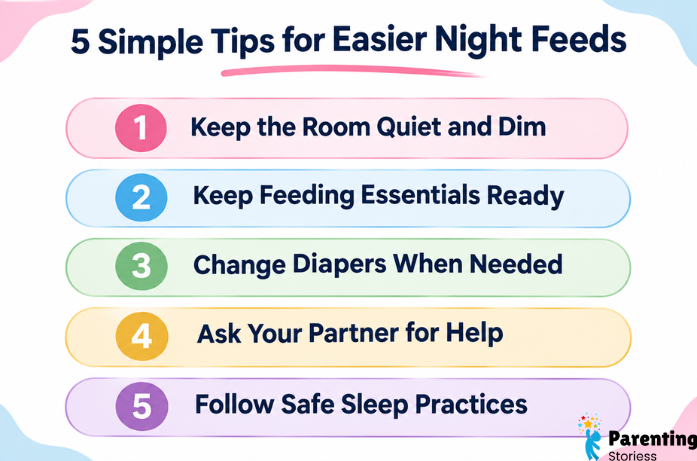
5 Simple Tips to Make Night Feeds Easier
Nighttime feeding can be tiring, especially when you’re still recovering from childbirth and getting very little sleep. But a few simple changes can make those late-night feeds easier for you and your baby.
1. Keep the Room Quiet and Dim
Use a soft nightlight instead of turning on bright lights. Try to keep your voice low and avoid playing with your baby during feeds.
A quiet, calm environment can help your baby gradually learn the difference between day and night.
2. Keep Feeding Essentials Ready
Before going to bed, keep diapers, wipes, burp cloths, and a bottle of water for yourself within easy reach.
If you’re formula-feeding, follow safe preparation and storage guidelines. Never leave prepared formula at room temperature overnight.
Having everything nearby means less searching for things when you’re already tired.
3. Change Diapers When Needed
You don’t need to change your baby’s diaper after every nighttime feed unless it’s dirty, leaking, or uncomfortable.
If the diaper is still clean and dry enough, you can let your baby rest. This may help them settle back to sleep more easily.
4. Ask Your Partner for Help
You don’t have to handle every night feed alone. If possible, ask your partner or a family member to help with diaper changes, burping, or settling your baby after feeding.
Even a little extra rest can make those sleepless nights easier to manage.
5. Make Safe Sleep a Priority
After every feed, place your baby on their back in their own crib or bassinet with a firm, flat mattress.
Keep pillows, blankets, and soft toys away from their sleeping area.
Avoid feeding on a sofa or armchair if you feel very sleepy, as falling asleep while holding your baby can be dangerous.
Always return your baby to their own safe sleeping space after feeding.
What If Your Newborn Falls Asleep During Feeding?
It’s common for newborns to become sleepy while feeding, especially during the first few weeks.
However, if your baby hasn’t finished feeding and still needs milk, gentle encouragement may help.
Try these simple methods:
- Gently rub their back or feet.
- Pause briefly to burp them.
- Change their diaper before feeding.
- Offer the other breast if breastfeeding.
- Try skin-to-skin contact while you’re awake and alert.
Never shake or startle your baby to keep them awake.
If your newborn is unusually difficult to wake, isn’t feeding properly, or seems less responsive than usual, seek prompt medical attention.
When Do Babies Stop Needing Night Feeds?
Many parents wonder when their baby will finally start sleeping longer without waking up for milk.
Some babies begin sleeping for longer stretches around 2–3 months, while others may still need night feeds for several more months.
As babies grow, their stomachs can hold more milk, and they may gradually start taking more of their feeds during the day.
However, sleeping longer doesn’t always mean your baby is ready to stop night feeds completely.
Before reducing nighttime feeds, consider your baby’s age, weight gain, feeding needs, and your pediatrician’s advice.
Remember: Every baby grows and develops at their own pace, so there’s no need to compare your little one’s feeding or sleeping schedule with other babies.
How Do You Know Your Newborn Is Getting Enough Milk?
When you’re feeding throughout the night, it’s natural to worry about whether your baby is drinking enough.
Fortunately, there are several reassuring signs.
Signs Your Baby Is Feeding Well
- Steady weight gain after the initial newborn weight loss.
- Regular wet diapers.
- Visible or audible swallowing during feeds.
- Periods of alertness while awake.
- Appearing satisfied after at least some feeds.
By around day five, many newborns should have at least six wet diapers within 24 hours.
Your pediatrician can help you assess feeding based on your baby’s age and growth.
When Should You Contact Your Pediatrician?
Contact your baby’s healthcare provider if you notice:
- Fewer wet diapers than expected.
- Poor weight gain.
- Difficulty latching or swallowing.
- Frequent refusal to feed.
- Increasing yellowing of the skin or eyes.
- Unusual sleepiness during feeds.
Seek urgent medical care if your newborn is difficult to wake, has breathing problems, or develops a temperature of 100.4°F (38°C) or higher.
Frequently Asked Questions
1. Is It Normal for a Newborn to Feed Every Two Hours at Night?
Yes. Feeding every two hours is common, particularly for breastfed newborns. Frequent feeds help support growth and milk production.
2. Can a Newborn Sleep Five Hours Without Feeding?
Some healthy babies can eventually sleep five hours, but newborns who haven’t regained their birth weight may need more frequent feeds. Ask your pediatrician before allowing longer stretches.
3. Should I Wake My Newborn Every Three Hours to Feed?
During the earliest weeks, often yes, especially if your baby hasn’t regained birth weight. Once weight gain is established, your pediatrician may allow longer sleep periods.
4. Do I Need to Burp My Baby After Every Night Feed?
Not necessarily. Some babies need burping, while others remain comfortable without it. Follow your baby’s cues.
5. Why Is My Newborn Hungrier at Night?
Growth spurts, cluster feeding, and developing sleep patterns can cause frequent nighttime hunger. This is often normal when your baby is gaining weight appropriately.
Final Thoughts
Those early weeks of nighttime feeding can be exhausting, especially when you’re getting very little sleep. But remember, night feeds for newborns play an important role in supporting healthy growth and development.
As your baby grows, they may gradually start sleeping for longer stretches at night. Until then, follow their hunger cues, monitor their weight gain, and ask your pediatrician if you’re unsure about their feeding needs.
Don’t forget to take care of yourself, too. Rest whenever you can, accept help from family, and remember that every baby develops at their own pace.
At Parenting Stories, we believe parenting is a journey of learning, patience, and love. These sleepless nights won’t last forever, so take things one day at a time and enjoy the little moments with your baby.
Medical Disclaimer
This article is for general educational purposes and does not replace professional medical advice. Consult your pediatrician about your newborn’s feeding schedule, growth, or health concerns.