
Written with love and care by a caring mom at Parenting Stories
Taking your little one to the beach for the first time can feel truly magical. The gentle sound of waves, the soft sand under tiny toes, and the fresh ocean breeze create moments that many parents treasure forever. But when it comes to baby safety at the beach, it’s completely normal for parents to feel both excited and a little worried at the same time.
Babies are naturally curious and sensitive to new environments, which means the beach requires a little extra care and preparation. With a few simple precautions and thoughtful planning, your baby can safely enjoy the sunshine, the calming sound of the sea, and the joy of being outdoors while you relax and enjoy this special family experience together.
Why Baby Safety at the Beach Is So Important
The beach may look peaceful and relaxing, but it comes with unique conditions that can affect babies differently than adults. Heat, strong sunlight, sand irritation, ocean waves, and dehydration are all things parents need to consider.
Babies have delicate skin that burns more easily than adult skin. Their bodies also struggle to regulate temperature, which makes them more vulnerable to heat and sun exposure.
Another important factor in baby beach safety is supervision. Even shallow water and small waves can surprise a baby who cannot balance or move away quickly. According to experts on water safety for babies, it’s always best to keep babies within arm’s reach when near water and supervise them closely at all times.
When parents stay aware of these risks and prepare ahead of time, beach trips become safe, joyful experiences rather than stressful ones.
1. Choosing the Right Time to Visit the Beach
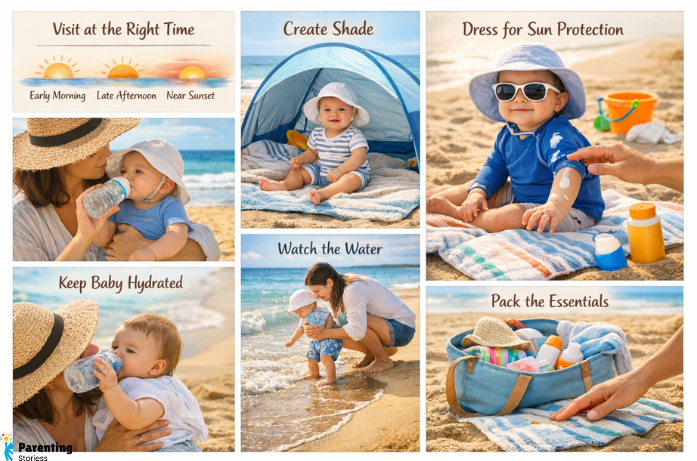
One of the simplest ways to protect your baby is by choosing the best time of day to visit the beach.
The sun is strongest between 10 a.m. and 4 p.m., which can make the sand extremely hot and increase the risk of sunburn. For babies, even short exposure during peak sun hours can cause discomfort.
Instead, consider visiting the beach:
- Early in the morning
- Late in the afternoon
- Near sunset
During these times, the sunlight is softer, the temperature is cooler, and the beach environment is generally calmer for little ones.
This small adjustment makes a big difference in improving baby safety at the beach while allowing your baby to enjoy the surroundings comfortably.
2. Creating a Shaded and Comfortable Spot
Babies should never sit directly under intense sunlight for long periods. Creating a shaded resting space is one of the most important steps in babies at the beach safety.
You can bring:
- A beach umbrella
- A pop-up baby beach tent
- A lightweight canopy
- A large breathable blanket
These items help create a cozy area where your baby can relax, play, or nap away from direct sun exposure.
Many parents also find that baby beach tents with mesh sides allow airflow while keeping sand and insects away. This can make the environment more peaceful and comfortable for both babies and parents.
3. Dressing Your Baby for the Beach
What your baby wears at the beach plays a big role in protecting their skin and keeping them comfortable.
Lightweight, breathable clothing works best. Many parents choose long-sleeve swimwear with UPF protection, which shields delicate skin from the sun.
Helpful clothing items include:
- Wide-brim baby hats
- UV-protective swim shirts
- Lightweight cotton outfits
- Baby sunglasses with soft straps
These items add an extra layer of protection and make baby beach safety much easier to manage.
A hat is especially important because it protects your baby’s face, ears, and neck, areas that burn quickly in the sun.
4. Protecting Your Baby’s Sensitive Skin
Baby skin is extremely delicate and can burn faster than many parents expect. Sunscreen can help protect exposed areas, but it’s important to choose products made specifically for babies.
Look for sunscreen that is:
- Mineral-based (zinc oxide or titanium dioxide)
- Fragrance-free
- Gentle for sensitive skin
For babies younger than six months, pediatricians often recommend focusing more on shade and protective clothing rather than relying heavily on sunscreen. The FDA also explains that sunscreen is generally not recommended for very young infants, and shade and clothing should be the first line of protection.
When applying sunscreen, remember to cover commonly missed spots like:
- The back of the neck
- Tops of the feet
- Ears
- Hands
Reapply every two hours or after water play to maintain strong protection.
5. Keeping Your Baby Hydrated
Hydration is another key part of baby safety at the beach, especially on warm days.
Babies can become dehydrated quickly because their bodies are smaller and lose fluids faster in heat.
Helpful hydration tips include:
- Offer breast milk or formula frequently
- Bring extra bottles of milk or water (for older babies)
- Take breaks in the shade
- Watch for signs of overheating
Signs that your baby may be too hot include:
- Fussiness
- Flushed cheeks
- Sleepiness or unusual tiredness
- Fewer wet diapers
If you notice these signs, move your baby to a cooler shaded area immediately and offer fluids.
6. Watching the Water Carefully
Water may look calm, but it can change quickly. Gentle waves, slippery sand, and unexpected currents make supervision extremely important.
When practicing babies at the beach safety, remember:
- Never leave your baby near water unattended
- Always keep them within arm’s reach
- Hold them securely if standing near waves
- Avoid deeper water with infants
Even sitting near the shoreline requires attention because waves can move faster than expected.
Many parents prefer letting babies explore wet sand rather than water. This still allows them to enjoy the beach safely while reducing risk.
7. Protecting Your Baby From Hot Sand
Sand can become surprisingly hot during sunny days. If it feels hot to your hand, it is definitely too hot for a baby’s delicate skin.
To prevent discomfort:
- Lay down a thick beach blanket
- Use a foam play mat
- Bring a baby beach mat or towel
You can also rinse the sand with a little water to cool it before allowing your baby to sit or crawl.
This small step can make a big difference in baby beach safety and help your baby stay comfortable during beach playtime.
8. Preventing Sand and Saltwater Irritation
Babies love touching everything around them, including sand. While this curiosity is wonderful for development, sand and saltwater can sometimes irritate sensitive skin.
Helpful tips include:
- Rinse your baby with fresh water after ocean play
- Wipe hands before feeding
- Bring a small bottle of clean water for quick rinses
- Change wet swimsuits promptly
Saltwater can dry out baby skin, so applying a gentle baby moisturizer afterward can help restore softness and prevent irritation.
9. Keeping Baby Beach Trips Short and Sweet
When planning a beach outing with a baby, shorter visits are usually best.
A couple of hours is often enough for babies to enjoy the experience without becoming overtired or overstimulated.
Watch your baby’s cues carefully. Signs your baby may be ready to leave include:
- Rubbing eyes
- Increased fussiness
- Turning away from stimulation
- Slower movements or fatigue
Leaving before your baby becomes overwhelmed keeps the experience positive and pleasant.
This approach supports both babies at the beach safety and your baby’s emotional comfort.
10. Packing a Baby Beach Safety Bag
A well-prepared beach bag makes parenting at the beach much easier.
Here are helpful essentials many parents bring:
Baby Beach Safety Checklist
- Baby sunscreen
- Wide-brim hat
- Extra clothes
- Diapers and wipes
- Shade tent or umbrella
- Large blanket
- Fresh water for rinsing
- Baby snacks or milk
- Towels
- Baby-safe moisturizer
Being prepared helps parents stay relaxed and confident while enjoying family beach time.
Gentle Beach Play Ideas for Babies
Even very young babies can enjoy simple beach experiences.
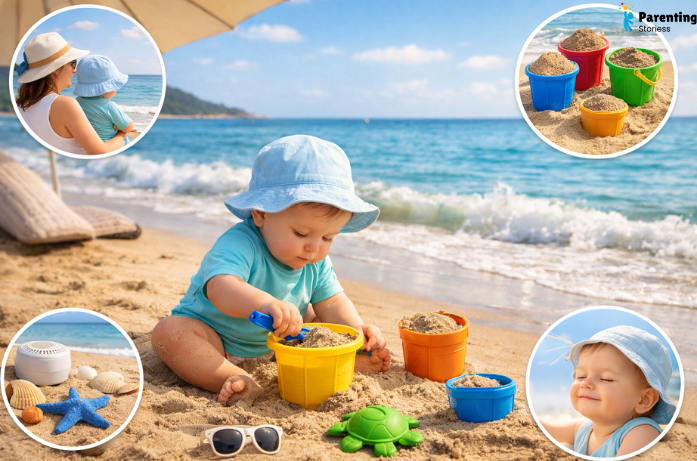
Some safe and fun ideas include:
- Letting baby touch cool wet sand
- Watching waves together from a shaded area
- Filling small cups with sand
- Listening to ocean sounds
- Feeling the breeze and fresh air
These quiet sensory experiences stimulate curiosity without overwhelming your baby.
Beach trips don’t need to be complicated. Often, the simplest moments become the most memorable.
When to Skip the Beach Trip
Sometimes the best decision is to postpone a beach visit.
Consider skipping the beach if:
- The weather is extremely hot
- Strong winds are blowing sand
- The ocean is rough
- Your baby is sick or very tired
Trusting your instincts is part of responsible baby safety at the beach. There will always be another beautiful beach day.
A Final Thought for Parents
Taking your baby to the beach can be a wonderful and heartwarming experience. Watching your little one explore the sounds of waves, feel soft sand between their fingers, and enjoy fresh ocean air creates memories that many parents treasure forever.
With a little preparation and awareness of baby safety at the beach, families can relax and fully enjoy these precious moments together.
Remember, your presence, attention, and care are the most powerful forms of protection for your baby. When parents stay mindful of simple safety steps, beach days can become peaceful, joyful adventures filled with laughter, discovery, and love.
So pack your bag, bring plenty of shade, and enjoy those beautiful seaside memories with your little one.
FAQs About Baby Safety at the Beach
1. At what age can I take my baby to the beach?
Most parents can safely take their baby to the beach after the newborn stage. However, very young babies should stay in shaded areas and avoid direct sunlight for long periods.
2. How long can a baby stay at the beach?
For most babies, 1–2 hours is usually enough. Short visits help prevent overheating, tiredness, and too much sun exposure.
3. Can babies go in the ocean water?
Babies can briefly touch shallow water while being held by a parent. Always keep them within arm’s reach and avoid deeper water or strong waves.
4. Should babies wear sunscreen at the beach?
Babies older than six months can use baby-safe mineral sunscreen. For younger babies, it’s best to rely on shade, hats, and protective clothing.
5. How can I protect my baby from the sun at the beach?
You can protect your baby by using a beach umbrella or tent, dressing them in light protective clothing, putting on a wide-brim hat, and avoiding peak sun hours.
If you love helpful parenting tips like these, subscribe to Parenting Stories for more caring advice, simple parenting guides, and real-life support for moms and dads raising happy, healthy little ones.