Written with love and care by a caring mom at Parenting Stories
Starting your baby on solids is one of those milestones that feels both exciting and a little overwhelming. I still remember standing in my kitchen, holding a handful of vegetables, wondering if I was making the right choices. One of the simplest and most reassuring foods I introduced early on was green bean puree for baby food. It’s soft, nutritious, easy to digest, and perfect for tiny tummies just beginning their food journey.
If you’re here, you are probably looking for something safe, healthy, and easy to prepare, and I promise, green beans check all those boxes. Let’s walk through everything together, just like one mom helping another.
Why Green Beans Are a Wonderful First Food for Babies
When it comes to choosing first foods, we often look for something gentle, nutritious, and easy to prepare. Green beans may not be the most popular choice compared to fruits, but they are incredibly beneficial.
They have a mild taste, become soft when cooked, and are easy to turn into a smooth puree. More importantly, they support your baby’s growth without being too heavy on digestion.
Nutritional Benefits of Green Beans
Green beans are packed with nutrients that help your baby grow strong and healthy:
- Fiber – Supports smooth digestion and helps prevent constipation
- Vitamin A – Promotes healthy vision and skin
- Vitamin C – Boosts immunity and helps fight infections
- Vitamin K – Supports healthy bones and blood clotting
- Folate – Important for brain development
- Iron – Helps in red blood cell production
What I personally loved was how light and balanced they are. They don’t overwhelm your baby’s system, making them ideal for early feeding stages.
When Can You Introduce Green Bean Puree to Your Baby?
Most pediatric experts recommend starting solids around 6 months of age. This is usually when babies begin to show signs of readiness.
You might notice your baby:
- Sitting with support
- Holding their head steady
- Showing interest in your food
- Opening their mouth when offered a spoon
If you’re seeing these signs, it’s a good time to introduce simple foods like green beans.
Always remember, every baby develops at their own pace. Trust your instincts and go slowly.
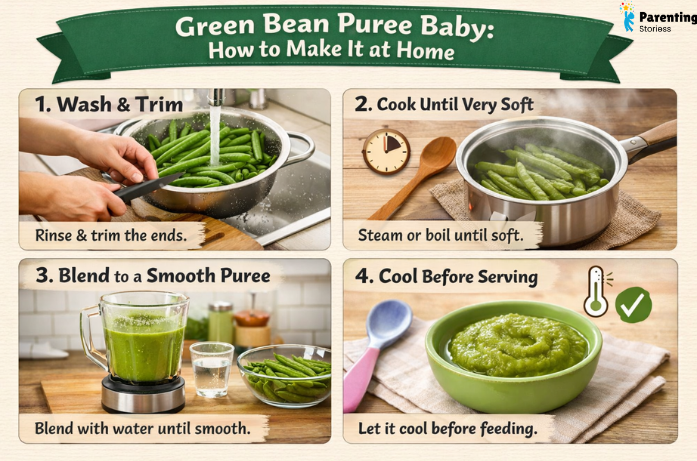
Green Bean Puree Baby: How to Make It at Home
Making homemade baby food may sound like a big task, but it’s actually very simple, and incredibly rewarding. You don’t need fancy tools or ingredients.
Ingredients:
- 1 cup fresh green beans
- Water (as needed)
That’s it. No salt, no sugar, no spices. Babies don’t need extra flavors at this stage.
Step-by-Step Method
1. Wash and Trim
Start by washing the green beans thoroughly under running water. Trim off the ends to remove any tough parts.
2. Cook Until Very Soft
Steam or boil the beans until they are soft enough to mash easily with a fork.
Steaming is a great option because it helps retain nutrients, but boiling works just fine too, especially if you’re short on time.
3. Blend to a Smooth Puree
Transfer the cooked beans into a blender. Add a little water and blend until smooth.
If you’re learning how to make green bean puree for baby, remember that the texture should be soft, smooth, and lump-free, especially for beginners.
4. Adjust Consistency
Add more water if needed to achieve a thin, easy-to-swallow texture.
5. Cool Before Serving
Always let the puree cool before feeding. A quick check on your wrist helps ensure it’s not too hot.
Tips for Perfect Texture and Taste
Getting the texture right can make a big difference in how your baby accepts the food.
Here are some gentle tips:
- Blend thoroughly for a silky smooth texture
- Add breast milk or formula instead of water for extra nutrition
- Strain the puree if your baby is just starting solids
- Serve fresh for the best taste and nutrients
When I first made green bean baby puree, I worried it might be too plain, but babies actually prefer simple, natural flavors.
What If My Baby Refuses Green Bean Puree?
This is one of the most common worries, and you are definitely not alone.
Babies often need time to accept new foods. It doesn’t mean they dislike it; it just means it’s new.
What You Can Do:
- Offer small amounts without pressure
- Try again after a few days
- Pair with familiar foods
- Keep mealtime calm and positive
I remember my baby making the cutest little faces at the first taste. But after a few tries, it slowly became a favorite.
Patience really is key here.
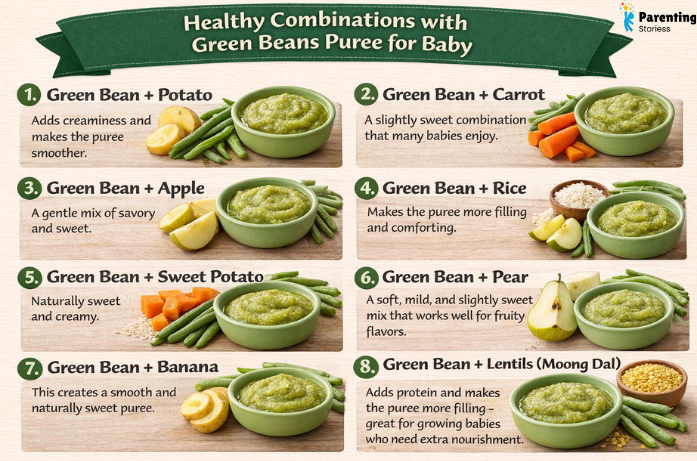
Healthy Combinations with Green Beans Puree for Baby
Once your baby is comfortable with single foods, you can start mixing flavors. This helps expand their taste and makes meals more exciting.
1. Green Bean + Potato
Adds creaminess and makes the puree smoother.
2. Green Bean + Carrot
A slightly sweet combination that many babies enjoy.
3. Green Bean + Apple
A gentle mix of savory and sweet.
4. Green Bean + Rice
Makes the puree more filling and comforting.
5. Green Bean + Sweet Potato
Naturally sweet and creamy, this combination is very baby-friendly and helps balance the slightly earthy taste of green beans.
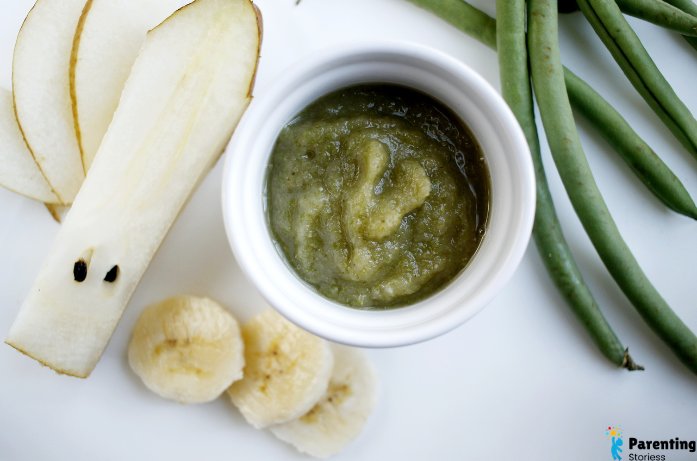
6. Green Bean + Pear
A soft, mild, and slightly sweet mix that works well for babies who prefer fruity flavors.
7. Green Bean + Banana
This creates a smooth and naturally sweet puree, perfect for babies who are just starting solids.
These combinations can make green beans puree for baby more enjoyable while still being nutritious.
8. Green Bean + Lentils (Moong Dal)
Adds protein and makes the puree more filling great for growing babies who need extra nourishment.
How Much Should a baby Feed?
In the early stages, start small.
- Begin with 1–2 teaspoons once a day
- Gradually increase as your baby shows interest
Always watch your baby’s cues. Some days they’ll eat more, some days less, and that’s perfectly normal.
Storing and Freezing Green Bean Puree
As a busy parent, having ready-to-use food can be a lifesaver.
Storage Guidelines:
- Store in the refrigerator for up to 2–3 days
- Freeze in small portions using ice cube trays
- Use frozen puree within 1 month
When reheating:
- Warm gently
- Stir well
- Check temperature before serving
Avoid reheating multiple times to keep the food safe and fresh.
Common Mistakes to Avoid
We all make mistakes while learning, and that’s okay. Here are a few things to keep in mind:
1. Adding Salt or Sugar
Babies don’t need added flavors. Keep it natural.
2. Serving Thick or Chunky Puree Too Early
Always start with a smooth consistency.
3. Forcing Your Baby to Eat
This can create negative associations with food.
4. Ignoring Freshness
Always check smell and texture before serving stored food.
Is Green Bean Puree Safe for Babies?
Yes, green beans are considered safe and low-risk when introduced properly.
Just make sure:
- They are cooked until soft
- Blended well
- Introduced one at a time
Keep an eye out for any allergic reactions, although green beans are rarely allergenic.
Homemade vs Store-Bought: Which Is Better?
Both options are valid, and as parents, we do what works best for our situation.
Homemade Puree:
- Fresh and natural
- No preservatives
- Budget-friendly
Store-Bought:
- Convenient
- Time-saving
- Good backup option
I personally preferred homemade because it felt more personal, but there’s no right or wrong choice here.
Emotional Side of Feeding Your Baby
Feeding your baby is not just about nutrition, it’s about connection.
There will be messy moments, rejected spoons, and days when nothing goes as planned. And that’s okay.
When I started making puree green beans for baby, it wasn’t just about feeding, it was about learning, bonding, and growing together.
Give yourself grace. You are learning too.
Final Thoughts: A Gentle Reminder for Every Parent
If you are here, trying your best to feed your baby healthy and wholesome food, you’re already doing something truly meaningful. Green bean puree baby meals may seem like a small step, but they play a big role in building strong, healthy eating habits from the very beginning.
Some days will feel easy, and others a little messy and that’s all part of the journey. Trust yourself, go gently, and remember your baby doesn’t need perfection, just your love, patience, and care.
FAQs
1. Can I give green bean puree to my baby every day?
Yes, you can offer it regularly, but it’s best to rotate with other vegetables and fruits to give your baby a variety of nutrients.
2. How do I know if the puree texture is right?
The puree should be smooth, soft, and lump-free. If your baby is just starting solids, a thinner consistency works best.
3. Can I mix green bean puree with other foods?
Absolutely! You can mix it with potato, carrot, apple, or rice to improve taste and texture.
4. Is it okay to use frozen green beans?
Yes, frozen green beans are a good option. Just make sure to cook them well and blend until smooth.
5. How long can I store green bean puree?
You can store it in the fridge for 2–3 days or freeze it for up to 1 month.
You can also explore more simple, healthy baby recipes on Parenting Stories to make mealtime easier and more joyful for you and your little one.
Disclaimer: This article is for informational purposes only and is based on personal experience and general parenting knowledge. Always consult your pediatrician before introducing new foods or if you have concerns about your baby’s health or nutrition.