
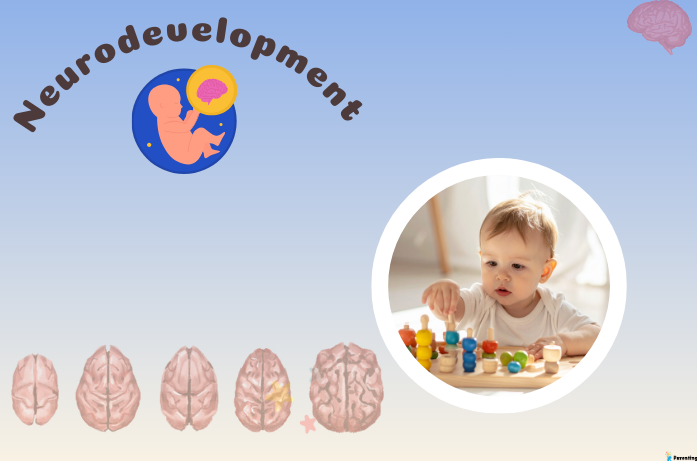
As parents, we often hear words like neurodevelopment, development milestones, or child brain development during doctor visits, and honestly, they can sound a bit confusing or overwhelming. But the truth is much simpler. Neurodevelopment is just the beautiful journey of how your child’s brain grows, learns, and slowly connects with the world from the very beginning of life. Every smile, sound, touch, and moment of care plays a role in early brain development in children.
You don’t need any medical knowledge to understand it. With clear, simple words and real-life examples, it becomes easy and even interesting. Let’s gently break it down in a warm, relatable way that truly speaks to parents like you.
What Is Neurodevelopment? (In Simple Words)
Neurodevelopment is the natural process of how a child’s brain and nervous system grow and mature over time. It shapes the way your child understands the world and responds to it as they grow.
Neurodevelopment influences how your child:
- Moves and controls their body
- Thinks, understands, and learns
- Communicates through sounds, words, or gestures
- Feels, expresses, and manages emotions
- Connects and interacts with others
From a baby lifting their head for the first time, to a toddler saying their first words, or a child learning to focus and follow instructions, every small step is part of neurodevelopment milestones.
When Does Neurodevelopment Begin?
Neurodevelopment begins even before a baby is born and continues gently through childhood and adolescence. It is a natural, ongoing process, where each stage plays an important role in shaping a child’s growth.
- During pregnancy: this is when your baby’s brain begins to take shape. Millions of brain cells are formed, laying the foundation for thinking, movement, emotions, and learning even before birth.
- First three years of life: these years are especially important because the brain grows faster than at any other time. Everyday experiences like talking, cuddling, playing, and responding to your child help build strong and healthy brain connections.
According to the World Health Organization (WHO), early childhood is a critical period for brain development, as experiences in the first years of life strongly influence learning, behavior, and overall health later on.
- Early childhood: during this stage, the skills your child has already started learning become more polished and confident. Movement becomes more coordinated, language improves, attention grows, and social skills develop through daily interactions and gentle guidance.
This is why providing a loving environment, attentive care, and positive early experiences is so important for healthy brain development.
Key Areas of Neurodevelopment
A child’s development doesn’t happen in just one way, it grows gradually across different areas, with each part supporting their overall growth.
1. Motor Development (Movement Skills)
This is all about how your child learns to move and use their body. It includes:
- Rolling, sitting, crawling, and walking
- Using hands to grasp, feed themselves, draw, or write
Both gross motor skills (big movements like crawling or walking) and fine motor skills (small movements like holding a pencil or picking up objects) are important for their overall growth.
The Centers for Disease Control and Prevention (CDC) explains that motor skills, language, thinking, and social abilities develop together as the brain matures, and children may reach these milestones at different times.
2. Cognitive Development (Thinking & Learning)
A child’s ability to think and learn develops gradually.
During this time, they:
- Begin to understand the world around them
- Try to solve simple problems
- Remember people, places, and experiences
- Learn new ideas and concepts
Playing together, gently repeating activities, and exploring their surroundings naturally support this early childhood brain growth. It’s a gentle and effective way to help your child learn and think without any pressure.
3. Language & Communication
This is how children learn to express themselves and understand others:
- Recognizing and understanding words
- Making sounds and forming sentences
- Communicating through gestures, facial expressions, and body language
Talking, singing, and reading with your child every day naturally support healthy language development and help them express themselves confidently.
4. Social & Emotional Development
This area helps children learn how to:
- Express their emotions
- Build relationships with others
- Manage frustration and challenges
- Develop confidence and empathy
A secure attachment and responsive, loving parenting play a key role in supporting this development.
What Supports Healthy Neurodevelopment?
You don’t need special programs or expensive tools, everyday parenting makes a huge difference.
Simple things that help your child brain development and thrive:
- Talk to your child often : Share words, stories, and songs. Your voice helps their brain develop.
- Play and respond to their cues : Follow their lead, laugh, and explore together.
- Provide good nutrition : Balanced meals and healthy snacks fuel both body and brain.
- Ensure enough sleep : Rest is essential for growth, learning, and mood.
- Offer love, safety, and consistency : A secure, caring environment is the foundation of healthy development.
Remember: your presence, attention, and interactions matter far more than any toy or screen.
The American Academy of Pediatrics (AAP) emphasizes that loving relationships, responsive parenting, proper nutrition, sleep, and play are some of the strongest supports for healthy brain and neurodevelopment in children.
What Can Affect Neurodevelopment?
A child’s brain development is influenced by many factors, including:
- Genetics : The traits your child inherits from you and your family, which help shape how they grow and learn.
- Pregnancy health : How a mother’s health, habits, and wellbeing during pregnancy can influence the baby’s early development.
- Nutrition : Providing balanced meals and essential nutrients supports your child’s brain and body growth.
- Environment : A safe, caring, and stimulating space helps children explore, learn, and feel secure.
- Early experiences : Positive interactions, love, and attention in the first years of life shape how children think, feel, and develop.
UNICEF highlights that early experiences, including play, communication, and emotional security, help shape how a child’s brain develops and how they learn to interact with the world.
Every child grows at their own pace. Some may develop faster or slower than others, and that doesn’t always mean something is wrong.
When Should Parents Be Concerned?
Every child grows and learns at their own pace. That said, it’s completely okay to seek guidance if you notice:
- Your child losing skills they previously had
- Little or no eye contact, or not responding to sounds
- Delays in speaking or moving
- Difficulty connecting or interacting with others
Remember, early support can make a real difference. Trust your instincts, and don’t hesitate to talk to your pediatrician if something feels off.
Neurodevelopment Is Not a Race
It’s important for parents to remember: every child grows at their own pace.
- Some children may walk early but start talking a little later.
- Others may speak early but take time to develop social skills.
These differences are completely normal. What truly matters is steady progress, not perfection. Celebrate each small milestone, every step forward counts!
FAQs: Neurodevelopment (For Parents)
Q1. Is neurodevelopment the same as child development?
Neurodevelopment is a part of overall child development. It focuses specifically on how the brain and nervous system grow and support skills like movement, learning, emotions, and communication.
Q2. Can parents really influence brain development?
Yes. Everyday actions like talking, playing, cuddling, and responding to your child’s needs strongly support healthy brain development.
Q3. Should I worry if my child reaches milestones later than others?
Not always. Children develop at different speeds. What matters is steady progress over time. If you’re unsure, it’s always okay to ask your pediatrician.
Q4. Do screens help with brain development?
For young children, real-life interaction is far more beneficial than screens. Talking, reading, and playing together support neurodevelopment much better.
Final Thoughts: Your Role Matters More Than You Think
Neurodevelopment isn’t something parents need to control, it’s something you support through love, patience, and presence.
Every cuddle, conversation, game, and comforting moment helps shape your child’s growing brain. You don’t need to be perfect. You just need to be there.
And that, you’re already doing beautifully.
Parenting is full of questions, learning, and quiet moments that matter more than we realize.
At Parenting Stories, we share simple explanations, real parenting experiences, and gentle guidance to support you at every stage of your journey.
Disclaimer
This article is for general informational purposes only and does not replace professional medical or developmental advice. If you have concerns about your child’s development, always consult a pediatrician or qualified healthcare professional.