

Written with care by a caring mom at Parenting Stories
Pregnancy goes through several stages, starting with minor surprises and culminating in major emotional changes until the doctor delivers their final professional verdict. One experience many expectant mothers notice, especially later in pregnancy, is a sudden urge to clean, organize, and prepare everything for their baby. Signs of nesting in pregnancy begin to appear as the expected delivery date approaches.
You might suddenly feel motivated to wash tiny baby clothes, rearrange furniture, or prepare meals for the weeks ahead. The pregnancy nesting instinct represents a natural human behavior which establishes a mother-to-be’s mental and physical readiness for her future delivery.
Mothers experience various nesting behaviors during their final trimester because every pregnancy presents distinct characteristics. This instinct helps you to practice safe handling while your body signals its requirement for downtime.
What Is the Pregnancy Nesting Instinct?
The pregnancy nesting instinct drives parents to create a suitable home environment for their upcoming baby through its intense emotional and physical needs. The behavior demonstrates a similarity to how animals make their nests before they give birth to their young. Human mothers experience this same instinct which drives them to establish safe environments that contain organized components and comfortable spaces for their newborns.
Many experts believe this instinct is linked to hormonal changes during pregnancy. As your body prepares for labor, hormones such as estrogen and oxytocin increase, which may boost motivation and emotional attachment to your baby.
According to the Cleveland Clinic, many expecting mothers experience a strong urge to organize, clean, and prepare their home as their baby’s arrival approaches. This behavior is a natural emotional and psychological preparation for parenthood.
Why Nesting Often Happens in the Third Trimester
Many moms begin experiencing nesting behavior pregnancy urges during the third trimester for several reasons.
First, hormonal changes increase as the body prepares for labor and childbirth. These hormonal shifts can create bursts of energy and motivation.
Second, the emotional connection to your baby often grows stronger as the due date approaches. Feeling your baby move, attending prenatal appointments, and imagining life after birth can inspire mothers to prepare their homes.
Finally, the approaching due date naturally encourages practical preparation. Packing the hospital bag, organizing baby supplies, and preparing meals are all helpful tasks before the baby arrives.
The American Pregnancy Association explains that many mothers feel motivated to prepare their homes and baby essentials as labor approaches, which can help them feel more emotionally ready for childbirth.
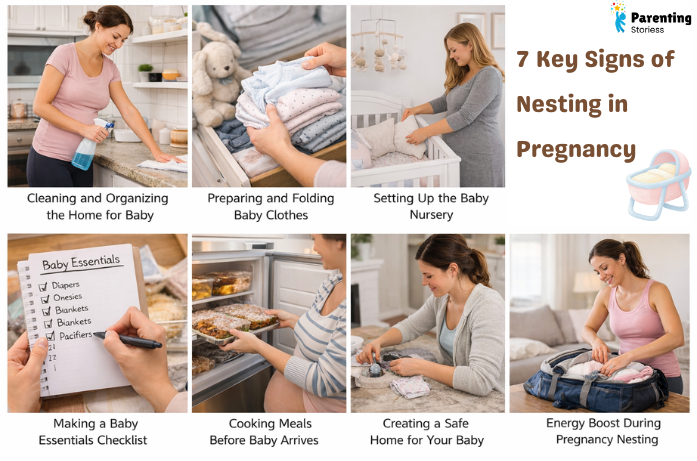
7 Key Signs of Nesting in Pregnancy
1. A Strong Urge to Clean and Organize Your Home
The birth process begins when a woman shows an instinctive need to clean and arrange her surroundings.
You may feel motivated to clean closets, wipe down surfaces, vacuum frequently, or reorganize kitchen cabinets. Even areas you normally ignore might suddenly feel important to tidy.
This cleaning instinct is often driven by a natural desire to create a healthy environment for your newborn.
Avoid using strong cleaning chemicals and ask for help with heavy chores to protect your health and your baby.
2. Preparing and Organizing Baby Clothes
Many moms experience a special joy when sorting through baby clothes.
You might begin washing newborn outfits, folding tiny socks, and organizing clothes by size. This small but meaningful task helps parents feel emotionally connected to their baby.
Organizing clothes is one of the most common signs of nesting in pregnancy, and it often brings excitement about meeting your baby soon.
Use drawer organizers or small baskets to keep baby clothes neat and easy to find.
3. Setting Up the Nursery or Baby Space
Another classic example of third trimester nesting is preparing the nursery.
You may find yourself choosing decorations, assembling the crib, organizing blankets, or arranging furniture. Even if your baby will sleep in your room at first, creating a cozy baby corner can feel comforting.
Remember that the nursery does not need to be perfect. Your baby mainly needs a safe sleep space and loving care.
4. Making Lists and Preparing Baby Essentials
Many moms start creating lists during nesting before labor.
You might write down things like:
- Hospital bag checklist
- Baby care essentials
- Feeding supplies
- Diapers and wipes
- Postpartum recovery items
This planning stage is a practical part of nesting behavior pregnancy, helping parents feel more confident about the upcoming birth.
5. Cooking and Preparing Meals for After Birth
Some mothers feel inspired to cook and prepare meals before the baby arrives.
Preparing freezer meals, organizing the pantry, and stocking easy snacks can make the early newborn weeks easier.
This is a thoughtful and helpful part of the pregnancy nesting instinct, as caring for a newborn can leave little time for cooking.
Simple freezer-friendly foods like soups, pasta sauces, and casseroles can be lifesavers during those first busy weeks.
6. Becoming More Protective of Your Environment
Another subtle pregnancy nesting sign is feeling more protective about your home environment.
You may start checking safety items such as smoke alarms, organizing cleaning products out of reach, or planning future baby-proofing.
Some moms also prefer a calmer home atmosphere and may limit visitors before birth.
This protective instinct is simply your maternal instincts becoming stronger as your baby’s arrival approaches.
7. Experiencing a Sudden Burst of Energy
Late pregnancy often brings fatigue, but many moms notice brief bursts of motivation.
You might suddenly feel determined to finish tasks like packing your hospital bag, organizing baby supplies, or completing nursery preparations.
This energy boost is a common part of third trimester nesting, but it’s important not to overexert yourself.
Your body still needs plenty of rest as it prepares for labor.
Healthy Ways to Manage Nesting Energy
If you’re experiencing nesting instinct pregnancy feelings, there are safe ways to channel that energy.
Focus on Light Tasks: Choose activities like folding baby clothes, organizing drawers, or preparing baby bags rather than heavy lifting.
Accept Help: Let your partner, friends, or family help with bigger tasks such as assembling furniture or deep cleaning.
Stay Hydrated and Rest Often: Even if you feel energized, pregnancy is physically demanding. Take breaks and listen to your body.
Keep Expectations Realistic: A perfectly organized home is not necessary. Your baby simply needs love, warmth, and safety.
When Nesting Doesn’t Happen
Not every expecting mother experiences strong pregnancy nesting signs, and that is completely normal.
Some women feel calm and relaxed during the final weeks of pregnancy. Others may focus more on rest and emotional preparation.
The absence of nesting behavior pregnancy urges does not mean you are less prepared or less connected to your baby.
Every pregnancy journey unfolds in its own unique way.
Emotional Benefits of the Nesting Instinct
While nesting may seem like simple organizing or cleaning, it also offers emotional benefits.
Preparing for your baby can help reduce anxiety and create a sense of readiness. Small tasks such as washing baby clothes or preparing the nursery allow parents to imagine life with their newborn.
These quiet moments of preparation often strengthen the emotional bond between mother and baby.
FAQs About Signs of Nesting in Pregnancy
1. When do the signs of nesting in pregnancy usually start?
Most mothers notice signs of nesting in pregnancy during the third trimester, especially in the final weeks before birth. However, some women may experience mild nesting instincts earlier.
2. Is the nesting instinct pregnancy experience the same for every mother?
No. The nesting instinct pregnancy experience varies from person to person. Some mothers feel a strong urge to organize and prepare, while others may not feel it at all.
3. Can nesting mean labor is near?
Sometimes nesting before labor happens in the final weeks or days before birth, but it does not always mean labor will start immediately. It is simply a natural preparation instinct.
4. Is nesting behavior pregnancy safe?
Yes, nesting behavior pregnancy is generally safe as long as mothers avoid heavy lifting, strong cleaning chemicals, and overexertion.
5. What if I don’t experience pregnancy nesting signs?
Not experiencing pregnancy nesting signs is completely normal. Every pregnancy is different, and many mothers prepare for their baby in other ways.
Final Thoughts on the Signs of Nesting in Pregnancy
The signs of nesting in pregnancy are a beautiful reminder of the powerful connection between a mother and her baby. Whether you feel inspired to organize baby clothes, prepare meals, or create a peaceful nursery, these small actions often come from a place of love and anticipation.
The pregnancy nesting instinct is not about creating a perfect home. It’s about preparing a warm and safe environment where your baby will be welcomed with care.
If you feel the urge to nest, embrace it gently and safely. And if you don’t experience strong nesting urges, that’s perfectly okay too.
Motherhood begins long before birth in the quiet moments of preparation, hope, and love that grow in your heart while you wait to meet your baby.
Written with care by a caring mom at Parenting Stories, a place where mothers find trusted guidance, emotional support, and practical advice for pregnancy, babies, and everyday parenting.