

Written with care by a loving mom at Parenting Stories
As parents, we spend so much time making sure our children are happy, safe, and loved. But somewhere along the way, many of us begin to wonder, are we also preparing them for real life? This is where understanding why parents should teach kids chores becomes so important. By gently involving children in everyday responsibilities, we help them build independence, confidence, and a strong sense of belonging within the family.
I’ll be honest with you, there were days when I felt it was easier to just do everything myself. It saved time, avoided mess, and felt less stressful. But over time, I realized something important. When we always do everything for our children, we unintentionally take away opportunities for them to grow.
Teaching chores isn’t about making children work. It’s about helping them become capable, responsible, and confident individuals, step by step, in the most natural way.
Why Parents Should Teach Kids Chores Is So Important
At first glance, chores might seem like simple household tasks. But their impact goes much deeper than a clean home.
When children participate in daily responsibilities, they begin to understand that they are an important part of the family. They are not just being taken care of, they are contributing too. This builds a strong sense of connection and emotional security.
Chores also teach responsibility in a very natural way. Instead of learning through lectures, children learn through action. When they put away their toys or help clean up after meals, they begin to understand that their actions have value.
Over time, this builds habits that stay with them into adulthood.
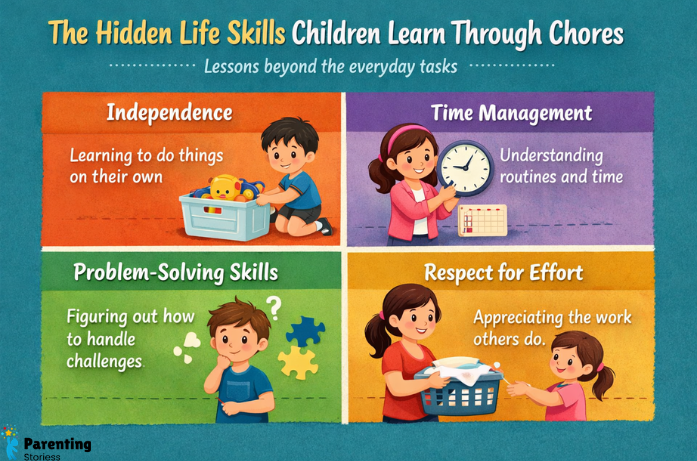
The Hidden Life Skills Children Learn Through Chores
As moms, we often focus on visible milestones like walking, talking, or learning numbers. But some of the most important skills are the ones we don’t always see right away.
Chores quietly teach life skills that children will carry forever. In fact, studies have also shown a positive connection between early responsibility and long-term development.
1. Independence
When children learn to do things on their own, even small tasks, they begin to trust themselves. This self-trust is the foundation of independence.
A child who learns to organize their belongings or complete simple tasks grows into an adult who can manage life confidently.
2. Time Management
Even basic chores help children understand routines and time. For example, cleaning up before bedtime or helping set the table before dinner teaches them structure.
These small habits later turn into strong time management skills.
3. Problem-Solving Skills
When children try to complete a task, they naturally face small challenges. Maybe they don’t know where something belongs or how to do it properly.
Instead of stepping in immediately, giving them space to figure things out helps develop problem-solving abilities.
4. Respect for Effort
When children are involved in household tasks, they begin to understand the effort that goes into maintaining a home.
This builds respect, not just for the work, but also for the people doing it.
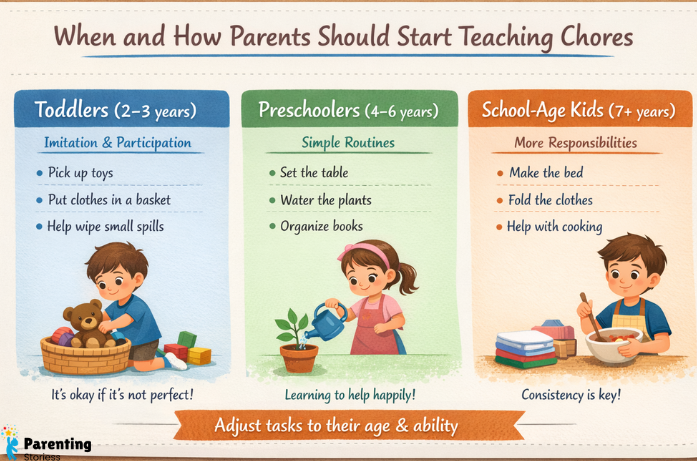
When and How Parents Should Start Teaching Chores
Many parents wonder, “Is my child too young for chores?”
The truth is, children are ready much earlier than we think. The key is to adjust expectations based on their age and ability. Even parenting experts at American Academy of Pediatrics highlight how early involvement in simple tasks can support a child’s development.
Toddlers (2–3 years)
At this age, it’s all about imitation and participation.
- Picking up toys
- Putting clothes in a basket
- Helping wipe small spills
They may not do it perfectly, and that’s completely okay.
Preschoolers (4–6 years)
Children at this stage understand instructions better and enjoy feeling helpful.
- Setting the table
- Watering plants
- Organizing books
This is a great age to build simple routines.
School-Age Kids (7+ years)
Now they can take on more structured responsibilities.
- Making their bed
- Folding clothes
- Helping with simple cooking
As they grow, their responsibilities can grow too.
The most important thing is consistency, not perfection.
Making Chores Feel Natural, Not Forced
One of the biggest challenges parents face is getting children to cooperate without turning chores into a daily struggle.
Here’s what has worked beautifully in my experience:
1. Start With Connection
Instead of giving instructions from a distance, involve yourself.
Say, “Let’s do this together,” rather than “Go do it.”
Children respond much better when they feel supported.
2. Turn It Into a Game
Children naturally enjoy play. When chores feel like a game, resistance reduces.
You can say:
- “Let’s see who can pick up more toys!”
- “Can you find all the blue blocks?”
Learning becomes fun instead of stressful.
3. Focus on Effort, Not Perfection
If your child folds clothes unevenly or spills water while helping, resist the urge to correct everything.
Instead, appreciate the effort. Confidence grows when children feel encouraged.
Supporting Yourself While Feeling Tired All the Time During Pregnancy
If you are managing a home, a child, and pregnancy at the same time, I want you to know, it’s okay to feel overwhelmed.
Feeling tired all the time during pregnancy is something many moms experience. Your body is doing so much, and your energy naturally dips.
This is actually a beautiful opportunity to involve your child in small chores.
Instead of pushing yourself too hard:
- Ask your child to help bring things to you
- Let them pick up toys
- Encourage them to help with simple tasks
Not only does this reduce your workload, but it also helps your child feel included in this new phase of life.
It becomes a shared experience instead of a stressful one.
And sometimes, that small support can make your day feel just a little lighter.
Common Mistakes Parents Make (And Gentle Fixes)
We all learn as we go. And that’s perfectly okay.
Here are a few common mistakes, along with simple ways to handle them:
1. Doing Everything Yourself
It may feel faster, but it limits your child’s learning.
Try slowing down and involving them, even if it takes a bit longer.
2. Expecting Immediate Results
Children need time to learn.
Be patient and allow room for mistakes.
3. Using Chores as Punishment
This can create a negative association.
Instead, present chores as a normal part of daily life.
4. Forgetting to Appreciate
A simple “You did a great job” can go a long way.
Children thrive on encouragement.
Creating a Simple Chore Routine at Home
You don’t need a complicated system.
In fact, the simpler it is, the more effective it becomes.
Keep It Manageable
Start with just a few tasks each day.
Too many chores can overwhelm children.
Build a Routine
Choose a specific time, like after playtime or before dinner.
Consistency makes habits easier to follow.
Use Visual Charts (Optional)
Some children enjoy visual reminders.
A small chart can make chores feel structured and even fun.
Celebrate Small Efforts
Recognition doesn’t need to be big.
A smile, a hug, or kind words are enough.
How Chores Strengthen Your Bond With Your Child
This is something many parents don’t expect.
Chores are not just about responsibility, they are also about connection.
When you do tasks together:
- You spend time with your child
- You talk and share moments
- You build trust and understanding
These everyday interactions become meaningful memories.
Sometimes, the simplest moments, like folding clothes together or cleaning up toys, turn into the most special ones.
Teaching Responsibility Without Pressure
The goal is not to raise a child who does everything perfectly.
The goal is to raise a child who feels capable, confident, and loved.
Approach chores with kindness:
- Guide instead of forcing
- Encourage instead of criticizing
- Support instead of controlling
This creates a positive relationship with responsibility that lasts a lifetime.
A Gentle Reminder for You
If you’re feeling unsure or thinking you haven’t started yet, please don’t be hard on yourself.
Parenting is a journey, not a checklist.
You can begin anytime.
Start small. Stay patient. And trust yourself.
You are doing your best, and that is more than enough.
Conclusion: Small Responsibilities, Lifelong Strength
In the end, teaching chores is not about having a perfectly clean home.
It’s about raising children who understand responsibility, value effort, and feel confident in their abilities.
When parents teach kids chores with love, patience, and understanding, they are building something much bigger than habits, they are shaping character.
And one day, when your child grows into a responsible and independent adult, you’ll see how these small, everyday lessons quietly made a big difference.
If you found this helpful, share it with another parent who might need a little support today And don’t forget to explore more gentle parenting tips on Parenting Stories.
FAQs
1. At what age should parents start teaching kids chores?
Parents can start teaching simple chores as early as 2–3 years old. At this stage, it’s more about participation and learning through imitation rather than doing tasks perfectly.
2. Why is it important that parents teach kids chores?
When parents teach kids chores, children learn responsibility, independence, and life skills. It also helps them feel like a valuable part of the family.
3. How can I motivate my child to do chores without forcing them?
Make chores fun and involve yourself. Turn tasks into games, use encouragement, and appreciate their efforts instead of focusing on perfection.
4. Should children be rewarded for doing chores?
Small appreciation like praise, hugs, or kind words is usually enough. Chores should feel like a normal part of daily life, not something they only do for rewards.
5. What if my child refuses to do chores?
Stay calm and patient. Start with very small tasks, do them together, and build a routine. Consistency and gentle guidance work better than pressure.
Disclaimer: This article is shared with care based on real parenting experiences. Every child is unique, so feel free to adapt these ideas in a way that suits your family best.