
Written by a Caring Mom at Parenting Stories
Those first few months with your baby can feel like they pass in a heartbeat. One day you are holding a sleepy newborn who only wants cuddles, and suddenly you notice little smiles, stronger movements, and a baby who wants to look at everything around them.
At around 14 weeks, your baby is entering an exciting stage of growth. They are becoming more alert, curious, and interactive with the people they love. Understanding 14 week old baby milestones can help you notice these beautiful changes while also giving you reassurance about your baby’s development.
As a mom, I know how easy it is to compare your baby with others or wonder, “Is my baby doing enough?” The truth is that every baby grows at their own pace. Some babies may surprise you with early skills, while others take a little more time. What matters most is providing love, comfort, and opportunities for your baby to explore.
At 14 weeks, your baby is learning through every smile, cuddle, sound, and movement. These everyday moments are helping shape their physical, emotional, and social development.
What to Expect From Your 14 Week Old Baby
A 14-week-old baby is around the end of the third month and is moving beyond the newborn stage. Many parents notice that their baby is becoming more expressive and easier to interact with.
Your little one may spend more time awake during the day, watch your face closely, respond to your voice, and show more interest in toys and surroundings.
This stage is not only about physical growth. Your baby is also building an emotional connection with you. They are learning that your voice means comfort, your touch means safety, and your presence means they are cared for.
Every smile, coo, and tiny movement is your baby’s way of communicating with you.
14 Week Old Baby Milestones You May Notice
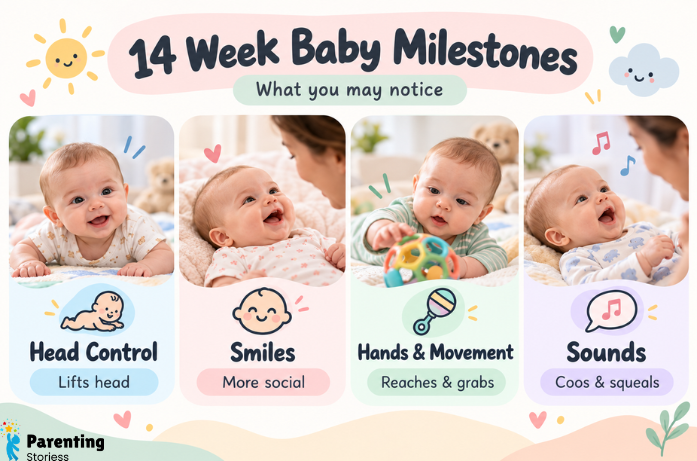
Every baby develops differently, but many babies show exciting new abilities around this age. These 14 week old baby milestones are common signs that your baby is growing and learning.
While milestones can give parents a general idea of development, every baby follows their own timeline. The CDC’s developmental milestones resources also explain that milestones are helpful signs to watch for, but they should be considered along with your baby’s overall growth and behavior.
1. Improved Head Control
One of the noticeable changes around this time is stronger neck and upper body control.
During tummy time, your baby may lift their head higher, look around more easily, and push up using their arms. These movements help strengthen the muscles needed for future milestones like rolling, sitting, and crawling.
If your baby still needs support while holding their head, do not worry. Some babies develop this skill gradually over several weeks.
Short and regular tummy time sessions can help your baby build strength naturally.
2. More Smiles and Social Responses
Around 14 weeks, many babies become more social. You may notice your baby smiling when you enter the room, reacting to your expressions, or becoming excited when you talk.
These smiles are more than cute moments. They show that your baby recognizes familiar people and is beginning to understand social connections.
Talking, smiling, and responding to your baby teaches them that their actions and sounds have meaning.
3. Discovering Hands and Movements
Your baby may become fascinated by their hands during this stage.
They might:
- Stare at their fingers
- Bring hands to their mouth
- Try to hold toys
- Move arms and legs with more control
This is an important part of 14 week old baby development because your baby is learning how their body works.
Simple activities like placing a soft toy nearby can encourage reaching and grabbing skills.
4. More Baby Sounds and Communication
Your baby may start making more coos, squeals, and little sounds.
These early conversations are your baby practicing communication. They are learning that making sounds gets a response from you.
Try answering your baby’s sounds, repeating their noises, or talking about what you are doing throughout the day.
You may feel like you are having one-sided conversations, but these moments are actually helping your baby develop language skills.
Understanding 14 Week Old Baby Development
At 14 weeks, your baby’s brain is developing quickly. They are learning from everything around them, including your voice, facial expressions, touch, and daily routines.
Understanding your baby’s development also includes creating a safe environment where they can explore. Resources like Cleveland Clinic’s baby development and safety guidance explain how physical growth, movement, and safe surroundings work together during early infancy.
Your baby may begin to:
- Follow moving objects with their eyes
- Recognize familiar faces
- Show excitement when they see you
- Enjoy music and different sounds
- Explore objects by touching and mouthing them
These small actions are signs that your baby is becoming more aware of the world.
The best learning environment for a baby at this age is not a room full of expensive toys. It is a loving environment where they feel safe, connected, and encouraged to explore.
Best 14 Week Old Baby Activities for Development
You do not need complicated activities to support your baby’s growth. Simple daily interactions can become meaningful learning experiences.
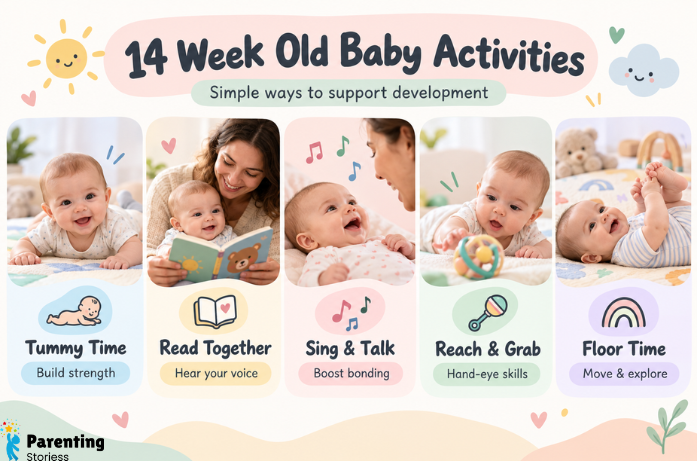
Here are some gentle 14 week old baby activities that can encourage development.
1. Tummy Time Practice
Tummy time is one of the most helpful activities for building your baby’s muscles.
Place your baby on their tummy while they are awake and supervised. You can lie down in front of them, smile, talk, or place a toy nearby.
If your baby gets frustrated quickly, try shorter sessions more often. Some babies need time to become comfortable with tummy time.
Remember, even a few minutes of practice can help.
2. Read Books Together
Your baby may not understand the story yet, but they love hearing your voice.
Choose books with:
- Bright pictures
- Simple patterns
- Different textures
- Short sentences
Reading helps your baby listen to sounds, watch facial expressions, and enjoy bonding time with you.
3. Sing, Talk, and Make Expressions
Your baby learns through your interaction.
Sing a simple song, make funny faces, or describe everyday activities like changing clothes or preparing a bottle.
These small conversations help your baby feel connected and support early communication skills.
4. Encourage Reaching and Grabbing
Place a safe toy near your baby and allow them to try reaching for it.
This activity supports coordination between their eyes and hands.
Soft rattles, cloth toys, and baby-safe objects with different textures can make playtime interesting.
5. Give Your Baby Safe Floor Time
Allowing your baby some supervised floor time gives them freedom to move, stretch, and explore.
Too much time in seats or swings can limit movement practice. A safe play area allows your baby to discover their body naturally.
3 Month Old Baby Milestones: How Your Baby Is Growing
Many parents search for 3 month old baby milestones because 14 weeks falls close to this stage.
Around three months, many babies begin showing:
- Better head control
- More intentional smiles
- Increased interest in faces
- Improved hand movements
- More predictable awake periods
- Stronger reactions to familiar voices
However, milestones are not a checklist that every baby completes on the same day.
Your baby may master some skills early and take longer with others. Development happens step by step.
Instead of focusing only on what your baby can do, also notice how they interact with you and how comfortable they feel while exploring.
14 Week Old Baby Sleep: What Parents Should Know
At 14 weeks, your baby’s sleep pattern may start becoming more predictable, but it can still change from day to day. Some babies sleep longer at night, while others still wake for feeding and comfort.
A typical 14 week old baby sleep routine may include daytime naps, longer awake periods, and nighttime feeds. Changes in sleep are normal as your baby’s brain develops and they learn new skills.
You can support better sleep by:
- Following a simple bedtime routine
- Keeping the environment calm and quiet
- Watching for sleepy cues like yawning or fussiness
- Avoiding too much stimulation before sleep
Remember, every baby develops their own sleep rhythm, so focus on what works best for your little one.
Feeding Your 14 Week Old Baby
At 14 weeks, most babies continue getting nutrition from breast milk or formula. Your baby may feed more often during growth spurts or when they need extra comfort.
Signs your baby may be hungry include:
- Sucking on hands
- Turning toward the breast or bottle
- Making sucking sounds
- Becoming restless
Follow your baby’s hunger cues and avoid comparing their feeding routine with others. If you have concerns about feeding or growth, your pediatrician can guide you.
How Parents Can Support Their Baby’s Growth
The most important thing your baby needs is not perfection. They need connection.
Simple things you do every day make a big difference:
- Respond when your baby cries
- Talk and sing regularly
- Offer cuddles and comfort
- Give your baby time to move freely
- Celebrate small achievements
Your baby learns through relationships. The love and attention you provide are helping build confidence and emotional security.
Responsive parenting, such as talking, comforting, and responding to your baby’s needs, plays an important role in early development. UNICEF’s guidance on baby developmental milestones also highlights how everyday interactions help support a child’s learning and emotional growth.
Sometimes parents worry that they are not doing enough, but everyday care is already supporting your baby’s development.
When to Talk With Your Baby’s Doctor
Every baby grows differently, but it is always okay to ask questions if you feel concerned.
Speak with your healthcare provider if your baby:
- Does not respond to sounds
- Rarely makes eye contact
- Seems unusually less active
- Has difficulty moving one side of the body
- Does not seem interested in interacting
Regular checkups are a great opportunity to discuss your baby’s progress and ask any questions you have. Keeping track of your baby’s progress can help you notice changes and discuss any concerns during checkups. Nationwide Children’s Hospital’s developmental milestones guide for babies from birth to 6 months can also help parents understand common skills during this stage.
Frequently Asked Questions
1. What should a 14 week old baby be doing?
A 14 week old baby may be smiling more, making sounds, improving head control, following objects, and becoming interested in people and surroundings.
2. How many hours should a 14 week old baby sleep?
Sleep needs vary from baby to baby. Many babies still need multiple naps and nighttime sleep with possible feeding breaks.
3. Can a 14 week old baby recognize parents?
Yes, many babies at this age recognize familiar faces, voices, and smells. They often show excitement when interacting with their parents.
4. What activities are good for a 14 week old baby?
Tummy time, talking, singing, reading, reaching games, and supervised floor play are simple activities that support development.
Final Thoughts
At 14 weeks, your baby is growing, learning, and discovering the world in their own special way. Every smile, sound, and new movement is a small but meaningful step in their development.
Remember, 14 week old baby milestones are not a race. Some babies reach milestones earlier, while others take more time. Focus on giving your baby love, comfort, playtime, and opportunities to explore.
Enjoy these precious moments, celebrate your baby’s progress, and trust that your care and attention are helping your little one grow beautifully.
Enjoy every little moment of your baby’s journey. For more helpful baby care tips, milestones, and parenting guides, explore more from Parenting Stories and continue learning together.
Disclaimer
This article is for informational and parenting guidance purposes only. It does not replace professional medical advice. If you have concerns about your baby’s development, feeding, sleep, or health, consult your pediatrician.